Gardening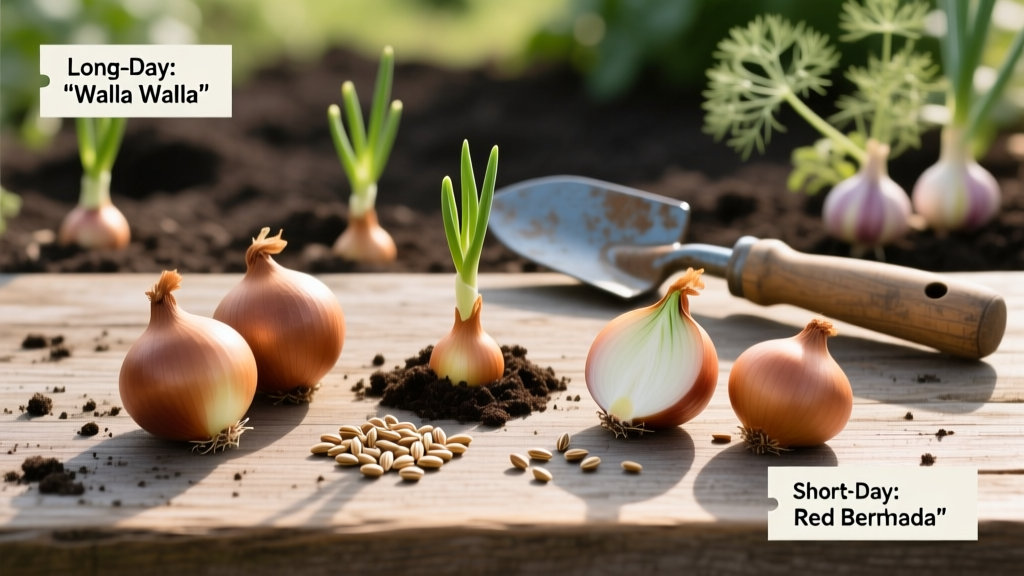
2026 Onion Planting Guide: Sets Vs Seeds & Day-Length Types
Sarah ChenPublished
Introduction to the 2026 Allium Season
As we enter the 2026 growing season, home gardeners and permaculture enthusiasts are rethinking how they utilize every square inch of their outdoor spaces. Onions remain a staple of the vegetable garden, but understanding the nuances of how they grow is the difference between a meager harvest and a bountiful, year-round supply of homegrown alliums. Whether you are tending to a traditional raised bed or integrating crops into a complex food forest, mastering the differences between onion sets and seeds, as well as long-day versus short-day varieties, is critical for success.
In this comprehensive guide, we will explore the biological triggers that cause onions to bulb, the economic and practical realities of planting sets versus seeds in 2026, and how to seamlessly integrate these pungent crops into your broader landscape design.
The Orchard Connection: Onions in Tree Selection & Planting Guides
While onions are traditionally viewed as a standard row crop, modern Tree Selection & Planting Guides heavily emphasize the use of alliums in fruit tree guilds and orchard understories. Planting onions beneath or around the drip lines of fruit trees serves multiple ecological purposes. First, the strong volatile oils emitted by the onion family help mask the scent of your fruit trees, effectively confusing and deterring destructive pests like the peach tree borer, apple maggot, and various species of aphids.
When designing your 2026 orchard layout, consider planting long-day onion varieties around the base of your apple and pear trees in northern climates, or short-day varieties beneath pecan and citrus trees in the south. By utilizing the space between your tree trunks and the drip line, you suppress grass competition, maximize your yield per square foot, and create a natural pest-repellent barrier. Just be sure to keep the immediate root flare of your trees clear to prevent crown rot and moisture retention issues against the bark.
Onion Sets vs. Seeds: Which Should You Choose in 2026?
One of the most common debates in the gardening community is whether to start onions from sets (small, immature bulbs) or from seed. Both methods have distinct advantages, and your choice will depend on your climate, patience, and the specific varieties you wish to grow.
Growing from Onion Sets
Onion sets are essentially onions that were planted densely the previous year, harvested while still small, and then dormant until you plant them in your garden. In 2026, the average cost for high-quality, disease-free onion sets hovers around $18 to $24 per pound.
- Pros: Sets are incredibly easy to plant, require no indoor seed-starting setup, and mature much faster than seeds. They also have a significant head start on garden weeds, which is crucial since onions have shallow root systems and poor competitive ability against aggressive weeds.
- Cons: The variety selection is severely limited. You will typically only find generic yellow, white, and red varieties at your local garden center. Furthermore, sets are more prone to 'bolting' (going to seed prematurely) if they experience a sudden cold snap after planting.
Growing from Onion Seeds
Starting onions from seed requires more foresight. Seeds must be sown indoors 10 to 12 weeks before your last expected spring frost. A standard packet of premium, organic onion seeds costs about $4 to $6 in 2026 and contains hundreds of seeds.
- Pros: The variety available is staggering. You can grow specialty heirlooms, massive exhibition onions, or ultra-sweet varieties that are never available as sets. Seed-grown onions are also much less likely to bolt, resulting in larger, more uniform bulbs that store better over the winter.
- Cons: They require a dedicated indoor grow light setup, careful hardening off, and meticulous weeding in the early stages of outdoor growth.
According to the University of Minnesota Extension, gardeners in northern climates with shorter growing seasons often rely on sets for reliability, but those willing to start seeds indoors under LED grow lights will be rewarded with superior storage crops.
Decoding Day-Length: Long-Day vs. Short-Day Onions
The most critical mistake a gardener can make is planting the wrong day-length onion for their geographic latitude. Onions are photoperiodic, meaning the initiation of bulb formation is triggered by the number of daylight hours, not by the age of the plant or the temperature.
Short-Day Onions
Short-day onions require only 10 to 12 hours of daylight to trigger bulbing. These are the ideal choices for gardeners in the Southern United States (USDA Zones 7 through 10). If you plant a short-day onion in the North, it will start forming a bulb when the plant is still very small and immature, resulting in tiny, marble-sized onions. Popular short-day varieties include 'Vidalia', 'Texas Supersweet', and 'Red Creole'.
Long-Day Onions
Long-day onions require 14 to 16 hours of daylight to begin bulbing. These are bred for Northern gardeners (USDA Zones 3 through 6). During the long summer days of the North, the plant has plenty of time to grow a massive, lush green canopy before the daylight trigger causes it to bulb. If you plant a long-day onion in the South, the days never get long enough to trigger bulbing, and you will be left with large green scallions but no actual bulbs. Top long-day varieties for 2026 include 'Patterson', 'Walla Walla', and 'Copra'.
Intermediate (Day-Neutral) Onions
For those in the middle latitudes (Zones 5 and 6), intermediate onions require 12 to 14 hours of daylight. Varieties like 'Candy' and 'Red Stockton' offer a reliable middle ground. The Penn State Extension recommends intermediate varieties for gardeners in the Mid-Atlantic and lower Midwest regions where day-length fluctuations can be unpredictable.
| Onion Type | Daylight Trigger | Best USDA Zones | Ideal Tree Companions | Top 2026 Varieties |
|---|---|---|---|---|
| Short-Day | 10-12 Hours | Zones 7-10 (South) | Pecan, Citrus, Fig | Texas Supersweet, Red Creole |
| Intermediate | 12-14 Hours | Zones 5-6 (Central) | Peach, Plum, Persimmon | Candy, Superstar |
| Long-Day | 14-16 Hours | Zones 3-6 (North) | Apple, Pear, Cherry | Patterson, Walla Walla |
Soil Preparation and Planting Steps
Onions are heavy feeders and require loose, well-draining soil rich in organic matter. Because they are often planted in the understory of fruit trees or in dedicated raised beds, soil preparation is paramount.
- Test and Amend pH: Onions thrive in a soil pH between 6.0 and 7.0. If your soil is too acidic, apply garden lime in the fall prior to your 2026 spring planting.
- Boost Phosphorus: While nitrogen is important for early green top growth, phosphorus is the key nutrient for root development and bulb expansion. Work a generous amount of bone meal or rock phosphate into the top 6 inches of soil before planting.
- Planting Depth and Spacing: For sets, plant them 1 inch deep and 4 to 6 inches apart in rows spaced 12 inches apart. For seed-grown transplants, plant them at the same depth they were growing in their cell trays. If planting around fruit trees, follow the drip line and maintain a 6-inch distance from the tree's trunk.
- Mulching: Apply a light layer of finely chopped straw or compost around the onions to retain moisture. Avoid using heavy arborist woodchips directly on the onion bed, as these are better suited for the pathways and the immediate base of your fruit trees.
Harvesting and Curing for Long-Term Storage
Knowing when to harvest is just as important as knowing what to plant. You will know your onions are ready when the green tops naturally yellow, weaken, and flop over at the neck. In 2026, with erratic late-summer weather patterns, it is wise to gently bend over any stubborn tops manually to signal the plant to stop sending energy upward and focus on sealing the bulb.
Pull the onions on a dry, sunny morning and let them lay on the soil surface for a few hours to dry. Afterward, move them to a well-ventilated, shaded area—such as a garage or a covered porch—and cure them for 2 to 3 weeks. Proper curing ensures the outer skins become papery and the necks seal tightly, which is the secret to storing long-day varieties like 'Patterson' well into the following winter. By understanding the intricate relationship between day-length, seed genetics, and your broader landscape design, your 2026 onion harvest will be your most successful yet.
