Gardening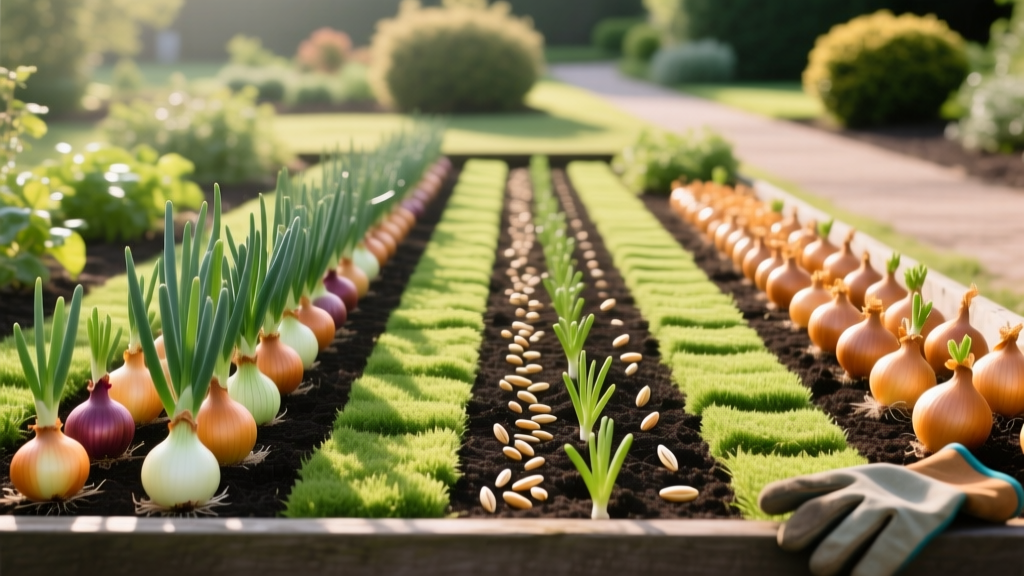
2026 Striped Potager Guide: Onion Sets Vs Seeds & Types
James MillerPublished
The Art of the Striped Potager: Translating Lawn Aesthetics to Edible Landscapes
For decades, the hallmark of a master groundsman has been the ability to manipulate turfgrass into striking, alternating light-and-dark stripes. This visual phenomenon, achieved by bending grass blades in opposing directions with a heavy roller, creates a sense of order, luxury, and meticulous care. But as we move through the 2026 growing season, a major trend in high-end landscape design is the translation of these pristine lawn striping techniques into the edible landscape. Welcome to the era of the 'Striped Potager.'
In a formal kitchen garden, visual structure is just as important as culinary yield. While lawns rely on the reflectivity of grass blades to create stripes, the aesthetic potager relies on plant architecture, color contrast, and razor-sharp row spacing to create geometric, striped patterns in the soil. Among all edible crops, onions are the undisputed champions of this design technique. Their upright, tubular foliage, uniform growth habits, and precise spacing requirements make them the ideal 'turf' for creating bold, topographical stripes across raised beds and in-ground rows.
However, achieving a flawless, striped onion bed requires more than just a string line and a trowel. It demands a deep understanding of horticultural science—specifically, the debate between planting onion sets versus seeds, and the critical importance of matching day-length types to your specific climate zone. Let us dig into the soil and explore how to cultivate the perfect striped onion patterns in 2026.
Photoperiodism: Matching Day-Length to Your Climate Zone
Before you can design your aesthetic patterns, you must select the right biological engine. Onions are photoperiodic, meaning their bulb initiation is triggered not by temperature or plant size, but by the number of daylight hours. Planting the wrong day-length type in your region will result in beautiful, thick green stripes of foliage, but a complete failure to produce the swollen, colorful bulbs at the base that anchor your design.
According to The Old Farmer's Almanac, understanding your latitude is the first step in onion cultivation. Here is how the three primary categories break down for the 2026 planting season:
| Onion Type | Daylight Required for Bulbing | Best Geographic Regions | 2026 Aesthetic Varieties |
|---|---|---|---|
| Short-Day | 10 to 12 hours | Southern US (Below 35th parallel) | Texas SuperSweet, Red Creole |
| Long-Day | 14 to 16 hours | Northern US & Canada (Above 35th parallel) | Redwing, Patterson, Copra |
| Day-Neutral | 12 to 14 hours | Transitional Zones & Nationwide | Candy, Sierra Blanca, Red Marble |
If you live in a northern state and plant short-day onions, the bulbs will attempt to form in early spring when the days are still short, resulting in tiny, marble-sized bulbs hidden beneath massive green tops. Conversely, planting long-day varieties in the deep south means the required 15 hours of daylight may never arrive, leaving you with nothing but green scallions. For the most reliable, uniform striping across diverse 2026 climate challenges, many master gardeners are turning to Day-Neutral (intermediate) varieties, which offer incredible flexibility and consistent bulbing regardless of minor latitude shifts.
Sets vs. Seeds: Choosing Your Striping Medium
Once you have selected the correct photoperiod type, you must decide on the planting method. In lawn care terms, planting onion sets is akin to laying down instant, thick-cut sod, while planting from seed is like precision drill-seeding a fine fescue blend. Both methods can yield stunning aesthetic stripes, but they require vastly different approaches to garden management.
Planting from Sets: The Bold, Instant Stripe
Onion sets are small, dormant bulbs that were grown the previous year and harvested early. When planted in your spring garden, they immediately push out thick, vigorous green shoots. For the landscape designer looking to establish bold, high-contrast stripes early in the season, sets are unparalleled. Because the sets are already uniform in size (usually around 3/4 inch in diameter), you can space them with mathematical precision, creating an immediate visual rhythm in the garden bed.
Furthermore, sets establish a canopy quickly, which helps shade out competing weeds. Weeds are the ultimate enemy of the striped potager; a single rogue dandelion can break the visual continuity of a carefully laid row. The primary drawback of sets is a limited selection of varieties and a slightly higher risk of bolting (premature flowering) if the 2026 spring experiences erratic temperature fluctuations.
Planting from Seeds: The Fine, Intricate Pattern
For gardeners who view their potager as a canvas for intricate, micro-geometric patterns, seeds are the superior medium. Growing from seed allows you to access hundreds of heirloom and hybrid varieties, enabling you to mix deep purples, bright whites, and golden yellows in alternating, razor-thin rows. Seeds also develop a stronger, deeper taproot system, which can lead to larger, more perfectly symmetrical bulbs at harvest time.
However, seeds demand patience and meticulous maintenance. According to the University of Minnesota Extension, onions grown from seed must be started indoors 8 to 10 weeks before the last frost date, or direct-seeded in the garden as soon as the soil can be worked. Direct seeding requires rigorous thinning. To maintain a crisp, lawn-like stripe, you must thin the seedlings to exactly 3 to 4 inches apart. If you neglect this step, the plants will crowd one another, resulting in twisted, overlapping foliage that destroys the clean lines of your design.
Step-by-Step: Designing and Planting the Perfect Alternating Stripes
To achieve the 'lawn striping' effect in your vegetable garden, you must rely on color contrast and impeccable soil preparation. Here is a masterclass blueprint for creating a striking, alternating onion bed in 2026.
Step 1: Soil Preparation and Bed Leveling
Just as a lawn requires a perfectly graded base to show off mowing stripes, your onion bed requires flawless tilth. Onions have shallow root systems and cannot penetrate compacted soil. Amend your raised beds or in-ground rows with 3 inches of well-rotted compost and a balanced, phosphorus-rich organic fertilizer. Rake the surface until it is as smooth and level as a golf green. Any dips or mounds in the soil will cast uneven shadows, ruining the optical illusion of your stripes.
Step 2: Laying the Lines
Do not rely on the naked eye. Use wooden stakes and mason's twine to mark out your rows. For a classic striped effect, space your rows exactly 12 inches apart. This tight spacing forces the tubular leaves to grow straight up, creating a dense, wall-like stripe of foliage.
Step 3: Alternating the Colors
The secret to the visual 'stripe' is contrasting colors. Plant Row 1 entirely with a deep red variety like 'Redwing' (Long-Day) or 'Red Creole' (Short-Day). Plant Row 2 with a pristine white variety like 'Sierra Blanca' or 'Snow White'. Continue alternating red and white rows across the entire bed. As the bulbs begin to swell at the soil line in early summer, the bed will transform into a breathtaking topographical map of alternating crimson and pearl stripes.
Step 4: Precision Planting
If using sets, press them into the soil so that the tip is just barely visible above the surface, spaced 4 inches apart within the row. If using transplants from seed, bury them 1 inch deep, ensuring the delicate white shank is straight and not bent, which would cause the eventual bulb to grow in a misshapen, curved manner.
Maintaining the Crisp Lines Through the 2026 Season
The aesthetic appeal of a striped potager relies entirely on maintenance. An overgrown, weedy onion bed looks no better than an unmowed, neglected lawn.
- Shallow Cultivation: Onions are poor competitors. Hand-pull weeds or use a shallow stirrup hoe to sever weed roots just below the soil surface. Never deep-till near the rows, as you will slice through the shallow onion roots and disrupt the uniform swelling of the bulbs.
- Consistent Moisture: To ensure every bulb in your stripe swells at the exact same rate, provide 1 inch of water per week. Drip irrigation lines laid precisely down the center of each row are highly recommended. Overhead watering can mat the tubular foliage, causing the 'stripes' to lean and lose their vertical architecture.
- Foliar Feeding: In 2026, many organic gardeners are utilizing liquid kelp or fish emulsion sprays every two weeks during the vegetative growth phase. This keeps the foliage a deep, uniform, vibrant green, enhancing the contrast against the dark mulch or soil between the rows.
A well-designed potager is a living tapestry. By treating your onion rows with the same geometric reverence that a groundsman applies to a championship turfgrass lawn, you elevate vegetable gardening from a mere chore to a high art form.
Conclusion
Whether you choose the instant gratification of sets or the intricate customization of seeds, onions offer a unique opportunity to merge agricultural productivity with high-end landscape design. By carefully selecting the correct day-length type for your region and executing a disciplined, color-alternating planting strategy, your 2026 garden will boast stripes that rival the most manicured estate lawns. Grab your twine, prepare your soil, and start designing your masterpiece today.
