Gardening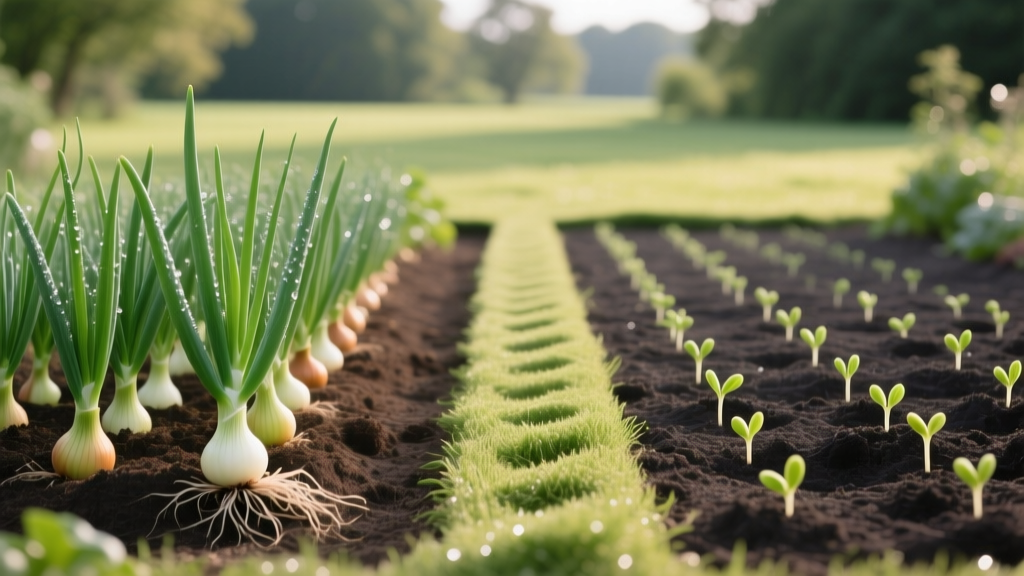
2026 Onion Guide: Sets vs Seeds & Lawn Edge Mowing Care
Robert HayesPublished
As we navigate the 2026 gardening season, the integration of edible landscapes into traditional turfgrass areas has become a dominant trend in home landscaping. However, growing vegetables adjacent to a manicured lawn presents unique challenges, particularly for shallow-rooted crops like onions (Allium cepa). Onions are notoriously poor competitors against aggressive grass rhizomes and broadleaf weeds. Furthermore, the mowing techniques and patterns you employ around your garden borders can make or break your onion harvest. In this comprehensive 2026 guide, we will break down the critical decisions between growing onions from sets versus seeds, explore the science of long-day versus short-day varieties, and detail the specific lawn mowing patterns required to protect your allium beds from compaction, clipping smothering, and grass encroachment.
The Great Onion Debate: Sets vs. Seeds in 2026
When planning your 2026 vegetable garden, the first decision you must make is whether to plant onion sets or start from seed. Both methods have distinct advantages, and your choice will heavily influence your garden layout and the adjacent lawn maintenance schedule.
Growing from Sets
Onion sets are small, dormant, immature bulbs that were grown the previous year and harvested early. They are the most popular choice for home gardeners because they offer a massive head start. Planted directly into the garden in early spring, sets bypass the fragile seedling stage and establish themselves quickly, which is vital for outcompeting early spring weeds near lawn edges. In 2026, the cost of organic onion sets has stabilized, making them an economical choice for border planting. However, sets are prone to 'bolting' (going to seed prematurely) if exposed to fluctuating early-spring temperatures, and the variety selection is generally limited to standard yellow, white, and red storage onions.
Growing from Seed
Starting onions from seed offers an unparalleled selection of heirloom and hybrid varieties, including specialized gourmet types that are rarely available as sets. Seeds are also significantly cheaper per plant. The drawback is the time and labor investment. Onion seeds must be started indoors 10 to 12 weeks before your last frost date. Because seedlings are incredibly thin and fragile, they require meticulous weeding and consistent moisture. If you are planting an onion bed directly adjacent to a turfgrass lawn, growing from seed means you must be hyper-vigilant about lawn edge encroachment, as a single invasive Bermuda or Kentucky Bluegrass rhizome can easily choke out a young onion seedling.
Understanding Photoperiods: Long-Day vs. Short-Day Onions
One of the most common mistakes gardeners make is purchasing the wrong onion type for their geographic latitude. Onions are photoperiodic, meaning bulb initiation is triggered by the length of daylight, not by the age of the plant or the temperature. According to the University of Minnesota Extension, planting a short-day onion in a northern climate will result in premature, tiny bulbs, while planting a long-day onion in the south will yield massive tops but no bulbs at all.
- Long-Day Onions: Require 14 to 16 hours of daylight to form bulbs. These are the only types that should be grown in the Northern United States and Canada (above the 35th parallel).
- Short-Day Onions: Require only 10 to 12 hours of daylight to trigger bulbing. These are ideal for the Southern United States (below the 35th parallel), where summer days are not long enough to trigger long-day varieties.
- Day-Neutral (Intermediate) Onions: Require 12 to 14 hours of daylight and can be grown successfully across most of the country, making them a versatile choice for 2026 gardeners in transitional zones.
| Onion Type | Daylight Requirement | Ideal Region | Top 2026 Varieties |
|---|---|---|---|
| Long-Day | 14-16 Hours | North (Above 35th Parallel) | Patterson, Red Wing, Copra |
| Short-Day | 10-12 Hours | South (Below 35th Parallel) | Texas Supersweet, Vidalia, Red Creole |
| Day-Neutral | 12-14 Hours | Transitional / Nationwide | Candy, Red Stockton, Sierra Blanca |
Mowing Techniques & Patterns to Protect Your Onion Beds
Because onions have shallow, sparse root systems that reside in the top 18 inches of soil, they are highly sensitive to the micro-environment created by adjacent lawns. The way you mow the grass surrounding your vegetable beds directly impacts soil compaction, moisture retention, and disease pressure on your onions. Implementing specific mowing patterns in 2026 will ensure your alliums thrive.
The Perimeter Discharge Pattern
When mowing the lawn immediately adjacent to your onion beds, the direction of your mower's clipping discharge is critical. Never side-discharge grass clippings toward the onion bed. Thick layers of fresh grass clippings can mat down, creating an impermeable barrier that blocks water from reaching the shallow onion roots. More importantly, decaying clippings resting against the necks of the onion plants create a humid microclimate that invites Botrytis leaf blight and neck rot. Always employ a perimeter discharge pattern where the mower's chute is directed away from the garden bed, dispersing clippings back onto the established turf where they can be safely mulched and broken down by soil microbes.
Anti-Compaction Turning Zones
Soil compaction is the silent killer of large onion bulbs. Bulbs need loose, friable soil to expand laterally. When operating heavy zero-turn mowers or garden tractors, avoid making tight, aggressive turns on the turf strip immediately bordering your raised beds or in-ground onion rows. The sheer weight of the mower, combined with the tearing action of the tires during a turn, compresses the soil profile deep into the root zone of the adjacent onions. To prevent this, establish an 'Anti-Compaction Turning Zone.' Execute your mower turns at least four to five feet away from the garden edge, and use a slow, wide arc when approaching the perimeter. For robotic mowers programmed in 2026, ensure the boundary wire is set back at least 12 inches from the bed edge, and use a string trimmer for the final gap to prevent the robot's repetitive edge-tracking from compacting the soil.
The 'Halftone' Mowing Height Strategy
Turfgrass adjacent to vegetable beds often suffers from edge stress due to heat reflection and competition for water. To protect your onions from excessive moisture theft by the lawn, utilize a halftone mowing strategy. Keep the main body of your lawn mowed at its standard height (e.g., 2.5 to 3 inches for fescue), but raise the mower deck one notch higher for the final two passes parallel to the onion bed. Taller grass at the perimeter shades the soil line, reducing evaporation and keeping the soil temperature cooler. This helps maintain consistent moisture levels in the adjacent onion bed, which is crucial during the bulbing phase in late spring and early summer.
Soil Preparation and Planting Timelines
Whether you are planting sets or seeds, proper soil preparation is non-negotiable. The North Carolina State University Extension recommends a soil pH between 6.0 and 6.8 for optimal nutrient uptake. Before planting, amend the bed with generous amounts of well-rotted compost to improve drainage and soil structure. Avoid high-nitrogen synthetic fertilizers, which will promote excessive top growth at the expense of bulb development. Instead, work in a balanced organic fertilizer or bone meal to provide the phosphorus necessary for strong root and bulb formation.
Plant onion sets 1 to 2 inches deep, just deep enough so the pointed tip is barely visible above the soil line. Space them 4 to 6 inches apart in rows that are 12 to 18 inches apart. If you are starting from seed, sow them 1/4 inch deep in indoor trays in late winter, and harden them off before transplanting them into the garden 4 weeks before your last expected frost. According to The Old Farmer's Almanac, consistent watering is vital; onions require about 1 inch of water per week, but the soil should never be waterlogged.
Conclusion
Successfully growing onions in 2026 requires more than just picking the right seed or set; it demands a holistic approach to garden and lawn management. By understanding the photoperiod requirements of long-day and short-day varieties, and by adapting your mowing techniques to protect the delicate soil structure and foliage of your onion beds, you can achieve a bountiful harvest. Keep your mower discharge directed away from the beds, minimize edge compaction, and maintain rigorous weed control to ensure your onions have the space and resources they need to form large, healthy, and flavorful bulbs.
