Pest Control
Organic Grub Control: Beneficial Nematodes vs Milky Spore
The Hidden Threat Beneath Your Lawn
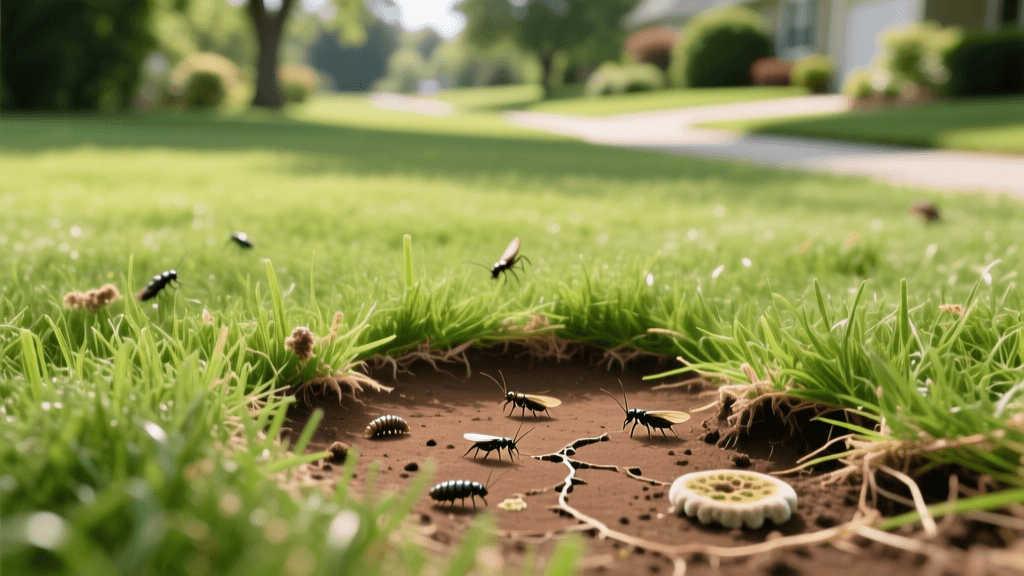
When your lawn develops irregular brown patches that peel back like loose carpet, you are likely dealing with a white grub infestation. These C-shaped larvae of Japanese beetles, June bugs, and European chafers feed aggressively on grassroots, severing the plant's ability to absorb water and nutrients. While the instinct of many homeowners is to reach for synthetic chemical pesticides, these products often carry severe ecological consequences. Integrated Pest Management (IPM) offers a superior, eco-friendly alternative that protects your soil biology, local pollinators, and waterways.
According to Penn State Extension, white grubs can cause catastrophic damage to turfgrass if left unchecked, but biological controls have proven highly effective when applied correctly. In the realm of sustainable lawn care, two biological heavyweights dominate the conversation: beneficial nematodes and milky spore disease. Both offer a natural way to eradicate grubs, but they function very differently in the soil ecosystem.
The Case Against Synthetic Grub Killers
Traditional grub control relies heavily on neonicotinoids, such as imidacloprid, or anthranilic diamides like chlorantraniliprole. While effective, these systemic chemicals linger in the soil and can be taken up by the nectar and pollen of nearby flowering plants and weeds, posing a documented risk to vital pollinator populations. Furthermore, broad-spectrum chemical insecticides indiscriminately wipe out beneficial soil organisms, including earthworms and predatory beetles, leading to a sterile soil environment that is actually more susceptible to future pest outbreaks. Transitioning to organic, biological controls restores the natural balance of your lawn's ecosystem.
Beneficial Nematodes: The Microscopic Hunters
Beneficial nematodes are microscopic, unsegmented roundworms that naturally occur in soils worldwide. For grub control, they act as lethal parasites. Once applied to the lawn, these microscopic hunters actively seek out soil-dwelling pests, entering the grub through natural body openings. Inside the host, the nematodes release a symbiotic bacteria that kills the grub within 48 hours. The nematodes then reproduce inside the dead carcass, eventually bursting out to hunt for new prey.
Selecting the Right Strain
Not all nematodes are created equal. The Environmental Protection Agency (EPA) classifies them as biological pesticides, and selecting the correct species is critical for success. For white grubs, the most effective strain is Heterorhabditis bacteriophora (often abbreviated as Hb). Unlike other strains that wait for pests to bump into them, Hb nematodes are active "cruisers" that can move through the soil profile to track down deep-feeding grubs.
Application Protocol and Timing
Nematodes are living organisms and require careful handling. They must be stored in a refrigerator (between 35°F and 40°F) until the exact moment of application and have a shelf life of only 2 to 3 weeks.
- Timing: Apply in late summer or early fall (August to September) when grubs are young, actively feeding, and close to the soil surface.
- Soil Temperature: Soil must be between 60°F and 85°F.
- Preparation: Water your lawn with 1/4 inch of water before application to moisten the soil and thatch layer.
- Application Rate: Apply 1 to 2 million infective juveniles per 1,000 square feet.
- Method: Mix the nematodes in a watering can or hose-end sprayer. Apply during the early evening or on a cloudy day, as ultraviolet (UV) light will kill them on contact.
- Post-Application: Immediately water the lawn with another 1/4 inch of water to wash the nematodes off the grass blades and into the soil.
Cost Estimate: Expect to pay $30 to $50 for a package containing 10 million nematodes, which is sufficient to treat 5,000 to 10,000 square feet. Because they do not persist long-term in harsh conditions, annual applications are usually required for heavy infestations.
Milky Spore: The Long-Term Biological Solution
Milky spore disease is caused by the bacterium Paenibacillus popilliae. Unlike nematodes, which hunt a variety of soil pests, milky spore is highly specific: it only affects Japanese beetle grubs (Popillia japonica). When a Japanese beetle grub ingests the spores while feeding on grassroots, the bacteria multiply rapidly inside its digestive tract, eventually entering the hemolymph (insect blood). The grub's blood turns a milky white, leading to death within 7 to 21 days. As the carcass decomposes, it releases billions of new spores into the soil, creating a self-sustaining biological barrier.
Understanding Its Limitations
As noted by Ohio State University Extension, milky spore is an incredible long-term tool, but it has distinct limitations. First, it is entirely ineffective against European chafers, Oriental beetles, and June bugs. If your lawn is suffering from a mixed-species grub population, milky spore alone will not save your turf. Second, it takes time to establish. While nematodes kill in 48 hours, milky spore can take 2 to 5 years to build up to a threshold that provides complete, natural suppression of the Japanese beetle population in your yard.
Application Protocol and Timing
Milky spore is sold as a dry powder and is much easier to store and handle than live nematodes.
- Timing: Apply in spring or fall when Japanese beetle grubs are actively feeding.
- Method: Use a specialized drop applicator or apply manually by dropping 1 teaspoon of powder every 4 feet in a grid pattern across your lawn.
- Activation: Water the powder into the soil gently so it is not washed away, but avoid heavy irrigation that might cause runoff.
- Chemical Warning: Do not apply synthetic chemical grub killers for at least two weeks before or after applying milky spore. If the chemicals kill the grubs too quickly, the spores cannot multiply and establish in the soil.
Cost Estimate: A 10-ounce box of milky spore powder costs around $40 to $60 and treats 2,500 square feet. While the upfront cost per square foot is higher than nematodes, a single successful application can protect your lawn for 10 to 15 years, making it highly cost-effective over time.
Head-to-Head Comparison: Nematodes vs. Milky Spore
To help you decide which biological control is right for your specific lawn care needs, review the comparison chart below:
| Feature | Beneficial Nematodes (Hb Strain) | Milky Spore Disease |
|---|---|---|
| Target Pests | Japanese beetles, June bugs, European chafers, Oriental beetles, weevils | Japanese beetle grubs ONLY |
| Speed of Control | Rapid (kills grubs within 48 hours) | Slow (takes 7-21 days to kill; years to establish) |
| Longevity in Soil | Short-term (requires annual reapplication) | Long-term (10-15 years once established) |
| Storage Requirements | Must be refrigerated; short shelf life | Room temperature; multi-year shelf life |
| Application Ease | Moderate (requires careful mixing, UV avoidance) | Easy (simple grid application of dry powder) |
| Upfront Cost (per 5k sq ft) | ~$30 - $50 | ~$80 - $120 |
Building an Integrated Eco-Friendly Defense
For the ultimate sustainable lawn care strategy, consider combining both methods alongside cultural controls. If you have a severe, active infestation of mixed grub species causing immediate damage, apply Heterorhabditis bacteriophora nematodes in late summer for a rapid biological knockdown. Once the immediate threat is neutralized and the soil has recovered, apply milky spore the following spring to establish long-term immunity against Japanese beetles.
Furthermore, biological controls work best in lawns with healthy, uncompacted soil. Core aeration reduces thatch buildup, allowing nematodes and milky spore to reach the soil surface more effectively. Maintain a mowing height of at least 3 inches to encourage deep, resilient root systems that can tolerate minor grub feeding without showing visible stress.
"A healthy lawn is the first line of defense against pests. By fostering robust soil biology through organic amendments and proper watering, you create an environment where beneficial organisms thrive and naturally suppress pest populations."
Final Thoughts on Sustainable Lawn Care
Transitioning away from synthetic pesticides is one of the most impactful decisions you can make for your local environment. By leveraging the predatory power of beneficial nematodes and the long-lasting bacterial suppression of milky spore, you can achieve a pristine, grub-free lawn without sacrificing the health of your soil or the safety of local wildlife. Embrace the science of Integrated Pest Management, and let nature do the heavy lifting beneath your turf.