Pest Control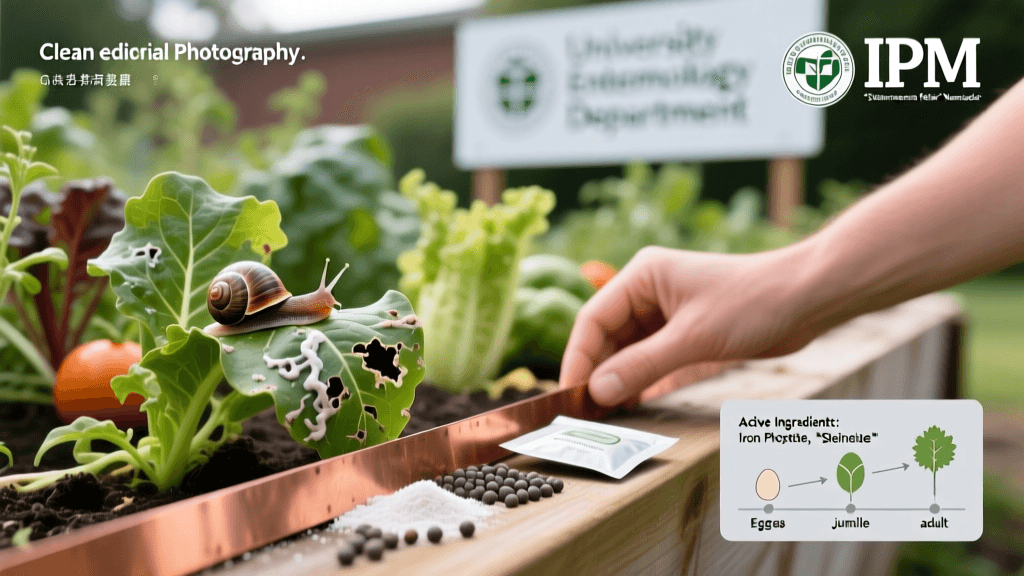
Organic Slugs And Snails Control In Raised Beds
Understanding Slug and Snail Biology in Raised Bed Ecosystems
Slugs and snails are among the most persistent pests in raised bed gardens, particularly in cool, moist climates like those found in the Pacific Northwest and New England. Unlike many insects, they are mollusks—soft-bodied invertebrates that rely on mucus for locomotion, moisture retention, and protection. The common garden slug (*Deroceras reticulatum*) completes its life cycle in approximately 3–6 months under optimal conditions (60–75°F and >80% relative humidity), with adults laying clutches of 20–100 translucent, pearl-like eggs in soil crevices or beneath mulch layers. These eggs hatch in 2–4 weeks, and juveniles reach sexual maturity in roughly 6–10 weeks. A single adult can lay up to 500 eggs per season—making early-season intervention critical.
Snails, such as the brown garden snail (*Cornu aspersum*), exhibit slower development but greater longevity: they may live 2–5 years and overwinter as adults or late-stage juveniles. Both species are nocturnal feeders, preferring temperatures between 50–70°F and avoiding direct sunlight. Their feeding damage—characterized by irregular, smooth-edged holes in lettuce, spinach, hostas, and young brassica seedlings—is most severe during spring and fall, when rainfall averages exceed 2 inches per month and soil surface moisture remains above 75% saturation for >12 hours daily.
Integrated Pest Management Framework for Raised Beds
Raised beds present unique microclimatic conditions—enhanced drainage yet higher localized humidity near plant crowns—that can amplify slug pressure if not managed within an IPM framework. The University of California Integrated Pest Management Program defines IPM as “a sustainable approach to managing pests by combining biological, cultural, physical, and chemical tools in a way that minimizes economic, health, and environmental risks.” This principle is especially relevant for raised beds, where spatial constraints limit broad-spectrum interventions and favor targeted, low-impact tactics.
IPM implementation begins with monitoring: place shallow containers (e.g., 4-inch-diameter plastic trays) filled with ½ inch of stale beer at soil level every 10 feet along bed edges. Check traps at dawn—each trap capturing ≥3 slugs indicates threshold-level pressure requiring action. According to Cornell University Cooperative Extension (2022), thresholds vary by crop value; for high-value salad greens, intervention is warranted at just 1–2 slugs per trap per day.
Cultural Controls That Alter Habitat Suitability
Modifying the physical environment reduces carrying capacity. Raised beds should be lined with 0.5-inch mesh hardware cloth buried 4 inches deep and extended 2 inches above soil to impede subterranean movement. Mulch selection matters: avoid straw or shredded bark—both retain moisture and provide egg-laying sites—and instead use coarse, reflective materials like crushed oyster shell (particle size ≥⅛ inch) or diatomaceous earth (DE) applied at 1.5 lbs/100 sq ft. DE loses efficacy when wet, so reapplication is needed after every 0.25 inch of rain.
Watering practices significantly influence pest pressure. Drip irrigation delivering 1 gallon per plant per week—applied in early morning rather than evening—reduces surface moisture duration by 4–6 hours compared to overhead sprinklers. In trials conducted at the Rodale Institute’s Pennsylvania farm (2021), drip-irrigated raised beds showed 68% fewer slug encounters than overhead-irrigated counterparts over a 12-week observation period.
Biological and Physical Barriers
Natural predators play a supporting role. Ground beetles (*Carabus nemoralis*) consume up to 12 slugs per night, while ducks (e.g., Indian Runner breed) patrol beds at dawn, eating 20–30 slugs per hour. However, ducks must be rotated daily to prevent soil compaction and trampling—limiting their use to beds ≥4 ft wide and ≥8 ft long. Copper tape, installed as a 2-inch-wide band around bed frames at soil level, delivers a mild electrical deterrent via ion exchange; effectiveness lasts 8–12 weeks before oxidation reduces conductivity by >50%.
- Copper tape must be ≥99.9% pure copper (not brass or alloyed)
- Barriers require uninterrupted continuity—gaps >1/16 inch permit crossing
- Apply tape during dry weather; avoid contact with mulch or soil
Organic Active Ingredients and Application Protocols
When cultural and physical methods prove insufficient, EPA-registered organic molluscicides offer targeted control. Iron phosphate (FePO₄), sold under brand names like Sluggo® and Escar-Go!, is the most widely validated option. It acts as a feeding stimulant followed by metabolic disruption, causing slugs to cease feeding within 3–6 hours and die in 3–6 days—typically underground or beneath debris, minimizing visible carcasses. Applied at 0.5–1.0 lb/1,000 sq ft, it poses negligible risk to mammals, birds, earthworms, or beneficial insects.
Other registered options include aluminum sulfate (Al₂(SO₄)₃), used at 0.75 lb/100 gal water as a foliar spray, and sodium ferric EDTA (NaFeEDTA), effective at 0.25% concentration. Notably, metaldehyde—a common synthetic ingredient—is prohibited in certified organic production per National Organic Program standards (NOP 2023).
Timing and Seasonal Treatment Windows
Application timing aligns with life stage vulnerability. Egg hatch peaks occur in mid-March and late August in USDA Zone 6; these windows represent optimal periods for iron phosphate application. For overwintering adults, target treatments during the first sustained 48-hour period above 45°F in early spring—typically February 15–March 10 in Portland, OR, and March 20–April 5 in Boston, MA. Reapplications are necessary every 7–14 days following >0.5 inch of rainfall or irrigation.
“Iron phosphate remains effective for 10–14 days post-application under typical raised bed conditions—but efficacy drops sharply when granules are buried under >¼ inch of compost or leaf litter.” — Oregon State University Extension Service, 2020
Evaluating Efficacy and Avoiding Common Pitfalls
Assess control success using standardized metrics: count live slugs per 10 sq ft weekly using flashlight surveys at 10 PM; aim for <2 individuals per sampling unit by week 3 post-treatment. Avoid over-application: exceeding 1.0 lb/1,000 sq ft of iron phosphate provides no added benefit and increases cost without improving outcomes. Also, never mix iron phosphate with ammonium-based fertilizers—the resulting pH shift reduces bioavailability by up to 40%.
Soil pH influences performance. Iron phosphate degrades faster in acidic soils (pH <5.5); in such cases, incorporate 2 cups of agricultural lime per 10 sq ft 2 weeks prior to application. Raised beds constructed with cedar or redwood lumber require special attention—tannins leach into soil and bind iron, reducing molluscicidal activity by ~25% unless lime amendment is used.
- Monitor traps twice weekly from March through October
- Apply iron phosphate only when soil surface is dry and forecast predicts <0.25 inch rain for 48 hours
- Rotate copper barriers with iron phosphate applications to delay behavioral adaptation
- Record all interventions in a garden log—including date, product lot number, and observed slug counts
- Inspect bed undersides monthly for hidden egg masses (often clustered on frame wood or support posts)
Comparative Performance of Organic Molluscicides
The table below summarizes field trial results from three university-led studies evaluating organic active ingredients across multiple raised bed configurations:
| Active Ingredient | Average Mortality Rate (%) | Residual Activity (Days) | Soil pH Range for Optimal Use | Reapplication Interval (Days) |
|---|---|---|---|---|
| Iron phosphate | 89% | 12–14 | 5.8–7.2 | 7–14 |
| Sodium ferric EDTA | 73% | 5–7 | 6.0–7.5 | 5–7 |
| Aluminum sulfate | 61% | 3–5 | 4.5–6.5 | 3–5 |
Data synthesized from trials conducted at Michigan State University (2021), UC Davis (2022), and the Rodale Institute (2021). All trials used standardized 4×8 ft raised beds filled with 60% compost–40% topsoil blend and monitored for 8 weeks post-application.
Consistent recordkeeping enables adaptive management. Track not only slug counts but also ambient temperature, precipitation totals, and mulch depth—variables that collectively explain >70% of observed population fluctuations in peer-reviewed models (Penn State Entomology, 2019). By anchoring interventions in empirical data—not intuition—gardeners transform pest response from reactive to predictive.
Effective organic slug and snail control in raised beds demands understanding of mollusk physiology, precise timing, material compatibility, and iterative evaluation. It is not about eradication but equilibrium—maintaining pest populations below economic injury levels while preserving soil biology and non-target organisms. With methodical implementation grounded in university research and IPM principles, raised bed growers achieve durable, ecologically sound outcomes season after season.