Home & Garden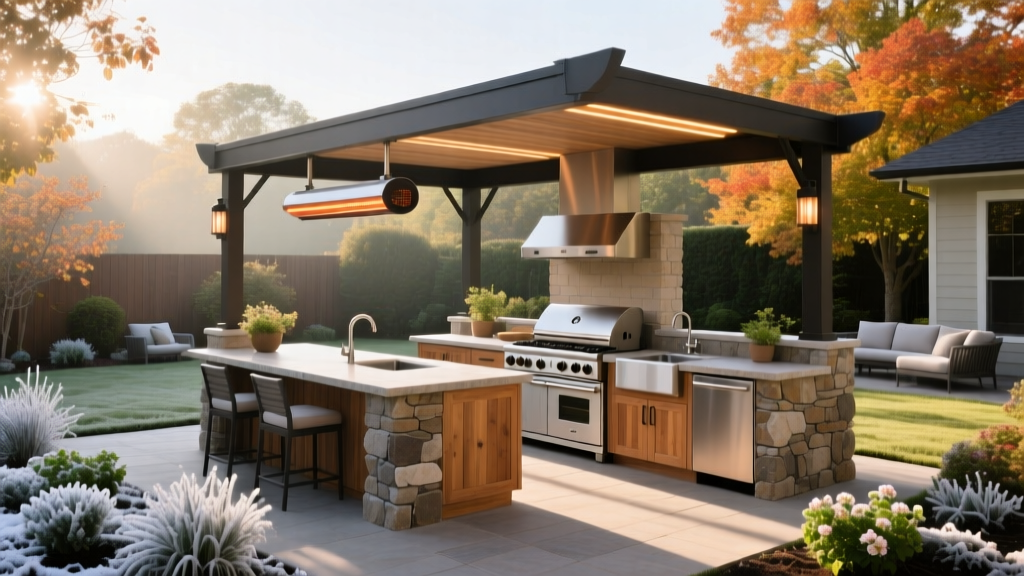
Planning a Four-Season Outdoor Kitchen: Layouts & Costs
Sarah ChenPublished
Designing an Outdoor Kitchen for Year-Round Entertaining
The modern backyard is no longer just a summer retreat; it is an extension of the home's living space. Bridging the gap between indoor comfort and outdoor ambiance requires meticulous planning, especially when designing a four-season outdoor kitchen. Whether you are navigating the freezing winters of the Northeast or the mild, rainy seasons of the Pacific Northwest, creating an outdoor culinary space that withstands the elements while remaining functional year-round is a highly rewarding investment. This comprehensive design guide will walk you through spatial planning, weatherproof material selection, climate control integration, and budgeting for a resilient outdoor kitchen.
Spatial Planning and the Outdoor Work Triangle
Just like an indoor kitchen, the foundation of a successful outdoor cooking space relies on an efficient layout. The classic "work triangle"—connecting the sink, the refrigerator, and the primary cooking zone—must be adapted for the outdoors. In a four-season design, you must also account for wind barriers, sun angles, and traffic flow from the indoor kitchen.
Standard Dimensions for Ergonomic Design
- Base Countertop Height: 36 inches is the standard for food prep zones, matching typical indoor dimensions.
- Bar Seating Height: 42 inches allows for comfortable barstool seating and hides prep clutter from guests.
- Counter Depth: A minimum of 24 inches is required for standard built-in grills, but extending to 30 inches provides a landing zone for hot platters.
- Aisle Clearance: Maintain at least 48 inches of clearance between opposing counters to allow multiple cooks to move safely, especially when handling hot grates or heavy cast iron.
Orientation and Passive Solar Planning
For a four-season kitchen, orient your primary cooking and seating areas toward the southern or southwestern exposure to maximize passive solar heat during the colder months. Position solid structural walls or privacy screens made of cedar or composite lumber on the north and west sides to block harsh winter winds and driving rain.
Weatherproof Material Selection
When planning a four-season outdoor kitchen, material durability is non-negotiable. Materials must withstand UV radiation, freeze-thaw cycles, and high humidity without warping, cracking, or rusting. Below is a comparison of premium materials suited for year-round exterior use.
| Material | Best Application | Estimated Cost (per sq. ft.) | Maintenance Level | Freeze-Thaw Durability |
|---|---|---|---|---|
| Dekton (Ultra-Compact) | Countertops | $65 - $120 | Very Low | Excellent (Non-porous) |
| 304-Grade Stainless Steel | Cabinetry & Appliances | $150 - $300 (linear) | Low (Requires polishing) | Excellent (Rust-resistant) |
| Marine-Grade Polymer | Cabinet Boxes & Doors | $100 - $200 (linear) | Very Low | Excellent (Impervious to water) |
| Honed Granite | Countertops | $50 - $100 | Medium (Annual sealing) | Good (If properly sealed) |
| Pour-in-Place Concrete | Countertops & Bases | $80 - $150 | High (Frequent sealing) | Poor (Prone to micro-cracking) |
The Case for Dekton and Marine Polymers
While granite is a traditional favorite, ultra-compact surfaces like Dekton are rapidly becoming the industry standard for outdoor kitchens. Manufactured through a process that mimics the metamorphic change of natural stone, Dekton is virtually non-porous, meaning water cannot penetrate the surface, freeze, and cause cracking. Similarly, marine-grade polymer cabinetry (such as those manufactured by NatureKast) is impervious to moisture, ensuring that your cabinet boxes will not rot, swell, or harbor mold during damp autumn and winter months.
Overhead Protection and Climate Control
To truly utilize your outdoor kitchen in November or March, overhead protection and active heating are mandatory. A four-season design moves beyond simple patio umbrellas and embraces architectural integration.
Louvered Pergola Systems
Motorized louvered pergolas, such as the StruXure or Azenco systems, offer unparalleled climate control. The extruded aluminum louvers can be angled to let in low winter sun for passive heating, or closed completely to form a watertight seal against rain and snow. When paired with integrated ZIP-style solar screens, you can create a semi-enclosed room that traps heat and blocks biting winds.
Infrared Heating Solutions
For active heating, gas or electric infrared heaters are vastly superior to traditional patio fire pits, as they heat objects and people rather than wasting energy heating the moving air. The Bromic Tungsten Smart-Heat series is a premier choice for high-end designs. A 6000W electric infrared heater can effectively warm a 10x10 foot zone, and when integrated with a smart home controller, you can pre-heat your outdoor dining area from your phone before stepping outside.
Cold-Climate Plumbing and Winterization
Water is the enemy of a neglected outdoor kitchen. If you plan to use your sink or ice maker year-round, or even just want to ensure your plumbing survives the winter, specialized rough-in plumbing is required.
According to the University of Minnesota Extension, proper winterization of outdoor water lines requires shutting off the interior valve, draining the exterior pipe, and installing frost-free sillcocks to prevent catastrophic freeze-thaw damage. Furthermore, all exterior PEX or copper lines must be pitched at a minimum slope of 1/4 inch per foot toward a drain valve to ensure complete evacuation of water.
Designing for Winter Use
If you intend to wash dishes in January, your outdoor kitchen must be built against the heated envelope of your home. The plumbing wall should be fully insulated and backed by the home's interior heating system. Alternatively, install a small, point-of-use electric tankless water heater inside an insulated, weatherproof cabinet to provide instant hot water without running a hot water line from the interior of the house.
Hardscaping and Permeable Flooring
The ground beneath your outdoor kitchen plays a vital role in both design and environmental sustainability. Traditional poured concrete patios can create massive runoff issues and are prone to frost heave in colder climates. Instead, consider permeable paver systems like Belgard's Aqua Roc. These interlocking pavers allow rainwater and snowmelt to percolate through the joints and into a gravel sub-base, reducing the burden on municipal storm drains and preventing icy puddles from forming around your cooking stations. For a more luxurious, slip-resistant surface, large-format porcelain pavers laid over a modular pedestal system (such as the Bison Innovative Products system) allow for perfect leveling and easy access to utility lines hidden beneath the floor.
Smart Home Integration and Ambient Lighting
Bridging indoor and outdoor living means extending your smart home ecosystem into the yard. Proper lighting design ensures safety and sets the mood as the sun sets early in the winter months.
- Task Lighting: LED under-counter strip lighting (IP65 rated) ensures safe food prep and knife work.
- Ambient Lighting: Warm-temperature (2700K) LED hardscape fixtures built directly into the retaining walls or seating ledges.
- Smart Controls: Integrate your outdoor lighting, louvered roof, and infrared heaters into a single hub like Lutron Caseta or Control4, allowing you to trigger a "Winter Entertaining" scene with a single voice command.
- Grill Tech: Incorporate wireless, Wi-Fi-enabled meat probes like the MEATER Plus, which allows you to monitor brisket or roasting temperatures from your living room while escaping the cold.
Budgeting and Cost Breakdown
Designing a four-season outdoor kitchen is a significant capital improvement that routinely yields a high return on investment by expanding the usable square footage of your home. Below is a realistic budget breakdown for a mid-to-high-end 12-foot linear kitchen setup in a cold-climate region.
- Permeable Hardscape Base & Pedestal System: $4,500 - $7,000
- Marine Polymer Cabinetry & 304 SS Doors: $6,000 - $9,000
- Dekton Countertops (Fabrication & Install): $4,000 - $6,500
- Premium Appliances (Built-in Grill, Drawer Fridge, Ice Maker): $5,000 - $10,000
- Motorized Louvered Pergola (12x14 footprint): $12,000 - $18,000
- Infrared Heating & Smart Lighting: $3,500 - $5,500
- Plumbing, Gas Rough-in, & Winterization Valves: $2,500 - $4,000
Total Estimated Investment: $37,500 - $60,000. While the upfront costs are substantial, the ability to host Thanksgiving appetizers outdoors or enjoy a crisp December evening with family transforms the backyard from a seasonal luxury into a daily living space.
Final Thoughts on Four-Season Planning
A successful four-season outdoor kitchen requires a holistic approach to design. By prioritizing the outdoor work triangle, investing in non-porous and rust-proof materials, integrating smart climate control, and adhering to strict cold-weather plumbing standards, you can create a resilient, beautiful space that defies the calendar. Consult with a certified landscape architect or a specialized outdoor kitchen designer to ensure your local building codes, frost-line depths, and wind-load requirements are meticulously addressed before breaking ground.
