Home & Garden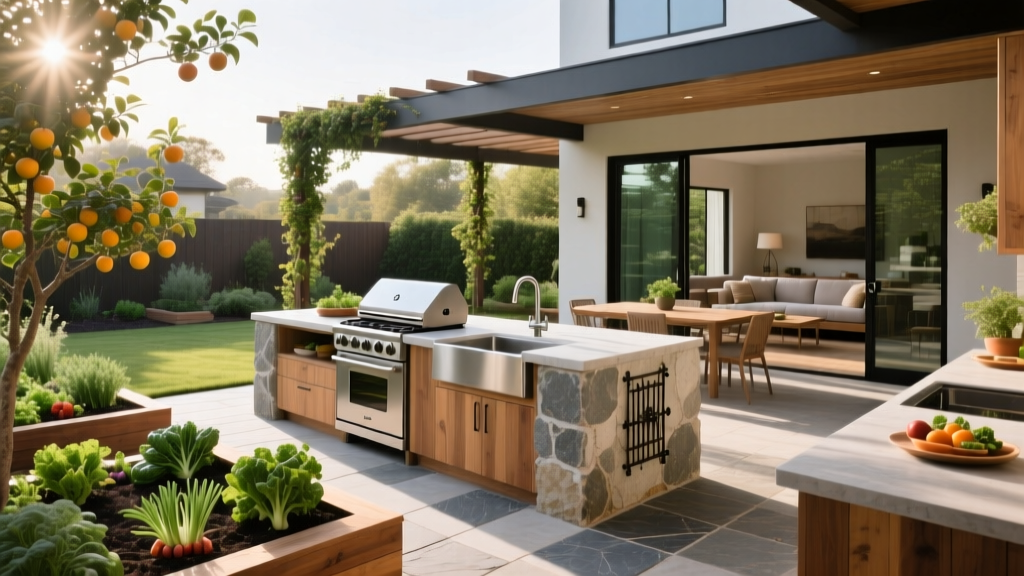
Plan an Outdoor Kitchen for Garden-to-Table Cooking
Emily WatsonPublished
The Rise of the Garden-to-Table Outdoor Kitchen
The modern home landscape is no longer just a place to mow and maintain; it is a vital extension of your indoor living space. For home chefs and gardening enthusiasts, the ultimate luxury is a seamless transition from the soil to the skillet. Designing an outdoor kitchen specifically tailored for garden-to-table cooking requires more than just dropping a stainless steel grill onto a concrete pad. It demands a thoughtful integration of culinary workflow, durable material planning, and direct access to your edible landscape. By bridging the gap between your vegetable beds and your patio, you can create a highly functional, energy-efficient, and deeply rewarding outdoor living environment.
Strategic Zoning: The Outdoor Work Triangle
When planning your outdoor kitchen layout, the traditional indoor 'work triangle' (the distance between the sink, stove, and refrigerator) must be adapted for the outdoors and expanded to include a fourth crucial point: the garden harvest zone. According to the National Kitchen and Bath Association (NKBA), outdoor kitchens should be divided into distinct functional zones to prevent cross-contamination and optimize workflow.
- The Hot Zone: Dedicated to cooking appliances. Plan for at least 36 inches of heat-resistant landing space on both sides of your primary grill or Kamado smoker. Ensure this zone is positioned away from prevailing winds to prevent smoke from blowing into the dining area.
- The Cold Zone: Housing your outdoor refrigerator, ice maker, and beverage storage. Keep this zone shaded and away from the direct heat of the cooking area to maintain energy efficiency and reduce strain on the compressor.
- The Prep Zone: Requires a minimum of 24 to 36 inches of continuous, level counter space. This is where chopping, marinating, and plating occur. Position this zone centrally between the hot and cold zones.
- The Harvest and Wash Zone: The critical bridge to your garden. This area is dedicated to receiving, cleaning, and prepping freshly picked produce before it moves to the main prep zone.
Designing the Garden Harvest and Wash Station
The true hallmark of a garden-to-table outdoor kitchen is the harvest station. This specialized area should be located on the perimeter of your patio, closest to your raised beds or kitchen garden, to minimize the distance you need to carry heavy, soil-covered produce.
For the sink, avoid standard shallow bar sinks. Instead, install a deep, wide apron-front farmhouse sink, such as the Kohler Brockway 36-inch cast iron sink. Its generous depth allows you to submerge large batches of leafy greens, root vegetables, and herbs to remove soil and debris. Pair this with a pull-down commercial-style faucet with a powerful spray setting. Additionally, integrate a secondary hose bibb directly adjacent to the sink for filling large watering cans or washing down muddy garden tools.
According to the Cornell University Cooperative Extension, rapidly removing field heat from freshly harvested vegetables is critical to preserving texture, moisture, and nutritional value. An integrated outdoor wash station allows gardeners to shock-harvest produce in cold water immediately before prep, drastically extending the shelf life and crispness of garden-to-table ingredients.
To complete this station, incorporate a dedicated compost chute or a concealed pull-out compost bin built directly into the cabinetry beneath the sink. This allows you to immediately discard vegetable scraps, keeping your prep area sanitary and streamlining your garden's nutrient cycle.
Material Selection: Countertops and Cabinetry
Outdoor kitchens face extreme environmental stressors, including UV radiation, freezing temperatures, and high humidity. Selecting the right materials is paramount for longevity and low maintenance. Below is a comparison of top-tier materials suited for outdoor culinary spaces.
| Material Type | Avg. Cost (Per Sq. Ft.) | UV & Heat Resistance | Maintenance Level |
|---|---|---|---|
| Dekton Ultra-Compact | $150 - $250 | Exceptional (Zero scorching) | Very Low |
| Natural Granite | $70 - $150 | High (Requires annual sealing) | Medium |
| Marine-Grade Polymer (Cabinetry) | $1,200 - $2,500 (Per Linear Ft.) | Exceptional (Impervious to water) | Very Low |
| 304 Stainless Steel | $120 - $220 | High (Can warp under extreme direct heat) | Medium (Shows water spots) |
For countertops, Dekton is widely considered the gold standard for outdoor kitchens. Because it is manufactured under extreme heat and pressure, it is completely UV resistant (it will not fade in the sun) and you can place a 700-degree cast iron Dutch oven directly on its surface without a trivet. For cabinetry, avoid wood or standard indoor MDF. Instead, invest in marine-grade polymer cabinets from brands like NatureKast. These are 100% waterproof, will not warp, rot, or rust, and can be cleaned with a simple garden hose.
Smart Home Integration and Ambient Lighting
A modern outdoor kitchen should leverage smart home technology to enhance both convenience and energy efficiency. Integrating these systems during the planning phase ensures that electrical and low-voltage wiring is properly routed through your outdoor islands.
Lighting the Workspace
Task lighting is essential for evening prep and safe grilling. Install waterproof, low-profile LED strip lighting beneath the upper cabinets or under the countertop overhangs. Connect these to a smart lighting hub, such as the Lutron Caseta system, allowing you to adjust the color temperature and brightness via your smartphone or voice assistant. Warmer tones (2700K) are ideal for dining ambiance, while cooler, brighter tones (4000K) are better for safely chopping vegetables and monitoring grill temperatures.
Irrigation and Climate Control
Nothing ruins an outdoor dinner party quite like the sprinklers turning on mid-meal. Integrate your outdoor kitchen's layout with a smart irrigation controller like the Rachio 3. By mapping your patio and dining zones as 'non-irrigation' areas and utilizing drip lines for your adjacent garden beds, you ensure that water is directed precisely where it is needed without misting your guests. Furthermore, consider installing motorized, wind-resistant pergola louvers (such as those from Struxure) that can automatically close when integrated rain sensors detect a sudden downpour, protecting your prep stations and electronics.
Budgeting and Project Timeline
Planning a high-end, fully integrated outdoor kitchen is a significant investment. Understanding the financial and temporal commitments will help you plan effectively.
- Design and Permitting (Weeks 1-6): Expect to spend $1,500 to $3,500 on professional landscape architecture and 3D renderings. Permitting for gas, electrical, and plumbing can take anywhere from two to six weeks depending on your local municipality.
- Hardscaping and Foundation (Weeks 7-9): Pouring reinforced concrete footings and running underground utility lines typically costs between $3,000 and $8,000.
- Cabinetry and Appliances (Weeks 10-12): A premium 304 stainless steel built-in grill (e.g., Blaze LTE 32-inch), an outdoor refrigerator, and custom polymer cabinetry will range from $12,000 to $25,000.
- Countertops and Finishing (Weeks 13-16): Dekton fabrication and installation, along with backsplashes and smart lighting integration, generally adds $6,000 to $15,000.
In total, a comprehensively planned outdoor kitchen designed for serious garden-to-table cooking will range from $25,000 to $55,000+. While the upfront costs are substantial, the National Association of Landscape Professionals (NALP) notes that well-designed outdoor living spaces can yield a return on investment of up to 100% or more upon resale, while drastically reducing your household's reliance on indoor energy consumption during the warmer months.
Final Thoughts on the Planning Process
Designing an outdoor kitchen for garden-to-table cooking is an exercise in blending the ruggedness of nature with the precision of culinary arts. By prioritizing a dedicated harvest and wash station, selecting indestructible materials, and integrating smart home technology, you create a space that honors the journey of your food from seed to plate. Take the time to measure your garden yields, map your patio sun exposure, and consult with certified outdoor designers to ensure your landscape becomes the ultimate culinary destination.
