Gardening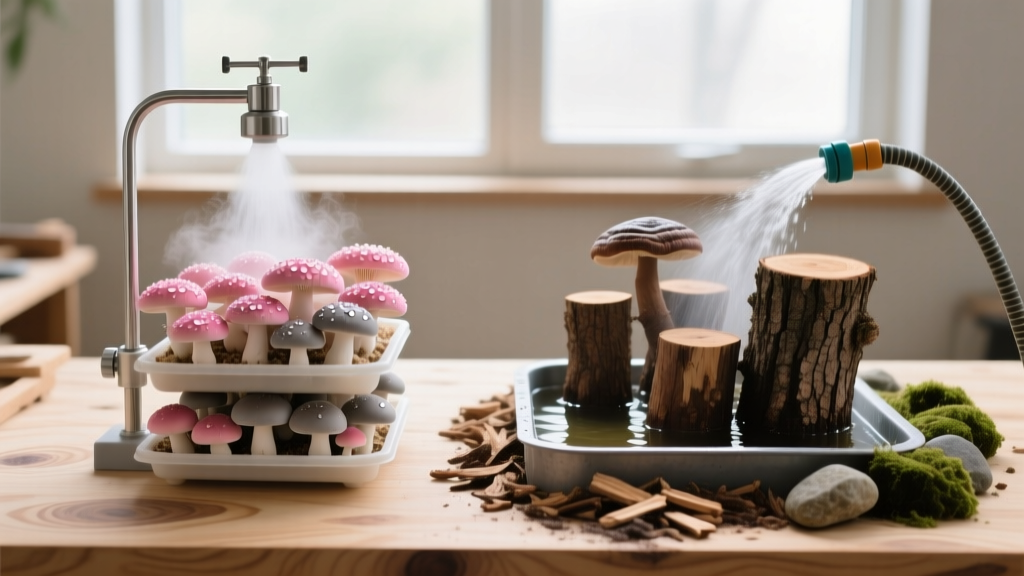
2026 Mushroom Irrigation: Oyster Kits vs Shiitake Logs
Lisa ThompsonPublished
Mastering Fungal Hydration: The 2026 Guide to Mushroom Irrigation
As home mycology continues to surge in popularity throughout 2026, gardeners are increasingly integrating mushroom cultivation into their broader backyard ecosystems. However, growing fungi is fundamentally different from growing traditional vegetables or flowers. While a tomato plant relies on deep root watering via standard drip irrigation, mushrooms lack true roots and instead depend on a complex network of mycelium that requires highly specific moisture and humidity levels to trigger fruiting. When deciding between the two most popular home cultivation methods—indoor/outdoor oyster mushroom kits and outdoor shiitake mushroom logs—the irrigation and water delivery systems you must deploy are drastically different.
Understanding how to properly hydrate your fungal crops is the difference between a bountiful harvest and a contaminated, dried-out failure. In this comprehensive guide, we will break down the exact sprinkler, misting, and soaking systems required for oyster kits versus shiitake logs, helping you build an automated, efficient mushroom irrigation zone in your garden this year.
The Science of Fungal Hydration
Mushrooms are composed of up to 90% water. Unlike plants that draw water from the soil through vascular systems, mushrooms absorb moisture directly through their mycelial network and the surface of their fruiting bodies. Therefore, your irrigation strategy must address two distinct metrics: substrate moisture (the water held inside the growing medium or log) and ambient humidity (the moisture in the air surrounding the mushroom).
Oyster mushroom kits, typically grown in sterilized grain or supplemented sawdust blocks, rely heavily on ambient humidity to prevent the delicate pins (baby mushrooms) from aborting. Shiitake mushrooms, grown on dense hardwood logs, rely on deep substrate moisture to sustain the slow-growing mycelium over several years, requiring heavy, infrequent soaking rather than constant misting.
Oyster Mushroom Kits: Micro-Misting and Humidity Control
Oyster mushrooms (Pleurotus ostreatus) are aggressive, fast-growing fungi that fruit in large, delicate clusters. Whether you are growing them in a controlled indoor tent or a shaded outdoor patio setup, the irrigation focus is on micro-misting. You are not trying to water the block; you are trying to create a microclimate of 85% to 95% relative humidity around it.
Setting Up an Automated Misting System
Hand-spraying with a pump bottle is tedious and leads to fluctuating humidity levels, which can cause the mushroom caps to crack or dry out. In 2026, the gold standard for oyster kit irrigation is an automated high-pressure micro-misting system. Here is how to configure it:
- Tubing and Nozzles: Use 1/4-inch polyurethane tubing fitted with brass or ceramic micro-mist nozzles. Space the nozzles every 12 to 18 inches above your fruiting chamber or shelf.
- Pressure Regulation: Misting nozzles require higher water pressure to atomize the water into a fine fog rather than heavy droplets. Attach an inline pressure regulator set to 40-60 PSI. If your garden hose bib only provides 30 PSI, you may need a small 12V diaphragm pump to boost the pressure.
- Smart Controllers: Connect your misting line to a smart irrigation controller equipped with a local humidity sensor. Modern 2026 models can trigger 30-second misting bursts whenever the ambient humidity drops below 80%, ensuring your oyster pins never dry out.
Water Quality for Oyster Kits
Municipal tap water often contains chlorine and chloramines, which are designed to kill microorganisms. Because mycelium is a living fungal network, heavily chlorinated water can stunt growth or cause bacterial blotch on the delicate oyster caps. Always run your misting system through an inline carbon filter or a reverse osmosis (RO) system to ensure the water is pure and safe for fungal tissue.
Shiitake Mushroom Logs: Sprinklers, Soaker Hoses, and Shock Watering
Shiitake mushrooms (Lentinula edodes) are a long-term investment. Inoculated hardwood logs (usually oak or maple) can produce mushrooms for 3 to 5 years. Unlike the delicate misting required for oyster kits, shiitake logs require deep, penetrating hydration to maintain internal substrate moisture levels between 35% and 45%. According to experts at Penn State Extension, the most critical irrigation event for shiitake logs is the "shock soak," which simulates a heavy spring rainstorm and triggers the mycelium to produce fruiting bodies.
Maintenance Watering: Soaker Hoses and Overhead Sprinklers
During the summer months, shiitake logs resting in a shaded woodland area or under a backyard shade cloth will slowly lose moisture to evaporation. To maintain baseline hydration without waterlogging the bark:
- Soaker Hoses: Weave standard rubber soaker hoses through your log stack. Connect them to a low-pressure regulator (15-25 PSI) and run them for 45 minutes twice a week. This provides a slow, deep渗透 that penetrates the outer bark and reaches the inner sapwood where the mycelium lives.
- Overhead Sprinklers: If your logs are arranged in a traditional "A-frame" or high-wire stack, an overhead oscillating sprinkler connected to a smart timer can mimic natural rainfall. Set the smart controller to water early in the morning, allowing the bark to dry slightly during the day, which prevents competing green mold (Trichoderma) from taking hold on the wet wood surface.
The Shock Soak Method
When you are ready to force a flush of shiitake mushrooms, maintenance sprinklers are not enough. You must submerge the logs in a dunk tank filled with cold water for 12 to 24 hours. This sudden drop in temperature and massive influx of water "shocks" the mycelium into pinning. While this is a manual soaking process rather than an automated sprinkler task, it is the most vital hydration step in the shiitake cultivation cycle.
2026 Irrigation Comparison Chart: Oyster Kits vs. Shiitake Logs
To help you plan your garden's plumbing and irrigation zones, review the structural differences between these two fungal watering methods below.
| Irrigation Feature | Oyster Mushroom Kits | Shiitake Mushroom Logs |
|---|---|---|
| Primary Delivery Method | Micro-misting nozzles & ultrasonic humidifiers | Soaker hoses, overhead sprinklers, & dunk tanks |
| Target Moisture Metric | Ambient Humidity (85% - 95%) | Internal Substrate Moisture (35% - 45%) |
| Required Water Pressure | High (40 - 80 PSI for atomization) | Low to Medium (15 - 40 PSI) |
| Watering Frequency | Short bursts 3-6 times daily | Deep watering 1-2 times weekly |
| Automation Technology | Humidity-sensing smart misting controllers | Soil-moisture-sensing smart irrigation timers |
| Filtration Requirement | Strict (Carbon/RO to remove chlorine) | Moderate (Dechlorinated preferred, but tolerant) |
Building a Dual-Zone Mushroom Irrigation Manifold
If you are growing both oyster kits in a greenhouse and shiitake logs in a shaded corner of your yard, you can efficiently manage both using a single outdoor hose bib by building a dual-zone irrigation manifold. This approach aligns with modern water efficiency standards outlined by the University of Minnesota Extension, ensuring you deliver the right amount of water precisely where it is needed without waste.
- Install a Backflow Preventer and Y-Splitter: Attach a brass backflow preventer to your spigot to protect your home's water supply, followed by a heavy-duty Y-splitter.
- Zone 1 (Oyster Misting): On the first valve, attach an inline carbon water filter, followed by a 60 PSI pressure regulator, and finally a smart solenoid valve connected to your humidity controller. Run the 1/4-inch misting tubing from this valve to your oyster fruiting chamber.
- Zone 2 (Shiitake Soakers): On the second valve, attach a 25 PSI pressure regulator and a standard smart irrigation timer. Connect your 1/2-inch poly mainline and soaker hoses to this zone, routing them to your outdoor log stack.
By separating the pressure requirements and filtration needs, you protect your delicate misting nozzles from clogging while ensuring your shiitake logs receive the deep, low-pressure hydration they require.
Common Watering and Irrigation Mistakes to Avoid
Even with the best 2026 smart irrigation technology, mycology requires a nuanced touch. Avoid these common pitfalls:
- Direct Spraying of Oyster Pins: Never aim a high-pressure misting nozzle directly at baby oyster mushrooms. The physical force of the water droplets can snap the delicate pins or cause them to fuse together into deformed, unmarketable clusters. Always point misting nozzles upward or toward the walls of the fruiting tent to create a gentle, falling fog.
- Overwatering Shiitake Logs: While shiitake logs need deep moisture, they also need to breathe. If your soaker hoses run too long and the bark remains constantly soggy, you will invite bark sloughing and anaerobic bacteria, which will kill the mycelium inside. The bark should feel dry to the touch between watering sessions.
- Ignoring Water Temperature: Fungi are highly sensitive to temperature shocks. If your irrigation water sits in a black polyurethane hose baking in the summer sun, the scalding water can cook the mycelium upon contact. Bury your main irrigation lines or use reflective tubing to keep the water temperature stable and cool.
Conclusion
Successfully integrating mushroom cultivation into your home garden requires a fundamental shift in how you think about irrigation. While oyster mushroom kits demand a high-tech, high-humidity micro-misting environment supported by strict water filtration, shiitake logs thrive on deep, low-pressure soaker hose hydration and dramatic seasonal shock soaks. By understanding the unique biological triggers of each species and leveraging modern smart irrigation controllers, you can automate your fungal harvests, save water, and enjoy a continuous supply of gourmet mushrooms right from your own backyard.
For further reading on substrate preparation and log inoculation techniques, be sure to consult the comprehensive guides provided by Penn State Extension's Oyster Mushroom Production resources. Happy growing, and may your 2026 harvests be abundant!
