
Landscaping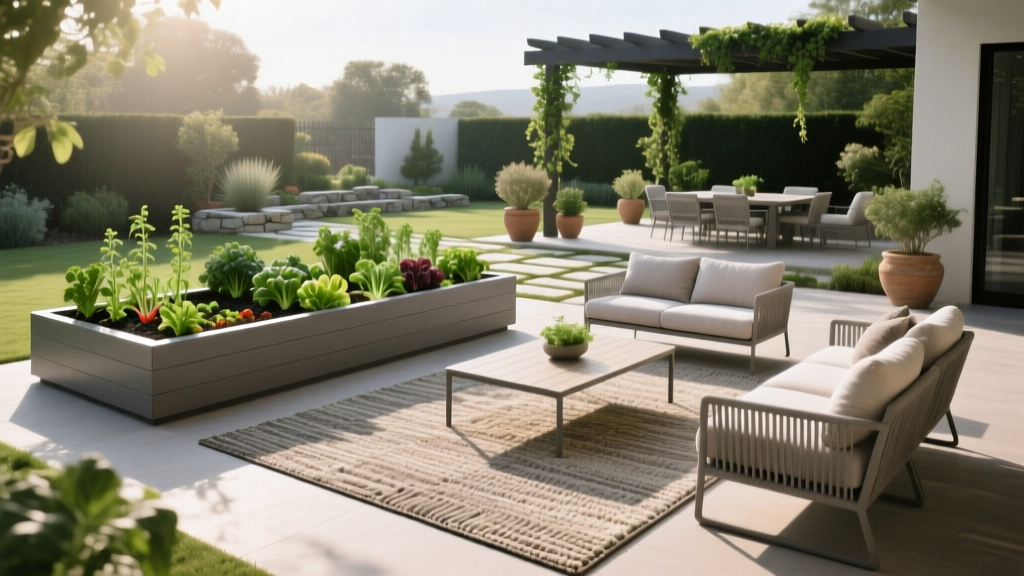
2026 Patio Makeover: Staging Rugs & Furniture Near Raised Beds
James MillerPublished
The Intersection of Edible Landscaping and Outdoor Living in 2026
As we move through 2026, the boundary between the functional vegetable garden and the recreational patio has completely dissolved. Homeowners are no longer treating their raised bed vegetable gardens as isolated agricultural zones tucked away in the back corner of the yard. Instead, the modern edible landscape is a centerpiece of outdoor living. Staging your outdoor rugs and patio furniture around raised beds requires a unique approach that balances aesthetic appeal with the practical demands of gardening. You are not just designing a place to sit; you are designing a harvest command center. When executing a patio makeover adjacent to raised beds, every square foot must serve a dual purpose: supporting your social life while nurturing your tomatoes, peppers, and leafy greens.
The Golden Rule of Proximity: Measurements and Flow
Before unrolling an outdoor rug or placing a single lounge chair, you must establish the correct clearance zones. The most common mistake in garden-adjacent patio staging is placing furniture too close to the soil. According to leading horticultural guidelines, such as those outlined by Gardeners Supply Company, raised beds require ample perimeter access for planting, weeding, and harvesting.
- The 36-Inch Utility Path: You must maintain a minimum 36-inch hardscape or gravel path between your patio rug edge and the raised bed timber or stone wall. This allows for the smooth passage of a standard wheelbarrow or garden cart without the wheels catching on the rug fringe or scraping your patio furniture.
- The 48-Inch Bending Zone: If your patio seating faces the garden, ensure there is a 48-inch buffer. This gives you enough room to kneel, lean, and harvest from the lower tiers of your raised beds without knocking over a side table or stepping onto your outdoor rug with muddy boots.
- The Vertical Clearance: Consider the mature height of your crops. Indeterminate tomatoes and pole beans can easily exceed six feet in height by late summer. Furniture staging must account for this vertical growth, ensuring that tall chair backs do not crush trailing vines or block essential airflow.
Selecting Outdoor Rugs for Edible Landscapes
Not all outdoor rugs are created equal, especially when placed near edible crops. In 2026, the focus is heavily on non-toxic, permeable, and UV-resistant materials. When watering your raised beds, splash-back and runoff are inevitable. If your rug leaches chemical dyes or traps moisture against the hardscape, it can create a toxic environment or promote mold growth that could theoretically impact your garden's immediate microclimate. Furthermore, managing runoff is critical; the EPA's Green Infrastructure guidelines emphasize the importance of permeable surfaces to prevent waterlogging and manage stormwater naturally, which is vital when hardscaping borders active garden soil.
2026 Rug Material Comparison Chart
| Material | Permeability | Garden Safety | Best Use Case Near Raised Beds |
|---|---|---|---|
| Recycled PET (Plastic) | High | Excellent (Inert) | High-traffic harvest zones; easy to hose off muddy footprints without chemical leaching. |
| Polypropylene | Medium | Good | Covered patios adjacent to herb gardens; resists fading from full sun exposure. |
| Natural Jute/Sisal | Low | Poor (Traps moisture) | Not recommended. Rotting fibers near damp garden soil attract pests and fungal spores. |
| Bamboo/Slat Roll | High | Excellent | Zen-style edible landscapes; allows water to pass directly to soil without pooling. |
For the 2026 season, the top choice for garden-adjacent patios is the flat-weave Recycled PET rug. These rugs are incredibly durable, do not absorb water, and can be literally hosed off over the garden bed using a gentle spray without fear of chemical leaching into your vegetable soil.
Furniture Staging: The Harvest Command Center
When staging furniture around raised beds, think about the flow of the harvest. Where do you put the vegetables once you pick them? In 2026, the trend is the integration of modular, multi-functional furniture that serves the gardener while maintaining a high-end aesthetic.
The L-Shaped Harvest Lounge
Position an L-shaped sectional so that the open end of the L faces the primary raised bed. This creates a natural amphitheater effect, allowing you to monitor your crops for pests or ripeness while relaxing. Place a weather-resistant, slatted teak or powder-coated aluminum coffee table in the center. The slatted top is crucial because it allows you to set down freshly harvested, dew-covered produce or muddy root vegetables without ruining the table finish. Water and soil simply fall through the slats, keeping your harvest station clean.
The Mobile Prep Station
Instead of static side tables, incorporate a rolling bar cart or a modular potting bench on heavy-duty casters. Stage this near the corner of the patio rug closest to the garden gate. This serves as your staging area for pruning shears, organic pest control sprays, and harvest baskets. When it is time to entertain guests, simply roll the cart away and replace it with a stylish outdoor ottoman or a fire pit.
Sunlight, Shadows, and Canopy Management
Your raised bed vegetables are sun-worshippers. Most fruiting crops, including peppers, eggplants, and squash, require a minimum of six to eight hours of direct, unfiltered sunlight daily. A major pitfall in patio makeovers is the careless placement of large patio umbrellas or shade sails that inadvertently cast long shadows over the garden beds during peak solar hours, stunting plant growth and reducing yields.
To solve this in 2026, landscape designers are utilizing cantilever umbrellas with adjustable tilt and rotation features. Stage the heavy base of the cantilever umbrella on the far edge of the patio rug, away from the garden. This allows you to suspend the shade canopy over your seating area while keeping the umbrella arm completely out of the garden's airspace. Alternatively, use permeable, knitted shade cloth sails attached to the outer perimeter of the patio structure, which provide dappled light for the humans without depriving the vegetables of their necessary photosynthesis.
Sustainable Hardscaping and Rug Pad Considerations
If your patio is made of solid concrete or composite decking, placing a rug directly on top can trap moisture, leading to algae growth or wood rot. More importantly, if the patio slopes slightly toward the raised beds, an impermeable rug pad can redirect rainwater and garden hose runoff directly into the soil, potentially causing root rot in your vegetables or washing away valuable topsoil and organic amendments.
Always use a specialized, open-weave outdoor rug pad made from recycled rubber or PVC-coated polyester. These pads elevate the rug slightly, promoting airflow and allowing water to evaporate rather than pooling against the patio surface or channeling aggressively toward your raised beds. In 2026, look for rug pads that are certified free of phthalates and heavy metals, ensuring that any water passing through the pad and into the adjacent garden soil remains completely safe for edible crop cultivation.
Final Thoughts on the Edible Patio Makeover
Staging an outdoor rug and furniture around raised vegetable beds is an exercise in harmonious design. By respecting the spatial needs of your crops, choosing non-toxic and permeable materials, and arranging your furniture to facilitate the harvest, you create a space that feeds both the body and the soul. As you plan your 2026 patio makeover, remember that the garden is not just a backdrop for your outdoor living space; it is an active, living participant. Treat it with the spatial respect it deserves, and your outdoor oasis will thrive in both beauty and bounty for years to come.

