
Landscaping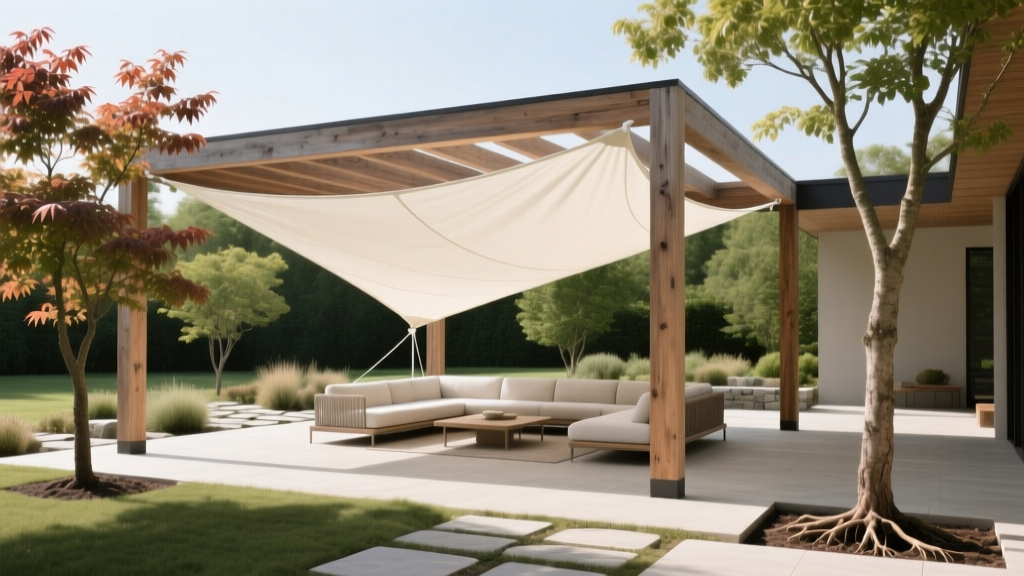
2026 Pergola Sunbrella Sail Canopy Tree Planting Guide
Robert HayesPublished
Integrating Hardscapes and Living Canopies in 2026
As outdoor living spaces continue to evolve in 2026, homeowners are increasingly blending sophisticated hardscaping with strategic softscaping. One of the most striking and functional combinations is the integration of a custom-built pergola featuring a Sunbrella shade sail canopy with a carefully curated tree planting scheme. While a pergola provides immediate architectural structure and the Sunbrella fabric offers superior UV protection and breathability, living trees bring dynamic beauty, natural cooling, and ecological benefits to your landscape. However, combining heavy timber structures, tensioned fabric sails, and growing root systems requires meticulous planning. This comprehensive guide explores how to select the right trees, protect critical root zones during pergola footing construction, and plant your landscape to complement your new shade sail structure.
Why Combine a Sunbrella Shade Sail Pergola with Trees?
You might wonder why you need trees if you are already installing a high-performance Sunbrella shade sail canopy. The answer lies in microclimate management and aesthetic layering. According to recent landscaping trends for 2026, layered shading is the gold standard for outdoor comfort. A Sunbrella sail blocks harsh, direct midday UV rays, but it can still trap ambient heat underneath if the surrounding air is stagnant. Strategically planted deciduous trees act as natural evaporative coolers, dropping the ambient air temperature beneath and around the pergola by several degrees.
Furthermore, trees act as vital windbreaks. Shade sails are essentially giant kites; they catch wind and transfer immense tension to the pergola posts. By planting dense evergreen windbreaks at the property's edge, you reduce the wind load on your Sunbrella canopy, extending the lifespan of both the fabric and the timber joints. Finally, the visual contrast between the crisp, geometric lines of a tensioned Sunbrella sail and the organic, sweeping branches of a mature tree creates a high-end, resort-quality aesthetic that purely structural elements cannot achieve alone.
Best Tree Species for Pergola Integration
When planting near a pergola, the primary concern is the tree's root system. Aggressive surface roots can heave concrete footings, shift pergola posts, and create trip hazards in your patio space. You must select trees with deep, non-invasive root structures or slow-growing ornamental varieties. Below is a comparison chart of the top tree species recommended for planting near pergola structures in 2026.
| Tree Species | Root Aggressiveness | Canopy Type | Min. Distance to Pergola Post | Debris Factor |
|---|---|---|---|---|
| Japanese Maple (Acer palmatum) | Very Low | Dappled / Ornamental | 5 Feet | Low (Small leaves) |
| Crape Myrtle (Lagerstroemia) | Low | Broad / Flowering | 8 Feet | Moderate (Petals) |
| Ginkgo Biloba (Male cultivars) | Moderate (Deep) | Pyramidal / Shade | 12 Feet | Low (Drops leaves all at once) |
| Red Oak (Quercus rubra) | Low (Deep Taproot) | Massive / Dense Shade | 20+ Feet | High (Acorns, large leaves) |
| Eastern Redbud (Cercis canadensis) | Low | Spreading / Ornamental | 6 Feet | Low |
Deep-Rooted Shade Trees for Overarching Canopies
If your goal is to plant a large shade tree that will eventually grow over the pergola, species like the Red Oak or the Ginkgo Biloba are excellent choices. Because they develop deep taproots rather than shallow, sprawling surface roots, they are less likely to interfere with the pergola's concrete footings. However, you must plant them at least 15 to 20 feet away from the structure. This distance allows the canopy to extend over the Sunbrella sail without the trunk compromising the hardscape. Be mindful of debris; oak leaves and acorns can stain light-colored Sunbrella fabrics if left to accumulate and decompose on the porous material.
Ornamental Accent Trees for Interior Planting Beds
For planting directly adjacent to the pergola or within interior courtyard beds framed by the structure, stick to ornamentals like the Japanese Maple or Eastern Redbud. These trees have non-invasive root systems that will respect the boundaries of your hardscape. Their dappled canopies allow beautiful, shifting patterns of sunlight to filter through, complementing the solid shade provided by the Sunbrella sail overhead.
Footing Construction and Root Protection
Building a pergola to support a tensioned Sunbrella shade sail requires robust footings. In 2026, standard engineering guidelines dictate that a 12x12 foot pergola supporting a shade sail must utilize a minimum of 6x6 pressure-treated timber or structural cedar posts, anchored in concrete footings that extend below the local frost line—typically 36 to 48 inches deep, depending on your climate zone.
When digging these footings near existing trees, you must protect the tree's 'structural root plate.' According to The Morton Arboretum, the vast majority of a tree's critical support and absorbing roots are located in the top 12 to 18 inches of soil, extending well beyond the drip line of the canopy. Severing roots larger than 2 inches in diameter can severely compromise the tree's stability and health.
Safe Digging Practices Near Trees
- Air Spading: If you must place a pergola post near an established tree, hire a certified arborist to use an air spade. This tool uses compressed air to excavate soil without slicing through vital roots, allowing you to hand-dig around them.
- Root Pruning Limits: Never remove more than 15% of a tree's root system in a single season. If a footing requires cutting major roots, reconsider the pergola's layout.
- Sonic Drilling: For extreme cases where footings must be placed near sensitive root zones, sonic or helical pile drilling can be used to install deep structural supports with minimal surface disruption.
Step-by-Step Tree Planting Guide Around Pergolas
Once your pergola is erected and the Sunbrella sail is tensioned, it is time to plant your selected trees. Proper planting technique is vital to ensure the trees thrive without damaging your new investment. The Arbor Day Foundation emphasizes the importance of planting depth and soil preparation for long-term tree health.
- Timing: Plant deciduous trees in early spring or late fall when they are dormant. This reduces transplant shock and allows roots to establish before the summer heat demands peak hydration.
- Locate the Root Flare: When removing the tree from its burlap or container, identify the root flare (where the trunk widens at the base). The root flare must sit slightly above grade. Planting too deep is the number one cause of tree mortality and encourages girdling roots that could eventually target your pergola footings.
- Digging the Hole: Dig a hole two to three times wider than the root ball, but no deeper. Rough up the sides of the hole to allow roots to penetrate the surrounding native soil easily.
- Backfilling: Use the native soil you just dug out to backfill the hole. Avoid amending the backfill with heavy compost, as this creates a 'bathtub effect' where water pools in the loose soil and rots the roots.
- Mulching: Apply a 3-inch layer of organic hardwood mulch in a wide ring around the tree. Critical Rule: Keep mulch at least 6 inches away from the tree trunk to prevent rot, and keep it at least 12 inches away from the wooden pergola posts to prevent moisture wicking and termite attraction.
Sunbrella Sail Tensioning and Tree Wind Dynamics
One of the most overlooked aspects of combining shade sails with trees is the dynamic movement of the landscape. Trees are not static; they sway, bend, and shift significantly during high winds. If you attempt to use a living tree trunk as an anchor point for your Sunbrella shade sail, the tree's movement will cause the sail to flap violently, potentially tearing the fabric or ripping the hardware from the tree bark.
In 2026, the best practice is to keep the pergola structure entirely independent of the trees. Use the pergola's heavy timber posts as the sole anchor points for the sail. To manage wind loads, utilize marine-grade stainless steel turnbuckles and dynamic tensioning springs at the corners of the Sunbrella sail. This allows the fabric to absorb sudden wind gusts without transferring catastrophic shock loads to the pergola joints. For fabric selection, the Sunbrella Shade Sail collections offer breathable, high-density polyethylene (HDPE) and woven acrylic options that allow wind to pass through the weave, drastically reducing the 'parachute effect' while still blocking up to 98% of harmful UV rays.
Maintenance: Managing Sap, Tannins, and Debris
Trees and pergolas require a symbiotic maintenance routine. Trees drop leaves, sap, and pollen, which can accumulate on the porous surface of a Sunbrella shade sail. While Sunbrella fabrics are treated with fluorocarbon finishes for water and stain resistance, organic tannins from oak leaves or sticky pine sap can cause discoloration if left untreated.
Perform a gentle cleaning of your shade sail twice a year—once in late spring after the tree pollen season, and once in late fall after leaf drop. Remove the sail from the pergola frame, lay it flat on a clean driveway, and use a soft-bristle brush with a solution of mild dish soap and lukewarm water. Rinse thoroughly with a garden hose and allow it to air dry completely in the sun before re-tensioning it on the pergola. Never use harsh chemical solvents or power washers, as these will strip the fabric's protective UV and water-resistant coatings.
By thoughtfully selecting non-invasive tree species, respecting the structural root plate during footing excavation, and utilizing independent tensioning systems for your Sunbrella canopy, you can create an outdoor sanctuary in 2026 that perfectly balances the permanence of hardscaping with the living beauty of nature.

