
Landscaping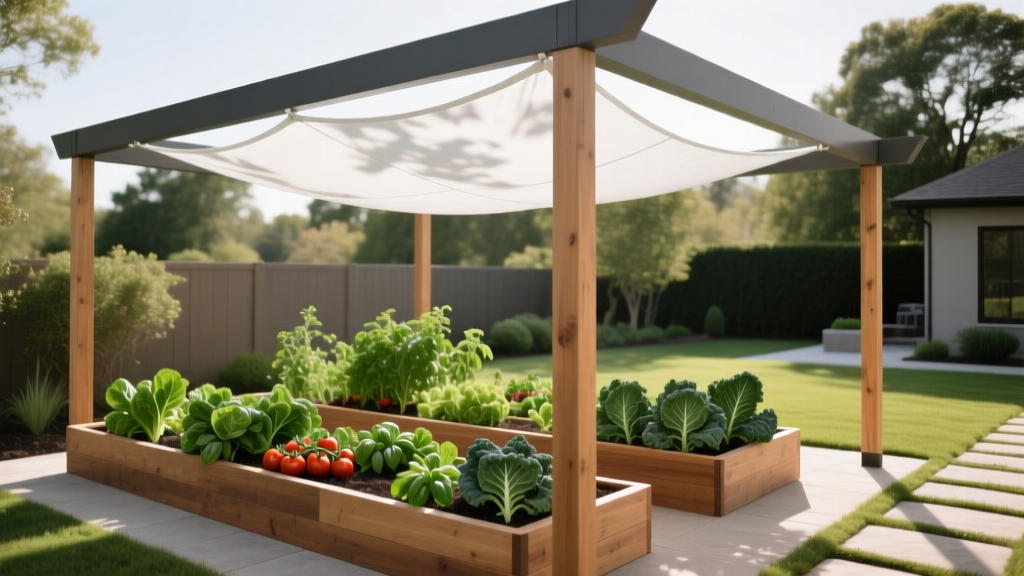
2026 Guide: Pergola Sunbrella Shade Sails for Raised Beds
James MillerPublished
The 2026 Climate Challenge for Raised Bed Gardens
As we navigate the 2026 growing season, home gardeners are facing increasingly volatile summer weather patterns. While raised bed vegetable gardening remains one of the most efficient and accessible ways to grow food at home, the very design that makes raised beds so advantageous in the spring—their ability to warm up quickly—becomes a significant liability during peak summer heat. When soil temperatures in elevated timber or stone beds exceed 85°F, essential crops like tomatoes, peppers, and leafy greens suffer from severe heat stress, leading to blossom drop, stunted root development, and premature bolting.
To combat these extreme thermal spikes, landscaping your garden with permanent or semi-permanent shade structures has transitioned from a luxury to a necessity. The most elegant, durable, and functional solution for the modern edible landscape is constructing a custom pergola fitted with a high-performance Sunbrella shade sail canopy. This architectural approach not only protects your harvest but also elevates the aesthetic of your outdoor living space, seamlessly blending hardscaping with sustainable food production.
Understanding Raised Bed Thermal Dynamics
Before breaking ground on a pergola, it is crucial to understand why raised beds require specialized shade interventions. According to horticultural research from Penn State Extension, raised beds drain faster and warm up earlier than in-ground soil. While this extends your spring planting window, it also means the soil volume is entirely exposed to ambient air temperatures and direct solar radiation on all sides.
During the intense heatwaves of July and August 2026, the dark soil and wooden or composite walls of a raised bed absorb and retain heat, effectively cooking the root zones of your plants. Traditional flimsy shade cloths draped over PVC hoops often trap humid air, restrict pollinator access, and degrade within a single season. A pergola structure, conversely, allows for optimal vertical airflow while the Sunbrella canopy filters harmful UV rays and reduces soil-level temperatures by up to 15 degrees, keeping your plants in their optimal metabolic sweet spot.
Why Choose a Sunbrella Shade Sail Canopy?
When selecting a canopy material for an edible landscape, durability and light diffusion are paramount. Sunbrella Shade Sails are engineered from solution-dyed acrylic, offering unparalleled resistance to UV degradation, mold, and water pooling. Unlike cheap polyethylene nets that tear in high winds or leach microplastics into your organic vegetable beds, Sunbrella fabrics are safe, stable, and designed to last for years in harsh outdoor environments.
Furthermore, the architectural tension of a shade sail mounted to a solid wood or composite pergola creates a clean, modern silhouette. This transforms a utilitarian vegetable patch into a stunning focal point of your backyard landscaping, increasing both curb appeal and the functional enjoyment of your outdoor space.
Designing the Pergola Footprint for Raised Beds
Proper sizing is critical to ensure your pergola accommodates both the plants and the gardener. The standard raised vegetable bed measures 4 feet wide by 8 feet long. To provide adequate shade coverage as the sun shifts angles throughout the summer, your pergola footprint should extend at least 12 to 18 inches beyond the bed's perimeter on all sides.
- Ideal Pergola Dimensions: 6 feet wide by 10 feet long for a single 4x8 bed.
- Post Placement: Always set footings outside the raised bed structure. Driving posts into the bed itself compromises the structural integrity of the bed walls and severely damages the established root networks of perennial herbs or deep-rooted vegetables.
- Overhead Clearance: Aim for a minimum height of 8 feet. This allows ample room for indeterminate tomato varieties, pole beans, and cucumbers to be trellised vertically on cattle panels or jute netting without touching the canopy.
Selecting the Right Sunbrella Fabric for Vegetables
Not all shade is created equal. Vegetables require a specific balance of light reduction and photosynthetic energy. While a 90% shade sail is perfect for a patio seating area, it will cause your vegetables to become leggy and unproductive. For the 2026 season, Sunbrella offers specialized shade meshes tailored for horticultural use.
| Fabric Specification | Shade Percentage | Ideal Crops | 2026 Est. Cost (per sq ft) |
|---|---|---|---|
| Sunbrella Shade Mesh 30% | 30% Light Block | Tomatoes, Peppers, Eggplant, Squash | $1.85 - $2.20 |
| Sunbrella Shade Mesh 50% | 50% Light Block | Lettuce, Spinach, Kale, Radishes, Cilantro | $2.10 - $2.50 |
| Sunbrella Marine Canvas | 100% Light Block | Not recommended (blocks all rain/light) | $3.50 - $4.00 |
For a mixed-vegetable raised bed, a 30% to 40% shade mesh is generally the most versatile choice, providing enough relief to prevent sunscald on pepper fruits while allowing enough PAR (Photosynthetically Active Radiation) for robust growth.
Step-by-Step Pergola Construction
Building a pergola to support a tensioned shade sail requires robust framing to handle the significant lateral and downward forces exerted by the fabric when wind catches it.
1. Setting the Footings
Dig four post holes at least 24 to 36 inches deep, ensuring you are below your local frost line to prevent winter heaving. Use sonotubes and pour quick-setting concrete. Insert 4x4 pressure-treated timber or cedar posts, using a level to ensure they are perfectly plumb. Allow the concrete to cure for at least 48 hours before proceeding.
2. Framing the Header and Rafters
Attach 2x8 header boards to the posts using heavy-duty galvanized carriage bolts. For the rafters, use 2x6 lumber spaced 16 inches on center. While the shade sail will provide the primary shade, the wooden rafters offer structural rigidity and a secondary layer of dappled shade during the hottest part of the afternoon.
3. Installing Tensioning Hardware
Do not simply tie the sail to the wood. Install heavy-duty stainless steel D-rings or eye bolts into the inner corners of the pergola frame. Use marine-grade stainless steel turnbuckles and snap hooks to connect the sail's reinforced webbing corners to the frame. This hardware is essential for maintaining tension and allowing for seasonal adjustments.
Rigging and the Crucial 'High-Low' Slope
The most common mistake DIY landscapers make when installing shade sails is pulling them perfectly flat. A flat canopy will collect rainwater, creating a massive, heavy waterbed effect that can snap pergola rafters or tear the fabric seams.
To prevent this, you must employ the 'High-Low' installation method. Attach two adjacent corners of the sail slightly higher than the opposite two corners, creating a minimum 15 to 20-degree slope. This ensures that heavy summer thunderstorms will sheet off the canopy efficiently. Position the lower runoff edge so that the water drips directly into a mulched border or a rain barrel system, rather than eroding the soil pathways around your raised beds.
Managing the Microclimate and Irrigation
Installing a Sunbrella canopy fundamentally alters the microclimate of your raised bed. Because the fabric blocks direct solar radiation and reduces wind exposure, the rate of soil evaporation drops significantly. If you are using an automated drip irrigation system, you must recalibrate your timers for 2026. Overwatering under a shade sail can quickly lead to waterlogged soil and root rot.
Additionally, reduced airflow can increase the humidity directly at the plant canopy level, which creates a favorable environment for fungal diseases like powdery mildew on cucurbits. To mitigate this, ensure you prune the lower leaves of your tomatoes and squash to promote cross-breezes beneath the pergola. According to guidelines on tomato cultivation from University of Minnesota Extension, maintaining proper air circulation and consistent, moderate soil moisture is the key to preventing blossom end rot and fungal blights, both of which are exacerbated by the stress of fluctuating heat and humidity.
Seasonal Maintenance and Winterization
One of the greatest advantages of a shade sail pergola over a solid-roof pavilion is its adaptability. In the spring of 2026, when your seedlings are establishing and craving maximum sunlight, you can leave the sail off or use a highly permeable mesh. During the brutal dog days of August, the sail provides a life-saving oasis.
As autumn approaches and the sun angle drops, remove the sail to allow late-season crops to ripen. Clean the Sunbrella fabric with a soft bristle brush, cold water, and a mild, non-detergent soap before storing it in a dry, climate-controlled space for the winter. Inspect your pergola's galvanized hardware annually, tightening turnbuckles and treating the cedar or composite wood with a UV-blocking sealant to ensure your structure remains a cornerstone of your edible landscape for decades to come.

