Pest Control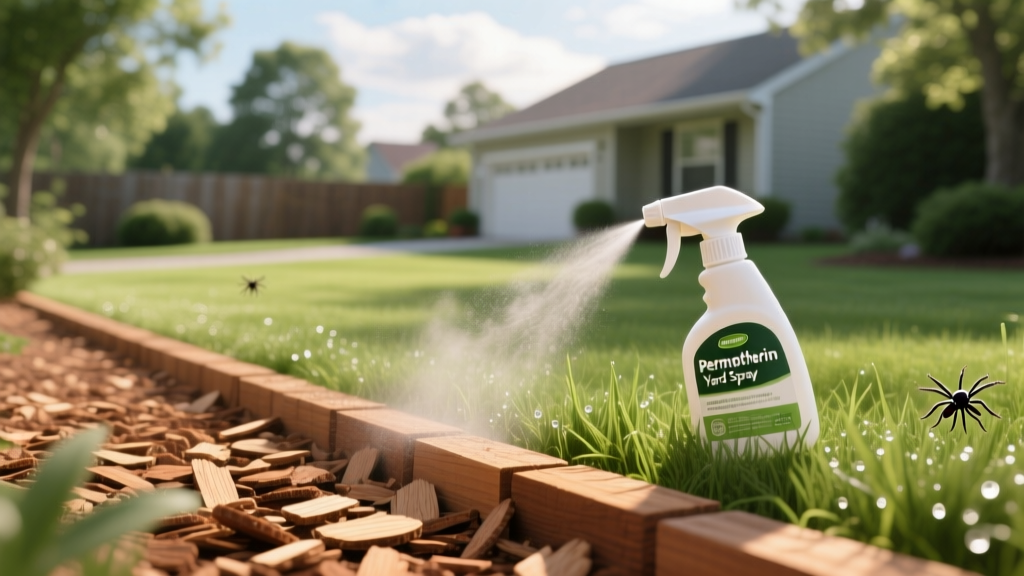
Stop Ticks in 2026: Permethrin Spray & Wood Chip Barriers
James MillerPublished
The 2026 Tick Threat and the Mulching Solution
As of 2026, the geographical range of disease-carrying ticks, including the black-legged tick (Ixodes scapularis) and the Lone Star tick (Amblyomma americanum), continues to expand across North America. Warmer, more humid springs have accelerated their life cycles, making proactive yard management more critical than ever for homeowners. Relying solely on chemical treatments is no longer the gold standard; instead, modern Integrated Pest Management (IPM) emphasizes a multi-layered approach.
One of the most effective, scientifically backed strategies for reducing tick populations in residential landscapes is the combination of physical wood chip barriers and targeted permethrin yard sprays. By viewing your yard through the lens of mulching methods and materials, you can manipulate the microclimate to make your property inherently hostile to ticks, while using modern chemical barriers as a secondary line of defense. This comprehensive guide will walk you through the exact materials, measurements, and application techniques required to secure your lawn in 2026.
Why Wood Chip Barriers Work Against Ticks
Ticks are highly susceptible to desiccation (drying out). They cannot survive in direct sunlight or in dry, arid environments for extended periods. They rely on the high humidity and damp leaf litter found at the edges of wooded areas to retain moisture. According to the Centers for Disease Control and Prevention (CDC), creating a dry, physical barrier between wooded areas and your manicured lawn is one of the most effective cultural controls available to homeowners.
When you install a thick wood chip barrier, you achieve two things: first, you eliminate the damp, shaded leaf litter that ticks use as a refuge. Second, the wood chips allow the underlying soil to dry out while creating a hot, arid surface layer that ticks are physically and biologically unwilling to cross. When combined with a permethrin treatment, this barrier becomes a lethal gauntlet for any tick attempting to migrate into your recreational lawn spaces.
Choosing the Right Mulch Material for Tick Control
Not all mulches are created equal when it comes to pest control. While hardwood mulches are popular for their aesthetic appeal and soil-building properties, they tend to retain moisture and break down quickly, which can inadvertently create the humid microclimates ticks prefer. For tick control, you need materials that dry quickly, reflect heat, and ideally contain natural repellent compounds.
| Mulch Material | Tick Repellency | Moisture Retention | Decay Rate | 2026 Avg Cost (per cu ft) |
|---|---|---|---|---|
| Cedar Wood Chips | High (contains natural thujone) | Low | Slow | $4.50 - $5.50 |
| Cypress Mulch | Moderate to High | Low | Slow | $3.80 - $4.50 |
| Pine Bark Nuggets | Low | Moderate | Moderate | $3.50 - $4.00 |
| Hardwood Shredded | Very Low | High | Fast | $3.00 - $3.50 |
| Eucalyptus Mulch | High (strong aromatic oils) | Low | Moderate | $5.00 - $6.00 |
For the ultimate tick-repellent barrier, cedar wood chips remain the top recommendation in 2026. Cedar contains natural oils, specifically thujone, which act as a mild insect repellent. More importantly, cedar chips are large and chunky, allowing for excellent air circulation and rapid drying after rainfall.
Step-by-Step: Building Your 3-Foot Tick Barrier
To effectively stop tick migration, your mulch barrier must be wide enough and deep enough to deter crossing. Research cited by Penn State Extension indicates that a 3-foot-wide barrier is the minimum requirement to deter tick movement from wooded edges into turfgrass.
- Clear the Transition Zone: Rake away all existing leaf litter, tall grass, and debris from the edge where your lawn meets the woods, stone walls, or brush piles. Ticks use this debris as a bridge.
- Install Steel or Stone Edging: Drive metal landscape edging or lay a stone border along the lawn side of the barrier. This prevents the mulch from spilling into the grass and keeps the turf edge sharp, eliminating shaded hiding spots.
- Apply the Cedar Mulch: Lay down your cedar wood chips to a uniform depth of 3 to 4 inches. Do not use landscape fabric underneath the mulch. Fabric can trap moisture in the soil below and create a humid tunnel system that ticks and other pests might exploit. The goal is to let the sun bake the top layer of soil and mulch.
- Maintain the Perimeter: Ensure that no overhanging branches from the wooded area are touching the ground inside the barrier, as ticks can drop directly from foliage, bypassing the ground barrier entirely.
The Chemical Component: Permethrin Yard Spray
While a dry cedar barrier is an excellent physical deterrent, it is not 100% impenetrable, especially during prolonged periods of heavy rain or when brought into the yard by host animals like deer or rodents. This is where permethrin comes in.
Permethrin is a synthetic pyrethroid insecticide derived from chrysanthemum flowers. It is highly effective against ticks, acting as both a repellent and a contact toxin. When a tick crawls over a surface treated with permethrin, the chemical attacks its nervous system, causing rapid paralysis and death.
Top 2026 Permethrin Formulations for Yards
In 2026, the market has shifted heavily toward micro-encapsulated permethrin formulations. Unlike older liquid concentrates that break down rapidly under UV light and wash away in the rain, micro-encapsulated versions trap the active ingredient in tiny polymer spheres. This extends the residual control from roughly 3 weeks to 6–8 weeks, significantly reducing the number of applications you need per season.
- Onslaught FastCap (Micro-encapsulated): While primarily labeled for general pest control, its micro-encapsulation makes it highly resistant to UV degradation, making it a favorite among professional landscapers for perimeter tick control.
- Martin's Permethrin SFR 36.8%: A traditional, highly concentrated liquid that is cost-effective for large properties. It requires more frequent reapplication but provides an immediate, aggressive knockdown of existing tick populations.
- Sawyer Permethrin Yard Spray (Ready-to-Spray): Ideal for smaller suburban lots (under 5,000 sq ft). It connects directly to a garden hose and requires no mixing, though it is less cost-effective for large acreage.
Integrating Mulch and Permethrin: The Ultimate IPM Strategy
The true power of this method lies in the synergy between the mulch and the chemical. Ticks actively avoid the dry, hot cedar barrier. However, if they are pushed into it by a host animal or wind, the permethrin ensures they do not survive the crossing.
Application Timing and Technique:
- Early Spring (April/May): Apply your first round of permethrin spray just as the cedar barrier is fully installed and the nymphal tick season begins. Use a pump sprayer to apply the permethrin directly to the 3-foot cedar barrier, the adjacent 2 feet of lawn edge, and any stone walls or brush piles nearby.
- Target the Microclimates: Ticks will congregate at the base of retaining walls, under the edges of sheds, and in the shade of ornamental shrubs. Drench these specific areas with the permethrin solution.
- Mid-Summer Reapplication: Thanks to 2026 micro-encapsulated formulas, you will likely only need a second application in late July or early August to cover the late-summer adult tick emergence.
Safety Warning: Permethrin is highly toxic to cats and aquatic life while it is wet. Keep all pets and children off the treated mulch barrier until the spray has completely dried (usually 2 to 4 hours). If your property borders a pond, stream, or wetland, you must maintain a strict untreated buffer zone of at least 25 feet to prevent aquatic toxicity.
Seasonal Maintenance and Longevity
A wood chip barrier is not a 'set it and forget it' solution. Organic mulches decompose, and their physical properties change over time. To maintain the desiccation effect required to repel ticks, you must manage the materials actively.
- Fluffing the Mulch: Every few weeks, use a steel-tined leaf rake to lightly fluff the cedar chips. This prevents the mulch from matting down and retaining moisture, ensuring the top layer remains dry and hostile to ticks.
- Topping Off the Barrier: By late autumn, the 3-to-4-inch layer will have settled and begun to break down. Add a 1-inch top-dressing of fresh cedar chips each spring to maintain the proper depth and replenish the natural repellent oils.
- Leaf Removal: The fastest way to ruin a tick barrier is to allow autumn leaves to pile up on top of it. Leaves trap moisture and create a perfect humid haven for ticks. Use a leaf blower to keep the cedar barrier completely clear of debris throughout the fall season.
Conclusion
As tick-borne illnesses continue to pose a significant health risk in 2026, homeowners must adopt sophisticated, multi-layered defense strategies. By understanding the biological vulnerabilities of ticks—specifically their need for high humidity—you can weaponize your landscaping materials against them. A properly constructed, 3-foot-wide cedar wood chip barrier creates an arid desert that ticks refuse to cross. When fortified with a modern, micro-encapsulated permethrin yard spray, this physical barrier becomes an impenetrable fortress. Implement these mulching methods and chemical protocols this season, and you can reclaim your yard, ensuring a safe, tick-free environment for your family and pets.