Pest Control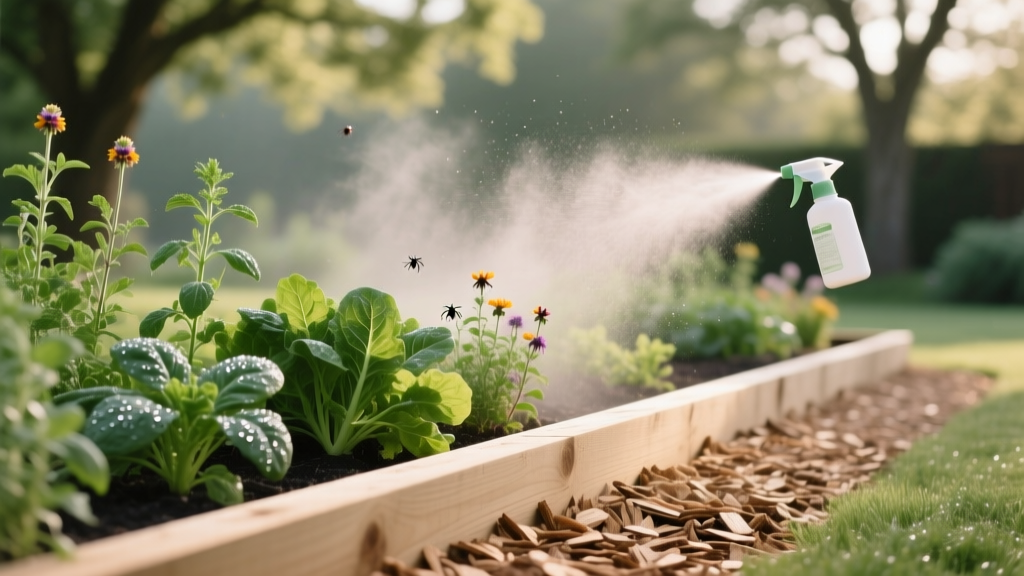
2026 Tick Control: Permethrin & Wood Chip Barriers for Foodscapes
David ParkPublished
The Rise of Foodscaping and the Tick Threat in 2026
As homeowners increasingly embrace foodscaping in 2026, replacing sterile turf grasses with productive fruit trees, berry brambles, and raised vegetable beds, a new ecological challenge has emerged. Edible landscapes mimic natural ecosystems, creating lush, humid, and structurally diverse environments. While this is fantastic for soil health and crop yields, it also creates ideal microclimates for ticks. With tick-borne illnesses like Lyme disease and Alpha-gal syndrome continuing to rise, protecting your family and pets without contaminating your organic food supply is a top priority for modern gardeners.
The most effective strategy for managing ticks in an edible landscape relies on Integrated Pest Management (IPM). Specifically, combining a physical wood chip barrier with targeted, perimeter-only applications of permethrin yard spray creates a highly effective defense line. This dual approach keeps ticks out of your garden beds while ensuring your harvest remains safe, organic, and free from chemical residues.
Understanding the 'Edge Effect' in Edible Landscapes
In ecology, the 'edge effect' refers to the transitional zone between two distinct habitats—such as where a wooded tree line meets your newly planted food forest. Ticks, particularly the black-legged tick (Ixodes scapitoides) and the Lone Star tick, thrive in these transitional zones. They rely on high humidity and leaf litter to survive, and they wait on the edges of tall grasses or shrubs to latch onto passing hosts.
When you plant edible landscaping near property lines or wooded areas, you inadvertently create a prime ambush zone. Because you cannot safely spray broad-spectrum insecticides directly onto your kale, blueberries, or apple trees, you must manage the tick population at the perimeter before they migrate into your food-producing zones.
The 3-Foot Wood Chip Barrier: Your First Line of Defense
According to the Centers for Disease Control and Prevention (CDC), one of the most effective non-chemical methods for reducing tick populations is creating a physical barrier between wooded areas and recreational or garden spaces. For foodscaping, this means installing a continuous 3-foot-wide wood chip buffer separating the wild edge from your edible beds.
Why Wood Chips Work
- Desiccation: Ticks require high moisture levels to prevent drying out. A dry layer of wood chips creates an arid microclimate that ticks are highly reluctant to cross.
- Soil Health Bonus: In an edible landscape, utilizing arborist wood chips on the garden side of the barrier feeds the soil food web. As the chips slowly decompose, they encourage mycorrhizal fungal networks that directly benefit the root systems of nearby fruit trees and berry bushes.
- Weed Suppression: A thick layer of chips eliminates the tall, weedy grasses where ticks typically quest for hosts.
Installation Specifications for 2026
To build an effective barrier, lay down a 3-foot-wide strip of wood chips at a depth of 3 to 4 inches. Cedar or cypress chips are often recommended due to their natural aromatic oils, which mildly repel insects, but standard arborist wood chips are equally effective at creating the necessary dry physical barrier and are often available for free from local tree services. Expect to pay approximately $40 to $60 per cubic yard for premium cedar chips if delivered in bulk in 2026.
Integrating Permethrin Safely Around Food Crops
Permethrin is a synthetic pyrethroid insecticide modeled after natural pyrethrins found in chrysanthemum flowers. It is highly lethal to ticks, disrupting their nervous systems upon contact. However, it is a broad-spectrum insecticide and is strictly prohibited for use on edible plants. It is also highly toxic to aquatic life, bees, and cats (when wet).
According to the National Pesticide Information Center (NPIC), permethrin binds tightly to soil and organic matter, breaking down slowly over several weeks. In a foodscape, permethrin must only be used as a targeted perimeter treatment on the 'wild side' of your property and directly onto the wood chip barrier itself, ensuring absolutely zero spray drift onto your edible crops.
2026 Micro-Encapsulated Formulations
In 2026, the industry standard for yard barriers has shifted toward micro-encapsulated permethrin or bifenthrin blends. These formulations encase the active ingredient in microscopic polymer shells. When sprayed onto a wood chip barrier, the capsules bind to the rough organic surface, providing a residual kill rate of up to 60 days while significantly reducing the risk of immediate leaching into the soil or runoff into nearby water features.
Comparison Chart: Tick Control Methods for Foodscapes
| Control Method | Best Use in Edible Landscapes | Pollinator & Crop Safety | Estimated 2026 Cost |
|---|---|---|---|
| 3-Foot Wood Chip Barrier | Separating woods from garden beds | High (Improves soil health) | $45 per cubic yard |
| Permethrin Spray (Buffer Only) | Wild edges, non-edible perimeter | Low (Toxic to bees if sprayed directly) | $25-$40 per acre |
| Metarhizium brunneum (Fungi) | Organic garden beds, compost areas | High (Targeted biological control) | $60 per quart |
| Guinea Fowl / Chickens | Orchard foraging, raised bed aisles | High (Natural pest reduction) | Feed costs vary |
Step-by-Step Implementation Protocol
To safely establish a tick-free zone around your edible landscape this season, follow this precise IPM protocol:
- Map Your Zones: Identify the exact boundary where your wild, unmaintained property line meets your edible landscape. Mark a 3-foot buffer zone where no edible plants, herbs, or fruit-bearing canes are allowed to grow.
- Clear and Level: Remove all tall grasses, leaf litter, and invasive brush from this 3-foot boundary. Ticks use these as ladders to reach hosts.
- Lay the Wood Chips: Apply a 3-to-4-inch layer of wood chips across the cleared 3-foot boundary. Ensure the chips extend slightly into the wild edge to catch migrating ticks.
- Mix the Permethrin Solution: Using a micro-encapsulated permethrin product (typically a 38% concentrate diluted to a 0.5% active ingredient solution), mix the spray in a pump sprayer. Always wear PPE, including gloves and a mask.
- Apply to the Barrier and Wild Edge: Spray the wood chip barrier and the vegetation on the wild side of the barrier. Use a coarse droplet nozzle to minimize wind drift. Never spray toward your edible beds.
- Establish the Interior: Inside the barrier, rely on organic methods. Maintain short grass or clover pathways between your raised beds, and consider introducing beneficial entomopathogenic fungi like Metarhizium brunneum (sold as Met52) to naturally infect and kill ticks that manage to bypass the perimeter.
Protecting Pollinators, Pets, and Poultry
Foodscaping relies heavily on pollinators. Because permethrin is acutely toxic to bees, timing your application is critical. Always apply permethrin sprays at dawn or dusk when pollinators are not actively foraging. Once the micro-encapsulated spray has completely dried on the wood chips (usually within 2 to 4 hours), the risk to foraging bees is drastically reduced, as the chemical is bound to the organic matter and not present on blooming flowers.
A Note on Pets and Poultry: Permethrin is highly toxic to cats while wet, and toxic to aquatic life. If you integrate backyard chickens into your foodscaping system for pest control, keep them out of the treated perimeter zone until the spray is 100% dry. Once dry, the wood chip barrier is safe for dogs and chickens to walk on, and the chickens will happily scratch for any dead or dying insects near the edge.
Conclusion
Managing ticks in an edible landscape requires a strategic balance between aggressive pest control and the preservation of a safe, organic harvest. By leveraging the desiccating power of a 3-foot wood chip barrier and the residual knockdown power of targeted permethrin applications on the wild perimeter, you can enjoy your 2026 foodscape without the fear of tick-borne diseases. Always respect the buffer zone, protect your pollinators, and let the physical and chemical barriers do the heavy lifting at the edge of your property.