Pest Control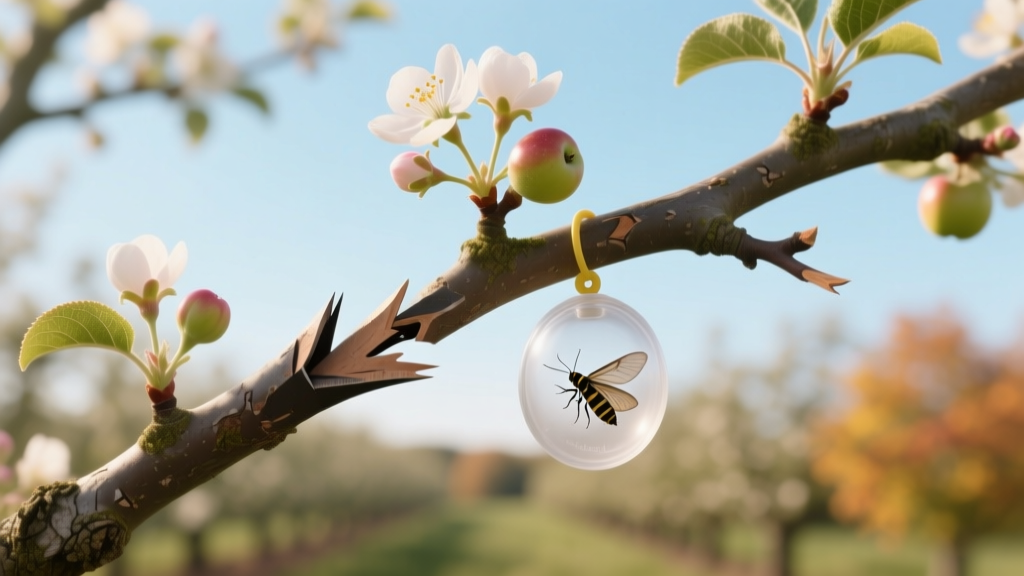
2026 Guide: Pheromone Traps & Pruning Codling Moth
Anna KowalskiPublished
The Intersection of Pruning and Codling Moth Management
The codling moth (Cydia pomonella) remains the most devastating pest of apples, pears, and walnuts in home orchards and commercial groves alike. As we navigate the 2026 growing season, shifting climate patterns and earlier spring degree-day accumulations mean that traditional calendar-based spraying is no longer effective. Instead, modern Integrated Pest Management (IPM) relies heavily on the synergy between precise pheromone trap monitoring and strategic pruning methods. While many gardeners view pruning solely as a way to shape trees or maximize fruit size, canopy management is actually one of the most powerful physical pest control tools available.
Dense, unpruned canopies create microclimates characterized by high humidity, low wind velocity, and deep shade. These conditions are highly favorable for codling moth survival, mating, and egg-laying. Furthermore, a thick canopy intercepts organic and biorational sprays, preventing them from reaching the inner fruit where larvae do the most damage. By aligning your pruning schedule with real-time data from pheromone traps, you can disrupt the moth's life cycle, eliminate preferred resting sites, and dramatically improve the efficacy of your IPM sprays.
Deploying Pheromone Traps for the 2026 Season
Pheromone traps do not control codling moths; rather, they act as an early warning system. Female codling moths emit a specific sex pheromone to attract males. By deploying synthetic versions of this pheromone in sticky traps, you can monitor male flight patterns, determine when mating is occurring, and predict when egg-laying will commence. This data is the biological trigger for your summer pruning and spray schedule.
Trap Selection and Placement
For the 2026 season, the industry standard remains the delta trap or the wing trap, baited with a standardized codling moth lure (such as the Suterra CM Combo or Trece Pherocon). To get accurate readings that will inform your pruning and spraying:
- Timing: Hang traps in the upper third of the tree canopy just before bloom (usually late March to early April, depending on your hardiness zone).
- Density: Use at least one trap per 5 acres in commercial settings, or one trap per 2-3 trees in a diverse home orchard.
- Placement: This is where pruning becomes critical. If your canopy is too dense, you cannot safely place, monitor, or replace traps in the upper canopy. Winter pruning must be executed to create "trap access corridors" and ensure adequate airflow at the top of the tree.
- Maintenance: Replace the sticky liner every two weeks and the pheromone lure every 4 to 6 weeks, or as specified by the 2026 manufacturer guidelines.
Dormant Pruning: Eliminating Overwintering Sites
Codling moth larvae overwinter as mature fifth-instar caterpillars in silken cocoons (hibernaculae). They typically hide in the loose, exfoliating bark of older trees, in crevices of the trunk, or in the crotches of major scaffold branches. Dormant pruning in late winter is your first line of defense.
When executing dormant pruning cuts, focus on removing dead, diseased, and crossing branches to open the center of the tree. An "open center" or "modified leader" pruning method is highly recommended for pest management. By removing excess wood, you expose the inner trunk and major branches to harsh winter temperatures and UV light, which can kill overwintering pupae. Additionally, dormant pruning is the ideal time to use a stiff brush or a specialized bark scraper to gently remove loose bark from the trunk and lower scaffolds, physically destroying the cocoons before the spring emergence begins. According to Penn State Extension, combining dormant bark scraping with targeted horticultural oil sprays in late winter significantly reduces the initial spring population.
Summer Pruning Timed by Pheromone Trap Data
While dormant pruning sets the stage, summer pruning is the tactical strike guided directly by your pheromone trap catches. Codling moths have multiple generations per year (typically two to three, depending on the climate). The first generation is often the most damaging, but subsequent generations can ruin late-season harvests.
The Water Sprout Connection
During the vigorous growth phase of early summer, fruit trees produce "water sprouts"—highly vertical, leafy, non-fruiting suckers that shoot up from the scaffold branches and the center of the canopy. These water sprouts create dense, shaded pockets that codling moths prefer for daytime resting and mating. Furthermore, larvae often use the base of these sprouts as entry points into nearby fruit clusters.
The Pheromone Trigger: Monitor your traps daily during the anticipated first flight. When you record a sustained catch (e.g., 5 or more moths per trap over a 48-hour period), it signals that the first flight has peaked and egg-laying is imminent. This is your immediate cue to execute summer pruning. By manually snapping off or pruning out water sprouts in June or early July—exactly when the trap data indicates peak moth activity—you destroy their preferred micro-habitat just as the vulnerable eggs are hatching. This forces the moths into the open, where they are more susceptible to natural predators and where your subsequent biorational sprays can easily penetrate.
2026 Codling Moth IPM and Pruning Calendar
The following table outlines how to integrate degree-day (DD) models, pheromone trap thresholds, and specific pruning actions for the 2026 growing season. Degree-days are calculated using a base temperature of 50°F (10°C) starting from January 1st.
| Phenological Stage | Degree-Day Target (Base 50°F) | Pheromone Trap Action | Pruning & Canopy Action | IPM Spray / Treatment |
|---|---|---|---|---|
| Late Dormancy | 0 - 100 DD | N/A (Traps not yet hung) | Execute dormant pruning; scrape loose bark from trunks to remove overwintering cocoons. | Apply dormant horticultural oil. |
| Pink Bud / Bloom | 100 - 250 DD | Hang delta traps in upper canopy. | Ensure upper canopy is open enough for trap access and airflow. | No sprays during bloom to protect pollinators. |
| First Flight Peak | 250 - 500 DD | Catch threshold met (sustained catches). | Remove early water sprouts to eliminate shaded resting sites before egg-laying. | Apply Spinosad or Codling Moth Granulovirus (CpGV) at petal fall. |
| First Egg Hatch | 500 - 700 DD | Monitor for decline in male catches. | Thin fruit clusters (pruning fruit) to prevent "stings" between touching apples. | Apply Bt or Entrust (Spinetoram) targeting newly hatched larvae. |
| Second Flight | 1200 - 1500 DD | Replace lures; monitor for second peak. | Execute mid-summer pruning of new vegetative growth to maintain spray penetration. | Reapply CpGV or Kaolin clay (Surround) to deter egg-laying. |
Fruit Thinning as a Specialized Pruning Strategy
When discussing pruning for pest control, we must include the pruning of the fruit itself. Codling moth larvae are notorious for attacking fruit clusters. When two or more apples or pears touch, the moth will almost invariably choose the protected space between the fruits to lay her eggs. The resulting larva can bore into both fruits, causing double the damage while remaining completely hidden from topical sprays and predatory insects.
Following the first flight peak indicated by your pheromone traps, you must aggressively thin your fruit clusters. Prune the fruit down to a single apple or pear per cluster, maintaining at least 6 inches of space between individual fruits on the branch. This physical removal of excess fruit not only improves the size and quality of your harvest but also eliminates the primary egg-laying targets for the codling moth. According to the Pacific Northwest Insect Management Handbook, rigorous fruit thinning combined with trap-monitored spray timing can reduce codling moth damage by up to 80% in organic systems.
Integrating Sanitation and Ground Management
Pruning does not stop at the canopy; it extends to the orchard floor. Throughout the summer, your pheromone traps will help you anticipate when "drops" (infested, prematurely falling fruit) will occur. Typically, 2 to 3 weeks after a trap-indicated egg hatch, you will see small, frass-filled holes in fruit that drops to the ground.
You must implement strict sanitation pruning—removing these dropped fruits from the orchard floor immediately. If left on the ground, the larvae will exit the fallen fruit, crawl up the trunk, and spin cocoons for the next generation, completely bypassing your canopy management efforts. Compost or destroy these drops weekly. Additionally, keep the ground beneath the tree's drip line mowed short or heavily mulched to encourage ground-dwelling predators like spiders and ants, which will consume larvae attempting to climb the trunk.
Conclusion
Mastering codling moth management in 2026 requires abandoning the "spray and pray" mentality in favor of a highly coordinated, data-driven approach. Pheromone traps provide the vital intelligence regarding the moth's life cycle, while strategic pruning methods provide the physical battlefield advantages. By opening the canopy during dormancy, aggressively removing water sprouts during the trap-indicated flight peaks, and thinning fruit clusters to eliminate hidden breeding grounds, you create an environment that is inherently hostile to the codling moth. For more detailed regional degree-day models and specific organic spray recommendations, consult your local university extension office, such as the comprehensive resources provided by Washington State University Tree Fruit. By marrying the art of pruning with the science of pheromone monitoring, you can protect your harvest and enjoy pristine, worm-free fruit season after season.