
Landscaping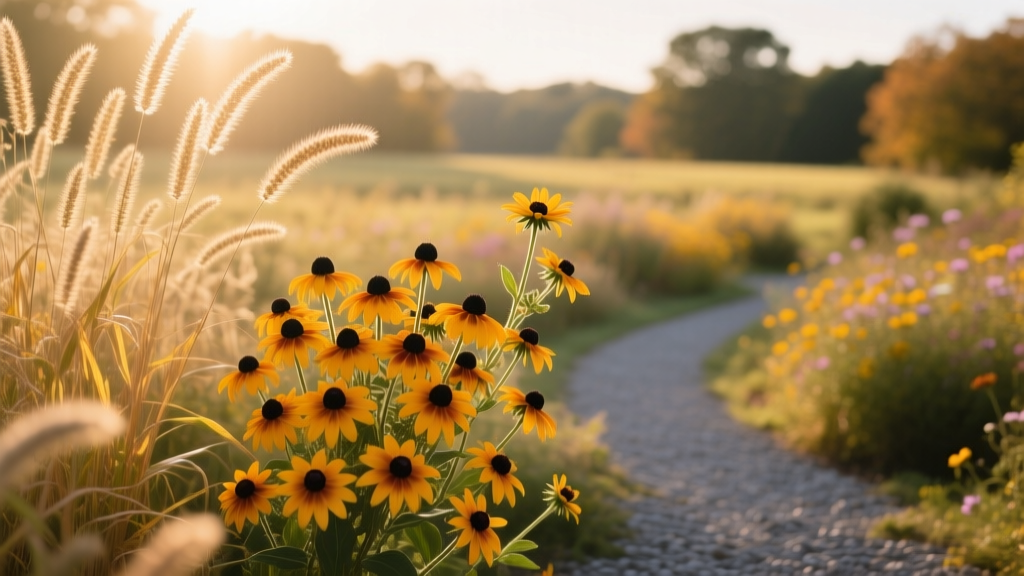
2026 Guide to Photographing Black-Eyed Susan and Switchgrass Gardens
Anna KowalskiPublished
The Intersection of Native Landscaping and Garden Photography in 2026
As we navigate the 2026 gardening season, the intersection of sustainable landscaping and digital documentation has never been more vibrant. Homeowners and landscape photographers alike are increasingly turning to native plant palettes to create resilient, ecologically rich outdoor spaces. Among the most visually striking and ecologically valuable pairings is the combination of Black-eyed Susan (Rudbeckia hirta) and Switchgrass (Panicum virgatum). This dynamic duo offers a masterclass in textural contrast, seasonal movement, and pollinator support, making it an ideal subject for garden photography and long-term landscape documentation.
In this comprehensive 2026 guide, we will explore how to intentionally design, plant, and photograph a native garden featuring these two powerhouse species. Whether you are using the latest 2026 flagship smartphone with computational AI photography or a professional mirrorless camera system, capturing the essence of these native plants requires an understanding of both their botanical habits and photographic principles.
The Ecological and Visual Power of Native Pairings
Before picking up a camera, it is essential to understand the subjects you are planting. According to the Lady Bird Johnson Wildflower Center, Black-eyed Susan is a quintessential native wildflower that thrives in full sun and well-draining soils, providing vital nectar for native bees and butterflies from early summer well into autumn. When paired with Switchgrass, a deep-rooted native prairie grass, the garden gains structural integrity, winter interest, and essential overwintering habitat for beneficial insects.
From a photographic perspective, this pairing is a dream. The rigid, dark brown, domed seed cones and bright golden-yellow ray florets of the Black-eyed Susan provide a bold, high-contrast focal point. In contrast, the airy, delicate, and translucent panicles of Switchgrass offer a soft, moving backdrop that catches the wind and the light. This juxtaposition of bold geometric forms and soft, chaotic textures is the foundation of compelling botanical photography.
Designing Your Native Canvas for the Lens
To create a landscape that photographs beautifully, you must design with the camera's perspective in mind. In 2026, landscape design heavily favors 'drift planting'—grouping plants in large, sweeping masses rather than isolated, polka-dot placements. This technique not only mimics natural prairie ecosystems but also creates clean, uncluttered compositions for your photographs.
- Spacing and Layout: Plant Switchgrass (Panicum virgatum cultivars like 'Heavy Metal' or 'Northwind') in clusters of three to five, spaced 36 inches apart. Their mature height of 4 to 6 feet makes them the perfect mid-ground or background layer.
- Foreground Framing: Plant Black-eyed Susans in sweeping drifts in the foreground, spaced 18 to 24 inches apart. Their mature height of 2 to 3 feet will overlap the base of the grasses, hiding the sometimes-bare lower stems of the Switchgrass and creating a seamless wall of color.
- Pathways and Vantage Points: Install a narrow, permeable hardscape path, such as decomposed granite or reclaimed brick, winding through the planting beds. This provides you with physical access to shoot from within the garden, allowing for immersive, eye-level perspectives rather than distant, detached shots.
2026 Camera Gear and Smartphone Techniques
The landscape of garden photography has evolved dramatically by 2026. While dedicated mirrorless cameras with fast prime lenses (such as an 85mm f/1.8 or a 100mm macro) remain the gold standard for high-resolution botanical prints, modern smartphones have closed the gap significantly. The latest 2026 flagship devices feature advanced LiDAR scanning and AI-driven subject isolation, allowing you to artificially manipulate depth-of-field and separate the delicate plumes of Switchgrass from busy backgrounds with startling accuracy.
When using a smartphone, utilize the 'Macro' mode to capture the intricate, bristly texture of the Black-eyed Susan's central cone. For wider shots, use the 'Portrait' or 'Cinematic' mode on your flora, ensuring the AI correctly maps the complex, semi-transparent edges of the grass plumes. If you are using a dedicated camera, keep your ISO low (100-400) to minimize noise, and use a fast shutter speed (1/500s or faster) to freeze the movement of the Switchgrass in the wind.
Mastering Light: The Golden Hour and Backlighting
The single most important element in garden photography is light. For native grasses like Switchgrass, backlighting is the ultimate technique. Position yourself so the sun is behind the grass, shooting directly into the light during the first hour after sunrise or the last hour before sunset. This 'golden hour' backlighting causes the delicate seedheads to glow, highlighting their intricate structure and creating a magical, ethereal halo effect.
For Black-eyed Susans, side-lighting during the golden hour emphasizes the texture of the petals and the rugged, three-dimensional dome of the central cone. Avoid shooting in the harsh, overhead light of midday, which casts ugly, deep shadows and washes out the vibrant yellow pigments. If you must document the garden at midday, utilize a portable diffuser to soften the sunlight, or focus entirely on macro details where you can control the light with a small, off-camera LED panel.
Seasonal Documentation Strategy
A true garden documentation project spans the entire year. The National Wildlife Federation emphasizes the importance of leaving native gardens standing through the winter to support local wildlife. This ecological practice also provides incredible photographic opportunities. Below is a structured timeline for documenting your Black-eyed Susan and Switchgrass garden throughout the 2026 seasons.
| Season | Botanical Stage | Photographic Subject | Recommended Technique |
|---|---|---|---|
| Spring | Vegetative Growth | Emerging Switchgrass shoots, basal Susan leaves | Macro lens, low-angle perspective, dew drops |
| Summer | Peak Bloom | Bright yellow Susan petals, pollinator activity | Golden hour backlighting, fast shutter speed |
| Autumn | Seedhead Formation | Dark Susan cones, airy Switchgrass plumes | Silhouette shots, depth-of-field isolation |
| Winter | Dormancy | Frost-covered stalks, structural garden bones | Overcast soft lighting, monochrome processing |
Post-Processing and Garden Journaling
In 2026, post-processing is as much about data management as it is about color grading. When importing your images, utilize metadata tagging to document the exact date, weather conditions, and specific garden zone where the photo was taken. This creates a searchable, visual database of your landscape's progression over time. Adjust your white balance to accurately reflect the warm, golden tones of the Susans, and use localized masking tools to gently enhance the contrast of the Switchgrass plumes without oversaturating the surrounding foliage.
Pair your visual documentation with a digital garden journal. Track the first bloom dates of the Black-eyed Susans and note the arrival of specific pollinators. The Xerces Society provides excellent resources for identifying native bees and butterflies; use their guides to tag your photos with the specific species visiting your garden. This not only enriches your personal documentation but contributes valuable citizen science data regarding pollinator activity and climate shifts in your specific hardiness zone.
Conclusion: Capturing the Living Landscape
Photographing a native garden is an exercise in patience, observation, and deep ecological appreciation. By intentionally designing your landscape with Black-eyed Susan and Switchgrass, you are creating a living canvas that evolves daily. The bold, sunny faces of the Susans and the whispering, golden plumes of the Switchgrass offer endless creative possibilities for the lens. As you document your garden through the 2026 seasons, you are not just creating beautiful images; you are preserving the story of a resilient, thriving ecosystem right in your own backyard.

