Gardening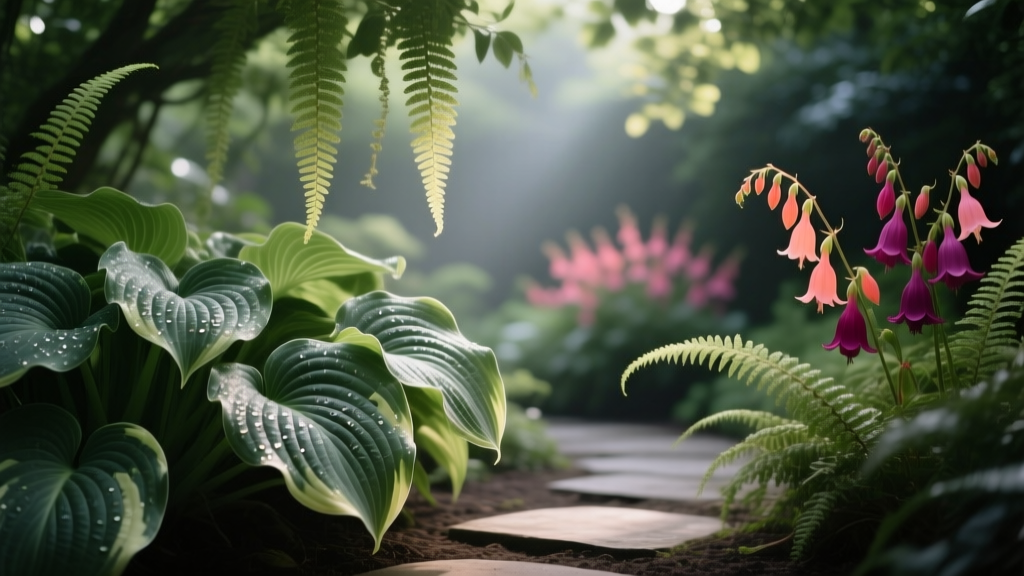
Capture Shade Gardens 2026: Hosta, Fern & Coral Bells Design
Mike RodriguezPublished
The Renaissance of the Shade Garden in 2026
As urban spaces become denser and mature tree canopies expand, shade gardening has evolved from a landscaping afterthought into a premier horticultural art form. In 2026, the focus is heavily on texture, foliage contrast, and ecological resilience. The undisputed champions of the shade border are the classic trio: Hostas, Ferns, and Coral Bells (Heuchera). However, capturing the moody, dappled beauty of these low-light sanctuaries presents a unique challenge for garden photographers and documentarians. This guide explores how to design a shade garden specifically for the camera lens and the technical skills required to photograph it in 2026.
Shade gardens lack the high-contrast, vibrant pops of direct sunlight found in rose beds or vegetable patches. Instead, they rely on subtle gradients, intricate leaf venation, and structural juxtaposition. To document these spaces effectively, you must first design them with photographic principles in mind, ensuring that the interplay between the broad leaves of hostas, the fractal fronds of ferns, and the jewel-toned rosettes of coral bells creates a visually compelling narrative.
Designing the Photogenic Trio: Color and Texture Theory
When designing a shade garden for photography, contrast is your most vital tool. Without direct sunlight to create harsh shadows and bright highlights, you must rely on color and textural contrast to give your images depth. According to the Clemson University Home & Garden Information Center, hostas provide the structural backbone of the shade garden, offering massive, ribbed, or variegated leaves that anchor the visual weight of a photograph.
To complement the hostas, we look to ferns. The Penn State Extension notes that ferns introduce a delicate, airy texture that softens the boldness of hosta mounds. Finally, coral bells (Heuchera) act as the color palette. The Royal Horticultural Society (RHS) highlights that modern Heuchera cultivars offer year-round foliage colors ranging from deep plum to fiery amber, which are essential for drawing the viewer's eye through a shaded landscape.
Photographic Contrast Guide: The 2026 Shade Trio
When planning your garden beds, use this table to select varieties that maximize visual contrast for your camera sensor.
| Plant Category | Recommended 2026 Variety | Photographic Role | Visual Contrast Feature |
|---|---|---|---|
| Hosta | 'Shadowland Diamond Lake' | Background / Anchor | Broad, cupped blue-green leaves with heavy corrugation |
| Hosta | 'Curly Fries' | Midground Accent | Narrow, rippled chartreuse leaves that catch dappled light |
| Fern | Japanese Painted Fern | Texture / Softener | Silvery-grey fronds with deep maroon stems |
| Fern | Autumn Fern 'Brilliance' | Seasonal Color Shift | Copper-red new growth contrasting with dark green mature fronds |
| Coral Bells | Heuchera 'Forever Purple' | Foreground / Color Pop | Deep, velvety purple-black leaves with ruffled edges |
| Coral Bells | Heuchera 'Marmalade' | Warm Accent | Rich amber and burnt orange foliage that glows in low light |
Mastering Low-Light Photography in the Garden
The primary challenge of shade garden photography is the lack of photons. In 2026, camera technology has largely mitigated the need for bulky tripods in tight garden beds. Modern mirrorless cameras equipped with advanced In-Body Image Stabilization (IBIS), such as the Sony A7R V or the Canon EOS R5 Mark II, allow photographers to shoot handheld macro shots at shutter speeds as slow as 1/10th of a second without motion blur.
However, relying solely on high ISO settings can introduce digital noise, which degrades the fine textures of fern fronds and hosta veins. The key is to balance your exposure triangle while utilizing the natural, soft light that shade environments provide. Shade acts as a giant natural softbox, eliminating harsh shadows and allowing for even, flattering illumination of foliage.
Recommended Camera Settings for Shade Foliage
| Scenario | Aperture | ISO (2026 Mirrorless) | Shutter Speed | Focus Technique |
|---|---|---|---|---|
| Wide Garden Landscape | f/8 to f/11 | 400 - 800 | 1/60s (with IBIS) | Single-point AF on midground fern |
| Hosta Leaf Macro | f/4 to f/5.6 | 800 - 1600 | 1/30s (with IBIS) | Manual focus peaking on leaf veins |
| Fern Fiddlehead Detail | f/2.8 | 1600 - 3200 | 1/100s | Focus stacking (3-5 frames) |
| Coral Bells Color Pop | f/5.6 | 400 | 1/60s | Eye-AF / Subject tracking on rosette center |
Lighting Techniques and Modifiers for Deep Shade
Even with excellent camera sensors, deep shade can result in flat, muddy images. To elevate your garden documentation, you must learn to manipulate the available ambient light. A standard 5-in-1 collapsible reflector (costing approximately $25 to $35 in 2026) is an indispensable tool for the shade garden photographer.
- The Silver Side: Use this to bounce cool, directional light into the deep shadows beneath a massive Hosta 'Empress Wu'. This reveals the intricate, architectural ribbing of the leaf surface.
- The Gold Side: Use sparingly to mimic late-afternoon golden hour light, warming up the cool tones of blue hostas and making the amber tones of Heuchera 'Marmalade' truly sing.
- The White Side: The most versatile option for shade. It provides a soft, neutral fill light that lifts shadows without altering the natural color temperature of the foliage.
- The Translucent Diffuser: If a single ray of harsh midday sun is piercing the tree canopy and creating a blown-out highlight on a fern frond, hold the diffuser above the plant to soften the beam into a gentle glow.
Documenting the Seasonal Progression
Garden documentation in 2026 extends far beyond single, static snapshots. True garden storytelling involves capturing the temporal shifts of the landscape. The shade trio offers incredible opportunities for seasonal time-lapse and progression photography.
In early spring, document the unfurling of fern fiddleheads and the emerging, spear-like shoots of hostas pushing through the mulch. This is the time for macro photography, focusing on the geometric perfection of the fractal fern coils. By mid-summer, shift your focus to wide-angle compositions that capture the sheer volume and overlapping layers of the mature hosta mounds and the delicate, airy flower scapes rising above the coral bells.
As autumn approaches, the shade garden transforms again. While hostas begin to yellow and fade, the Autumn Ferns flush with copper tones, and the Coral Bells deepen in color, reacting to the cooler night temperatures. Setting up a weather-sealed action camera or a dedicated garden time-lapse rig on a fixed fence post allows you to compress these months of subtle shifts into a captivating 30-second video sequence, perfect for sharing on digital gardening portfolios.
Post-Processing Workflow for Shade Images
When importing your RAW files into modern editing software like Lightroom or Capture One, shade photos require a specific approach. Utilize the AI-driven shadow recovery tools standard in 2026 software to lift the dark areas under the plant canopies without introducing color banding. Be careful not to over-sharpen fern fronds, as this can create unnatural halos. Instead, use localized masking to selectively enhance the texture of hosta leaves while keeping the delicate ferns smooth and natural. Adjust the white balance carefully; shade naturally skews blue, so warming the image slightly will often render the foliage colors more accurately to the human eye.
Conclusion
Designing and photographing a shade garden featuring hostas, ferns, and coral bells is a masterclass in subtlety and texture. By thoughtfully selecting varieties that offer contrasting colors and forms, and by leveraging 2026's advanced low-light camera capabilities and lighting modifiers, you can transform a dark, forgotten corner of your yard into a breathtaking visual sanctuary. Whether you are capturing the macro details of a single painted fern frond or documenting the sweeping, layered drifts of a mature shade border, the key is to embrace the soft, moody light and let the intricate foliage tell the story.
