
Landscaping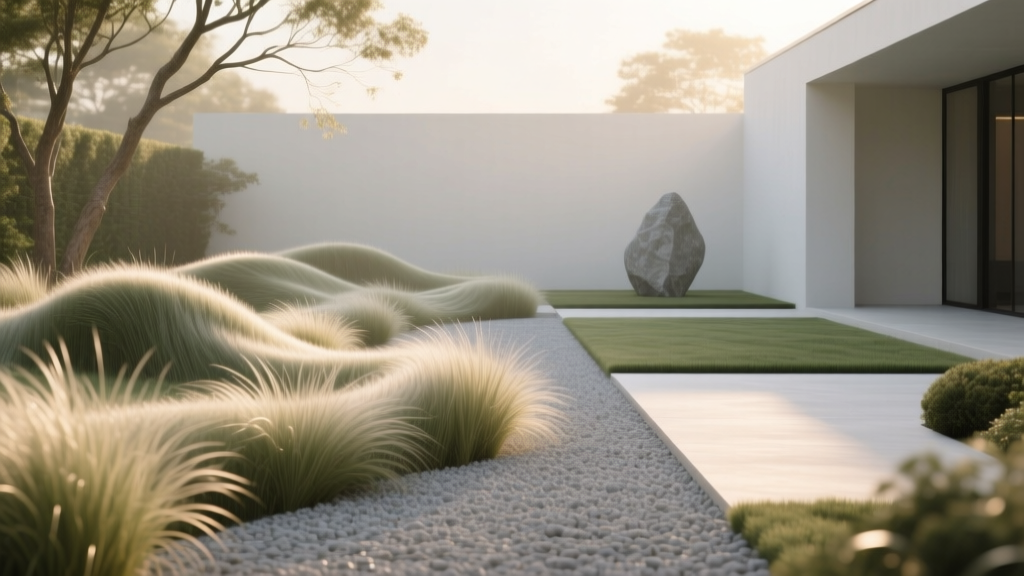
2026 Guide to Photographing Minimalist Grass Yards
Sarah ChenPublished
The Rise of the Modern Minimalist Front Yard in 2026
In 2026, the traditional turf-heavy front yard has been largely replaced by sustainable, architectural landscapes that prioritize water conservation, structural hardscaping, and low-maintenance flora. The modern minimalist front yard is defined by clean geometric lines, large-format porcelain pavers, Corten steel edging, and monolithic concrete retaining walls. However, to prevent these spaces from feeling cold or sterile, landscape architects are increasingly relying on the softening, dynamic movement of ornamental grasses. For garden photographers and landscape documentarians, this intersection of rigid hardscaping and fluid botanical elements presents a unique and highly rewarding photographic opportunity.
Documenting these spaces requires more than just pointing a camera at a yard. It demands an understanding of how light interacts with translucent grass plumes, how to balance the visual weight of heavy concrete with delicate foliage, and how to utilize negative space to emphasize the minimalist ethos. Whether you are building a professional landscape architecture portfolio or simply documenting your own property's transformation, mastering the photography of ornamental grasses in minimalist settings is an essential skill for the modern visual artist.
Selecting Ornamental Grasses for the Lens
Not all grasses are created equal when it comes to photography. The best varieties for minimalist landscapes offer strong vertical lines, striking seed heads, and foliage that catches the light beautifully. According to the Royal Horticultural Society, ornamental grasses provide unparalleled year-round structure, but their photogenic qualities peak at different times depending on the species. When planning a photoshoot or designing a yard specifically for documentation, consider the texture, height, and color shifts of the grasses throughout the seasons.
Tall, feathery grasses like Miscanthus create a stunning backdrop against stark white or dark grey modern home exteriors, while low-growing, mounding grasses like Festuca provide excellent foreground textural contrast against smooth concrete pathways. Below is a comparison of the most photogenic ornamental grasses used in contemporary minimalist designs.
| Common Name | Botanical Name | Mature Height | Best Photographic Feature | Peak Visual Season |
|---|---|---|---|---|
| Karl Foerster Feather Reed Grass | Calamagrostis x acutiflora | 4 to 5 feet | Strict vertical lines and golden wheat-colored plumes that glow in backlight. | Late Summer to Winter |
| Gracillimus Maiden Grass | Miscanthus sinensis | 5 to 6 feet | Fine, arching foliage with a silver midrib that catches wind and light dynamically. | Autumn |
| Hameln Dwarf Fountain Grass | Pennisetum alopecuroides | 2 to 3 feet | Bottlebrush-like plumes that create a soft, blurred foreground against sharp hardscaping. | Late Summer |
| Mexican Feather Grass | Nassella tenuissima | 1 to 2 feet | Incredible translucency and fluid, water-like movement in the slightest breeze. | Spring to Early Summer |
| Blue Fescue | Festuca glauca | 8 to 12 inches | Striking metallic blue color that contrasts heavily with warm wood or rusted steel. | Spring and Autumn |
Essential Camera Gear for 2026 Landscape Documentation
The landscape photography gear landscape in 2026 is dominated by high-resolution, full-frame mirrorless cameras equipped with advanced AI-driven subject tracking and computational photography features. When photographing ornamental grasses, wind is your biggest adversary and your greatest creative tool. Modern flagship cameras from Sony, Canon, and Nikon now feature in-camera wind-compensation algorithms and high-speed burst modes that allow you to capture the exact millisecond a grass plume aligns perfectly with the light.
Lens selection is equally critical. A macro lens, such as a 90mm or 100mm f/2.8, is indispensable for isolating individual seed heads and capturing the intricate, dew-covered details of foliage in the early morning. For capturing the broader architectural context of the minimalist yard, a tilt-shift lens (like a 24mm f/3.5) is highly recommended. Tilt-shift lenses allow you to correct the converging vertical lines of modern home facades and retaining walls, ensuring that the rigid geometry of the hardscaping remains perfectly straight and true to the designer's intent.
Additionally, a sturdy carbon-fiber tripod with a geared head is non-negotiable. When shooting minimalist landscapes, precise alignment of the camera sensor with the horizon and the architectural lines of the property is crucial. A geared head allows for micro-adjustments that ball heads simply cannot achieve, ensuring your composition is mathematically perfect.
Mastering Light: Capturing Texture and Translucency
Lighting dictates the mood and success of any garden photograph, but it is especially vital when working with ornamental grasses. The magic of grass photography lies in translucency—the way light passes through the delicate awns and seed heads, making them appear to glow from within. To achieve this, you must shoot with the light source (the sun) behind your subject, a technique known as backlighting or rim lighting.
The golden hours—shortly after sunrise and just before sunset—are the optimal times for this. The low angle of the sun creates long, dramatic shadows across minimalist concrete pavers, emphasizing their texture and layout, while simultaneously backlighting the grasses. However, do not dismiss overcast days. A heavy, diffused overcast sky acts as a giant softbox, eliminating harsh shadows and allowing the deep greens, blues, and subtle variegations of the grass foliage to render with rich, saturated accuracy. This is particularly useful when documenting the mid-day structural layout of a front yard where harsh midday sun would normally blow out the highlights on light-colored hardscaping materials.
Composition Rules for Minimalist Hardscaping and Flora
Minimalism in landscape design is all about intentionality. Every element placed in the yard serves a specific purpose, and your photographic composition must reflect that same level of intentionality. The concept of 'negative space' is your most powerful tool here. In a modern minimalist front yard, negative space might be a vast expanse of clear blue sky, a stark, unadorned stucco wall, or a wide stretch of dark gravel. By positioning a single, striking clump of Miscanthus grass against this empty space, you force the viewer's eye directly to the subject, highlighting its form and texture without distraction.
Leading lines are another fundamental principle. Use the geometric lines of the hardscaping—such as the gaps between large rectangular stepping stones or the sharp edge of a Corten steel planter—to lead the viewer's eye through the frame and directly toward the ornamental grasses. According to design principles highlighted by the American Society of Landscape Architects, the tension between the rigid, man-made lines of hardscaping and the organic, chaotic growth of nature is what makes contemporary landscapes visually compelling. Your camera angle should actively seek to juxtapose these two elements within the same frame.
Camera Settings for Freezing and Blurring Movement
Ornamental grasses are rarely static. Understanding how to manipulate your shutter speed allows you to tell different stories about the landscape. To freeze the intricate details of a grass plume swaying in a stiff breeze, you will need a fast shutter speed—typically 1/1000th of a second or faster. This requires widening your aperture (e.g., f/2.8 or f/4) and potentially raising your ISO, though modern 2026 sensors handle high ISO noise exceptionally well.
Conversely, if you want to convey the feeling of a gentle, relaxing breeze moving through the front yard, use a slow shutter speed (between 1/15th and 1/2 of a second) while keeping the camera locked on your tripod. This will render the hardscaping and the base of the grasses in razor-sharp focus, while the tips and plumes will blur into a soft, ethereal mist. This technique beautifully communicates the kinetic energy of the garden, a vital aspect of landscape documentation that static images often fail to capture.
Building a Seasonal Documentation Portfolio
True landscape documentation extends beyond a single afternoon shoot. Ornamental grasses undergo dramatic transformations throughout the year. In spring, they are vibrant, compact, and green; in late summer, they send up towering, architectural plumes; in autumn, they shift to stunning hues of gold, copper, and rust; and in winter, their bleached, skeletal forms provide striking contrast against frost or snow. The Missouri Botanical Garden Plant Finder is an excellent resource for tracking the phenology and seasonal habits of specific grass cultivars to plan your shoot schedule.
To build a comprehensive portfolio, establish a fixed 'node' or shooting position in the front yard. Return to this exact spot, using the same focal length and camera height, on the same day of every month. By compiling these images into a time-lapse or a structured grid, you create a powerful visual document that showcases the enduring, year-round value of ornamental grasses in minimalist landscape design. This methodical approach not only serves as a beautiful artistic endeavor but also provides invaluable data for landscape architects and homeowners evaluating the long-term viability and aesthetic return on investment of their sustainable garden designs.

