
Landscaping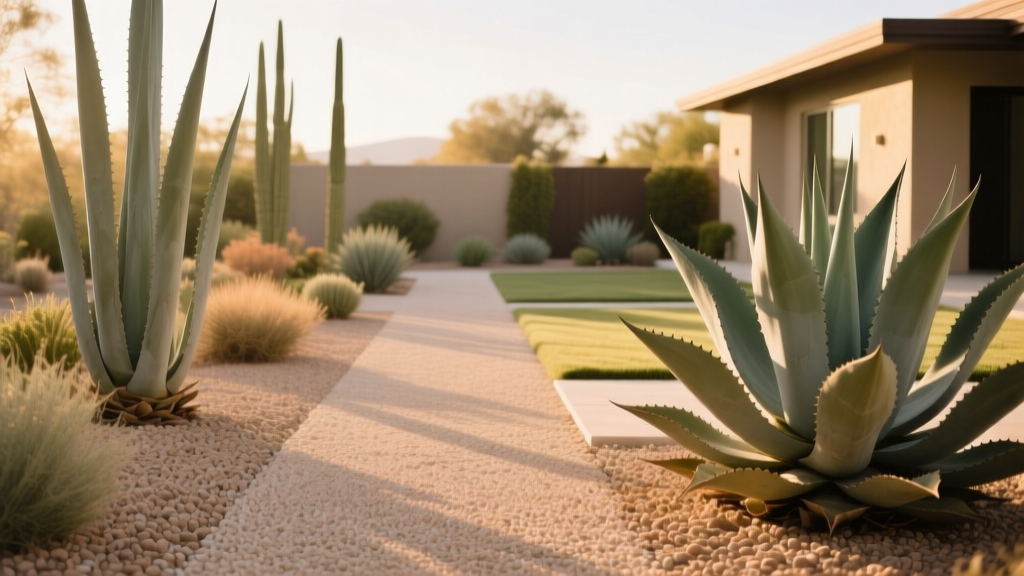
Photographing Xeriscape Yards: Agave and Granite Guide 2026
Emily WatsonPublished
The 2026 Xeriscape Renaissance: Documenting the Modern Front Yard
As municipal water conservation mandates continue to tighten across the Sun Belt and arid regions in 2026, the xeriscape front yard has evolved from a niche ecological choice to the premier standard for modern curb appeal. Among the most striking, sustainable, and low-maintenance combinations is the pairing of architectural agave plants with the rustic, permeable hardscaping of decomposed granite (DG). For landscape enthusiasts, garden photographers, and horticultural documentarians, this specific pairing offers a masterclass in texture, contrast, and geometric form. Documenting these landscapes requires a specialized approach to garden photography—one that respects the harsh lighting conditions and unique material properties of desert-inspired design. According to the EPA WaterSense program, outdoor water use can account for up to 60% of household water consumption in arid regions, making the shift toward DG and agave not just an aesthetic triumph, but an environmental imperative.
Understanding Your Subjects: Agave and Decomposed Granite
To photograph a xeriscape effectively, you must first understand the visual language of its primary components. Agave plants are architectural marvels. Their rigid, fibrous leaves form perfect mathematical rosettes, often coated in a waxy, water-retaining cuticle known as a 'bloom.' This bloom gives the leaves a matte, sometimes blue-green or silvery finish that reacts uniquely to polarized light. Decomposed granite, on the other hand, is a matrix of crushed, weathered rock. Unlike smooth concrete or uniform pavers, DG is highly textured, granular, and available in a spectrum of earthy tones—from Sonoma Gold to Mojave Blend and deep Chocolate Brown. The visual tension between the smooth, waxy, sweeping lines of the agave and the rough, chaotic, light-absorbing texture of the DG is the core narrative of your photographic documentation.
Popular 2026 Agave Varieties for Front Yard Photography
- Agave attenuata (Fox Tail Agave): Soft, spineless, and arching. Best photographed with a macro or mid-range zoom lens to capture the smooth, jade-green skin and sweeping curves without the distraction of harsh terminal spines.
- Agave americana 'Marginata': Bold, structural, and edged in vibrant yellow. Requires wide-angle lenses to capture its massive wingspan and the striking color contrast against dark decomposed granite pathways.
- Agave parryi (Artichoke Agave): Compact, heavily patterned, and densely leaved. The intricate, dark terminal spines cast incredible, lace-like shadows on the granite during midday shoots.
Preparing the Hardscape and Flora for the Lens
Before you even uncap your lens, site preparation is critical. Decomposed granite is a loose, organic-looking material, but footprints, stray leaves, and wind-blown debris can ruin the pristine, minimalist aesthetic of a xeriscape photograph. In 2026, landscape photographers specializing in arid gardens recommend using a specialized leaf blower with a variable-speed nozzle to gently clear organic debris from the DG without disturbing the carefully graded, compacted surface. For the agave, a soft-bristled brush or a blast of compressed air is ideal for removing dust from the waxy cuticle. Never wipe an agave leaf with a wet cloth; doing so will permanently strip the protective bloom, damaging both the biological function of the plant and its photogenic matte finish.
Essential 2026 Camera Gear for Desert Landscapes
Capturing the micro-textures of decomposed granite and the sweeping geometry of agave requires specific optical tools. Modern 2026 flagship mirrorless cameras feature AI-driven scene recognition that can automatically balance the extreme dynamic range between bright, reflective gravel and deep, shadowed rosette centers. However, the right glass and filters remain paramount.
- Circular Polarizing Filter (CPL): This is non-negotiable for xeriscape photography. A CPL cuts the micro-glare off the silica particles in the DG, revealing rich terracotta and gold tones, while simultaneously managing the reflection on the waxy agave leaves.
- 100mm to 105mm Macro Lens: Essential for isolating the intricate patterns of the agave's leaf margins and the granular composition of the decomposed granite.
- 24-70mm f/2.8 Wide-Angle Zoom: Perfect for capturing the entire front yard layout, emphasizing the leading lines of DG pathways drawing the eye toward a massive focal-point agave.
- Heavy-Duty Tripod with Spiked Feet: Standard rubber feet will sink into loose DG. Spiked feet ensure your camera remains perfectly level and stationary, which is crucial for focus stacking and time-lapse documentation.
Mastering Light: Time of Day and Shadow Play
Desert landscapes are defined by their light. The high-albedo nature of decomposed granite means it can easily blow out your highlights if shot at the wrong time of day. As noted by the conservation experts at Water Use It Wisely, a successful xeriscape relies on thoughtful placement of plants and hardscapes to manage heat and light; as a photographer, you must mirror this thoughtfulness in how you capture that light.
| Time of Day | Lighting Quality | Best Subject Focus | 2026 Gear Recommendation |
|---|---|---|---|
| Early Morning (Golden Hour) | Soft, directional, warm | Agave rosettes, dew on spines, warm DG tones | 100mm Macro Lens |
| Midday (Harsh Sun) | High contrast, deep shadows | DG texture, geometric agave shadows on hardscape | Wide-Angle with CPL Filter |
| Late Afternoon | Golden, elongated shadows | DG pathways leading to focal points, curb appeal | 35mm Prime Lens |
| Blue Hour (Dusk) | Cool, ambient, low light | Integrated landscape uplighting on DG and Agave | Tripod + Fast f/1.4 Lens |
Pro Tip: When photographing decomposed granite at midday, use your polarizer not just for the sky, but angle it downward to cut the silica glare. This transforms the DG from a blown-out white surface into a rich, deeply textured earth tone.
Composition: Framing the Architectural Garden
Xeriscapes are inherently minimalist, often drawing inspiration from Zen gardens and modernist architecture. Your compositions should reflect this 'less is more' philosophy. Utilize the negative space provided by the open DG areas to give your agave subjects room to breathe within the frame. Employ leading lines by positioning yourself low to the ground, allowing the edges of a decomposed granite pathway to draw the viewer's eye directly to a mature Agave americana. The rule of thirds is highly effective here; place the agave on an intersecting third, allowing the sweeping expanse of the granite to fill the remaining two-thirds, emphasizing the scale and drought-tolerant nature of the landscape.
Long-Term Documentation: The Xeriscape Time-Lapse
One of the most rewarding aspects of garden photography is documenting the evolution of the landscape over time. Xeriscapes change slowly; agave growth is measured in inches per year, and decomposed granite settles and shifts with seasonal rains. To create a compelling visual journal or time-lapse in 2026, establish permanent reference points. Drive small, hidden landscape spikes into the ground at your chosen vantage points, and log the GPS coordinates using your camera's geotagging features. By returning to the exact same millimeter-perfect coordinate every season, you can document the subtle settling of the hardscape, the seasonal color shifts in the granite, and the majestic, slow-motion unfurling of new agave leaves. This meticulous documentation is invaluable for landscape architects tracking the long-term viability and aesthetic maturation of their xeriscape designs.
Post-Processing: Enhancing Earth Tones and Waxy Blooms
When editing your xeriscape documentation, resist the urge to over-saturate the image. The beauty of a decomposed granite and agave yard lies in its natural, muted, and sophisticated color palette. In your editing software of choice, focus on localized adjustments. Use masking tools to isolate the agave, slightly lifting the shadows to reveal the intricate striations on the leaves without destroying the contrast. For the decomposed granite, adjust the white balance to ensure the earth tones remain true to life—avoiding the temptation to push the yellows and oranges too far, which can make the DG look like artificial turf infill or painted concrete. Sharpening should be applied selectively; enhance the micro-contrast of the granite particles while keeping the smooth, waxy surfaces of the agave leaves clean and noise-free.
Conclusion
Photographing a xeriscape front yard featuring decomposed granite and agave is an exercise in capturing the harmony between rugged geology and resilient botany. By understanding the unique textural properties of your subjects, mastering the harsh desert light, and employing a disciplined approach to long-term documentation, you can create a stunning visual archive of sustainable landscaping. As water-wise gardening continues to define the aesthetic of 2026 and beyond, your photographic records will serve not only as art but as vital documentation of our shifting relationship with the natural environment.

