Tree Care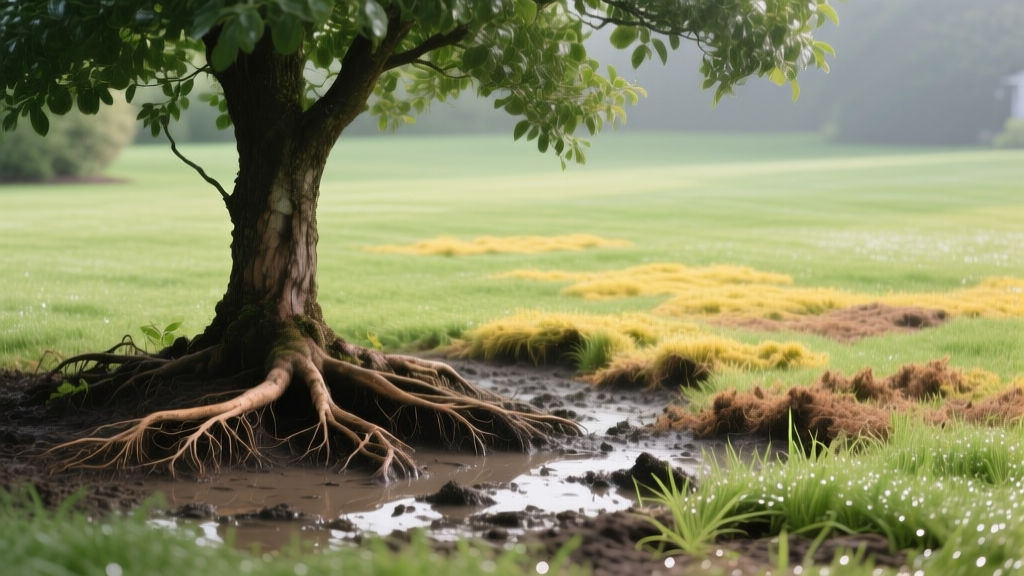
Phytophthora Root Rot: Identifying and Treating Trees and Lawns
Sarah ChenPublished
The Hidden Threat Beneath Your Soil
When homeowners notice their lawn turning yellow and their adjacent landscape trees showing signs of dieback, they often treat them as two separate problems. You might call a lawn care specialist for the turf and an arborist for the trees, completely missing the underlying connection. In many landscapes, the culprit is a single, devastating pathogen thriving beneath the soil surface: Phytophthora root rot. This aggressive water mold does not discriminate between your prized Kentucky bluegrass and your mature oak trees. Understanding how to identify, treat, and prevent this pathogen requires a holistic approach to your landscape's ecosystem.
What is Phytophthora? The Water Mold Menace
Phytophthora is technically not a true fungus, but rather an oomycete, commonly referred to as a water mold. It thrives in wet, poorly drained, and compacted soils. Unlike typical fungal spores that rely on wind dispersal, Phytophthora produces motile zoospores that literally swim through soil moisture to find and infect vulnerable plant roots. Once established, it destroys the fine root hairs responsible for water and nutrient uptake, eventually girdling the main structural roots and the lower trunk. The USDA APHIS closely monitors specific aggressive strains like Phytophthora ramorum, the causative agent of Sudden Oak Death, which has devastated both forest ecosystems and residential landscapes across the country.
Identifying the Disease: Trees vs. Lawns
Identifying Phytophthora can be tricky because the above-ground symptoms closely mimic drought stress or nutrient deficiencies. However, because this pathogen attacks the root system first, the signs will manifest differently depending on the plant type. In trees, you will typically notice a thinning canopy, smaller than normal leaves, and chlorosis (yellowing) that starts in the upper branches. A telltale sign on trees is the presence of dark, water-soaked cankers on the lower trunk, often oozing a reddish-brown sap.
In lawns, the disease presents as irregular, water-soaked patches that turn yellow and then brown. The turf will feel spongy underfoot and can be easily pulled up from the soil because the root system has been completely rotted away. According to the Royal Horticultural Society (RHS), poor drainage and heavy clay soils are the primary catalysts for these symptoms to escalate rapidly.
Symptom Comparison Chart
| Symptom | Phytophthora Root Rot | Drought Stress | Brown Patch (Lawn Fungus) |
|---|---|---|---|
| Root Appearance | Dark, mushy, lacking fine hairs | Dry, brittle, but intact | Roots generally healthy |
| Turf Pull Test | Pulls up easily, no resistance | Requires force, roots hold | Leaves slip, roots hold firm |
| Tree Trunk Signs | Dark cankers, bleeding sap | None, maybe bark cracking | N/A (Turf disease) |
| Soil Condition | Wet, poorly drained, heavy | Dry, hard, hydrophobic | Humid surface, wet thatch |
Step-by-Step Treatment and Management Protocol
Treating Phytophthora requires a multi-pronged approach that addresses both the pathogen and the environmental conditions that allowed it to thrive. You cannot simply spray a fungicide and expect a cure if the soil remains waterlogged.
1. Soil Drainage and Aeration
The absolute first step in managing this disease is improving soil drainage. For lawns, perform deep core aeration in the fall or spring to relieve compaction and allow water to penetrate deeper rather than pooling on the surface. For trees, avoid grading soil up against the trunk. If your landscape suffers from heavy clay, consider installing French drains or dry creek beds to redirect excess surface water away from the root zones of both your trees and your turf.
2. Chemical Controls and Fungicides
When cultural controls are not enough, targeted chemical interventions are necessary. Because Phytophthora is an oomycete, standard broad-spectrum fungal treatments will not work. You must use fungicides specifically labeled for oomycetes, such as those containing mefenoxam (e.g., Subdue MAXX) or phosphonates (e.g., Agri-Fos, potassium phosphite). For lawn applications, a soil drench of mefenoxam at a rate of 1 to 2 fluid ounces per 1,000 square feet, watered in immediately, can protect new root growth. For high-value trees, trunk injections of phosphonate fungicides are highly effective. A certified arborist can inject the chemical directly into the tree's xylem, bypassing the compromised root system and delivering the treatment straight to the canopy. Always follow the manufacturer's label instructions regarding timing, typically applying in early spring before the wet season or in early fall.
3. Cultural Controls and Mulching
Proper mulching is critical, but it must be done correctly. The Arbor Day Foundation emphasizes the importance of avoiding 'volcano mulching,' which traps moisture against the tree trunk and creates a perfect breeding ground for Phytophthora. Apply a 2-to-3-inch layer of organic mulch around the tree's drip line, but keep it at least 3 to 6 inches away from the trunk flare. For the lawn, ensure that thatch buildup does not exceed half an inch, as thick thatch layers hold excess moisture against the soil line and hinder air circulation.
Soil Testing and Professional Lab Diagnosis
If you are unsure whether your landscape is suffering from Phytophthora or a different issue, professional lab diagnosis is the gold standard. You can collect soil and root samples from the margin of the affected area—where the dying tissue meets the healthy tissue—and send them to your local university extension plant diagnostic clinic. The lab will isolate the pathogen and confirm the exact species of Phytophthora, which can help dictate the most effective chemical and cultural management strategy moving forward.
Preventative Strategies for a Unified Landscape
Prevention is always more cost-effective than treatment. When planting new trees or laying new sod, select species and cultivars that are known to be resistant to root rot, especially if your property has a history of poor drainage. Implement smart irrigation practices by switching from overhead sprinklers to drip irrigation for trees and shrubs, and water your lawn deeply but infrequently in the early morning hours so the surface dries out during the day. Finally, practice strict sanitation; clean your mower blades, shovels, and pruning tools with a 10% bleach solution or rubbing alcohol after working in an infected area to prevent spreading the microscopic zoospores to healthy parts of your landscape.
Pro Tip: Never move soil from an area known to be infected with Phytophthora to a healthy part of your yard. The zoospores can survive in damp soil clumps on your boots, wheelbarrow tires, and shovels for extended periods.