Pest Control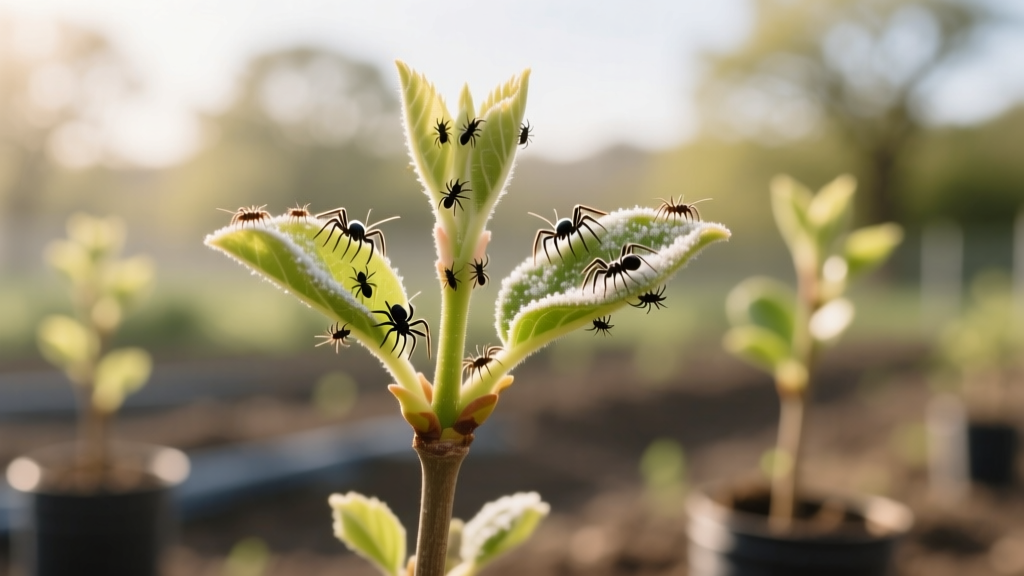
2026 Guide: Phytoseiulus Mite Release for Tree Spider Mites
David ParkPublished
The Intersection of Tree Selection and Spider Mite Pressure
When planning a landscape installation or adding new specimen trees to your garden, the principle of 'Right Plant, Right Place' is your first line of defense against pests. However, even perfectly sited trees can face severe stress during their first year of establishment. In 2026, with shifting climate patterns bringing hotter, drier springs to many regions, newly planted trees are exceptionally vulnerable to the two-spotted spider mite (Tetranychus urticae). These microscopic arachnids thrive in hot, dusty conditions and can rapidly defoliate a young tree before its root system is fully established.
As a core component of modern Integrated Pest Management (IPM), biological controls have become the gold standard for protecting valuable landscape investments. Among the most effective biological agents available to homeowners and professional landscapers is the predatory mite Phytoseiulus persimilis. This guide explores how to integrate Phytoseiulus releases into your tree planting and early-care protocols to ensure robust, pest-free growth from day one.
Understanding the Threat: Spider Mites on New Transplants
Spider mites are not true insects; they are closely related to spiders and ticks. They feed by piercing the leaf tissue and sucking out the cellular contents, causing a stippled, yellowish appearance on the foliage. According to the University of Minnesota Extension, severe infestations lead to premature leaf drop, reduced photosynthesis, and stunted growth—outcomes that can be fatal to a newly planted tree trying to establish its root ball.
New transplants are particularly susceptible because the digging, transporting, and replanting process induces transplant shock. This stress reduces the tree's natural chemical defenses. Furthermore, nursery-grown trees often arrive with low-level mite populations already present in the root ball or canopy. When moved to a drier, sunnier landscape environment, these latent populations can explode.
Why Phytoseiulus persimilis is the Ultimate Biological Control
Phytoseiulus persimilis is a voracious, fast-moving predatory mite that specializes in hunting spider mites. Unlike generalist predators that might wander off in search of pollen or other food sources, P. persimilis relies almost exclusively on spider mites for survival and reproduction. When spider mite populations are high, P. persimilis reproduces faster than its prey, allowing it to rapidly crash the pest population.
The University of California Agriculture and Natural Resources (UC ANR) notes that P. persimilis is most effective when introduced at the first sign of spider mite activity. A single adult predator can consume up to 20 spider mite eggs or 5 adult spider mites per day. In 2026, commercial insectaries have perfected cold-chain shipping methods using sustainable, moisture-retaining vermiculite carriers, ensuring that the predatory mites arrive at your doorstep highly active and ready to hunt.
Tree Selection Chart: Susceptibility and Release Strategy
Not all trees are equally attractive to spider mites. When selecting trees for hot, dry microclimates (such as near south-facing walls, driveways, or street curbs), you must anticipate mite pressure. Below is a guide to common landscape trees, their susceptibility, and how to plan your Phytoseiulus releases.
| Tree Species | Common Name | Mite Susceptibility | Planting Site Considerations | Phytoseiulus Release Strategy |
|---|---|---|---|---|
| Acer palmatum | Japanese Maple | High | Requires dappled shade; hot afternoon sun triggers severe mite outbreaks. | Preventative release of 5 predators per sq ft of canopy in early spring. |
| Picea abies | Norway Spruce | Moderate to High | Tolerates full sun but suffers in dry, dusty urban soils. | Curative release at first sign of stippling; use slow-release sachets. |
| Citrus reticulata | Dwarf Mandarin (Patio) | High | Container or patio planting; high heat reflection from concrete. | Bi-weekly releases during summer heatwaves; maintain high humidity. |
| Thuja occidentalis | Arborvitae | Moderate | Often planted as dense privacy screens; poor air circulation inside canopy. | Targeted release on outer canopy edges where dust accumulates. |
| Malus domestica | Dwarf Apple | High | Full sun required for fruit; highly attractive to two-spotted mites. | Integrate with orchard IPM; release immediately post-bloom. |
Step-by-Step Phytoseiulus Release Protocol for 2026
Integrating predatory mites into your tree planting guide requires precise timing and application. Follow these steps to ensure a successful biological inoculation.
1. Pre-Planting Inspection and Preparation
Before removing the tree from its nursery pot or burlap sack, inspect the undersides of the lower leaves using a 10x jeweler's loupe. Look for tiny moving specks, cast skins, or fine silk webbing. If spider mites are already present, you will need a higher, curative release rate rather than a preventative one. Ensure that no broad-spectrum chemical pesticides (such as bifenthrin or carbaryl) have been applied to the tree or the surrounding soil within the last 30 days, as these will kill your beneficial predators.
2. Calculating Release Rates
In 2026, a standard bottle of Phytoseiulus persimilis contains approximately 2,000 predators and costs between $35 and $45. To determine how many bottles you need, estimate the square footage of the tree's canopy.
- Preventative Release (No visible mites): 2 to 5 predators per square foot of canopy.
- Curative Release (Visible stippling and webbing): 10 to 15 predators per square foot of canopy.
- Hotspot Treatment: If mites are localized to one branch, sprinkle the predator-vermiculite mixture directly onto the affected foliage at a concentrated rate.
3. Application Techniques
There are two primary methods for applying P. persimilis to trees:
- Loose Vermiculite Sprinkle: Gently rotate the bottle to distribute the mites evenly within the carrier medium. Sprinkle the mixture directly onto the leaves, focusing on the lower canopy and the undersides of leaves where spider mites congregate. The vermiculite will eventually fall to the soil, which is harmless to the tree.
- Slow-Release Sachets: For trees planted in dry or windy areas where loose vermiculite might blow away, slow-release paper sachets are ideal. These sachets contain a breeding population of predators mixed with a food source (like bran mites) that sustains them until they migrate out of the sachet and onto the tree. Hang the sachets on interior branches, out of direct, scorching sunlight.
Environmental Requirements for Success
The Environmental Protection Agency (EPA) emphasizes that biological controls are living organisms that require specific environmental conditions to thrive. Phytoseiulus persimilis is native to humid, temperate regions and has strict environmental requirements:
- Temperature: Optimal hunting and reproduction occur between 60°F and 85°F (15°C - 29°C). They become sluggish below 55°F and may suffer heat stress above 90°F.
- Humidity: This is the most critical factor. P. persimilis requires a relative humidity (RH) of at least 60% to 70% for its eggs to hatch successfully. In dry climates, the predatory mite's eggs will desiccate.
Landscaper's Trick: To boost humidity around newly planted trees, apply a thick layer of organic mulch around the root zone to retain soil moisture, and use overhead micro-sprinklers to mist the canopy in the early morning. This not only raises the local humidity but also washes dust off the leaves, making it easier for the predators to navigate and hunt.
'The success of a Phytoseiulus release on a newly planted tree is dictated not by the number of predators you buy, but by the microclimate you create for them. Dust and low humidity are the true enemies of biological control.' — Dr. Aris Thorne, IPM Specialist, 2026.
Post-Planting Monitoring and Maintenance
Releasing the predators is only half the battle. You must monitor the tree weekly for the first month after planting. Check the undersides of the leaves near the trunk and on the lower branches. You are looking for two things:
- The presence of the predator: P. persimilis is distinctly teardrop-shaped, orange-red, and moves much faster than the spider mite. If you see these fast-moving orange mites, the biological control is working.
- The decline of the pest: Spider mite eggs will appear collapsed, and adult spider mites may look shriveled or discolored, indicating they have been fed upon.
If the predator population seems to be declining but spider mites are still present, it is likely due to low humidity or extreme heat. In such cases, supplement with a secondary predatory mite species that tolerates heat and dry conditions better, such as Neoseiulus californicus, which can act as a reliable backup during the peak of summer.
Conclusion
Selecting the right tree and planting it correctly sets the foundation for a healthy landscape, but proactive pest management ensures it survives the critical establishment phase. By integrating Phytoseiulus persimilis releases into your 2026 tree planting protocols, you eliminate the need for toxic chemical sprays, protect local pollinators, and give your new trees the best possible chance to thrive. Embrace the power of biological control, and let nature's tiny hunters do the heavy lifting in your garden.