Pest Control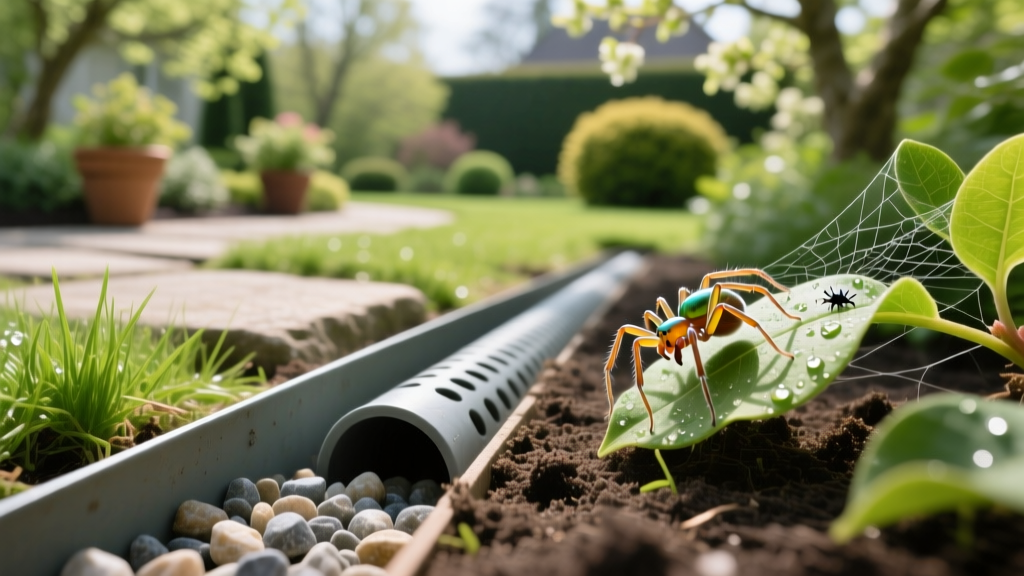
Post-French Drain Spider Mite Control: Phytoseiulus 2026
Robert HayesPublished
The Unseen Pest Threat After French Drain Installation
Installing a French drain is one of the most effective ways to protect your home’s foundation and eliminate waterlogged lawn areas. In 2026, with climate shifts bringing more intense wet-dry cycles to many regions, subsurface drainage systems are a critical component of modern landscape architecture. However, while you may be focused on soil grading, perforated pipe placement, and gravel backfilling, an invisible threat is often lurking in the disrupted soil: the two-spotted spider mite (Tetranychus urticae).
Homeowners and landscaping professionals frequently notice severe spider mite outbreaks in the weeks following major drainage work. The plants situated near the excavation zone—such as ornamental shrubs, roses, and perennial borders—suddenly develop stippled, yellowing leaves and fine webbing. Understanding the intersection between heavy landscape construction and pest biology is crucial for implementing an effective Integrated Pest Management (IPM) strategy. The most powerful tool in your post-drainage arsenal is the predatory mite Phytoseiulus persimilis.
Why Drainage Trenching Triggers Spider Mite Outbreaks
To effectively manage pests, we must first understand why French drain installation creates an ideal environment for spider mites. The correlation comes down to three primary factors: dust accumulation, root stress, and altered microclimates.
1. The Dust Bowl Effect
Digging trenches, moving dry subsoil, and pouring gravel backfill generates a massive amount of fine particulate dust. This dust settles heavily on the foliage of nearby plants. According to the UC Agriculture and Natural Resources IPM Program, dusty conditions are a primary catalyst for spider mite proliferation. Dust interferes with the plant's natural defenses and provides a physical barrier that protects mites from natural weather disruptions and larger predatory insects.
2. Root Pruning and Biochemical Stress
Even with careful excavation, trenching near existing landscape beds inevitably severs feeder roots. This root damage induces immediate water stress in the plant. When a plant is water-stressed, its internal biochemistry changes; it often produces higher concentrations of soluble sugars and amino acids in its sap. Spider mites thrive on this stressed sap, leading to explosive population growth. The plant essentially becomes a more nutritious host right when its ability to fight off pests is compromised.
3. Altered Soil Moisture and Humidity
A properly installed French drain works rapidly to pull excess water away from the topsoil. While this cures your waterlogging issues, it can cause the top few inches of soil to dry out much faster than the plants are accustomed to. Spider mites thrive in hot, dry conditions, whereas their natural predators generally require higher ambient humidity.
Enter Phytoseiulus persimilis: The Biological Heavyweight
When dealing with a post-construction spider mite outbreak, reaching for broad-spectrum chemical miticides is often a mistake. These chemicals can cause mite resistance and will annihilate any remaining native beneficial insects. Instead, the 2026 standard for IPM in residential landscapes is the targeted release of Phytoseiulus persimilis.
P. persimilis is a specialized predatory mite that feeds almost exclusively on the two-spotted spider mite. It is a voracious hunter; a single adult predator can consume up to 20 adult spider mites or 50 eggs per day. Furthermore, under optimal conditions (temperatures between 70°F and 85°F with high humidity), P. persimilis reproduces twice as fast as its prey, allowing it to rapidly overtake and collapse the spider mite colony.
Modern biological control suppliers have vastly improved the carrier materials for these predators. In 2026, most P. persimilis products are shipped in moisture-retaining vermiculite or specialized slow-release sachets that protect the predators from UV light and desiccation during the critical first 48 hours after application.
Preparing Your Post-Drainage Landscape for Release
Before you order and release your predatory mites, you must prepare the environment to ensure their survival. Releasing P. persimilis into a dusty, bone-dry landscape is a waste of money.
- Wash the Foliage: Use a garden hose with a spray nozzle to thoroughly wash the dust off the leaves of all plants near the French drain trench. This not only removes the physical barrier protecting the spider mites but also disrupts their webbing, making them more vulnerable to the predators.
- Restore Ambient Humidity: Because your new French drain is actively wicking away moisture, you may need to temporarily increase overhead irrigation or apply a thick layer of organic mulch around the base of the plants to trap soil moisture and raise the localized humidity.
- Check the Weather: Schedule your release for the early morning or late evening. Avoid releasing predators if a severe heatwave (above 95°F) is forecasted for the next 48 hours, as the predators are highly susceptible to desiccation.
Phytoseiulus Release Rates and Application Methods
Application rates depend heavily on the severity of the spider mite infestation and the level of plant stress caused by the drainage work. The University of Minnesota Extension recommends regular scouting to determine exact pest pressure before deploying biological controls.
| Infestation Level | Visual Symptoms | Release Rate (Predators per sq. ft.) | Application Method |
|---|---|---|---|
| Preventative / Low | No webbing; 1-2 mites per leaf found on lower canopy. | 1 - 2 predators | Slow-release sachets hung in the lower third of the plant canopy. |
| Moderate | Visible leaf stippling; isolated webbing on branch tips. | 3 - 5 predators | Shaker bottle application directly onto infested leaves and surrounding foliage. |
| Severe (Post-Trenching) | Heavy webbing; severe yellowing; plant defoliation beginning. | 10+ predators | Targeted spot-treatment with shaker bottles, followed by a secondary release 7 days later. |
Application Tip: When using the shaker bottle method, gently rotate the bottle horizontally to mix the predators with the vermiculite carrier. Sprinkle the mixture evenly over the leaves, focusing on the undersides where spider mites congregate. Do not apply during windy conditions, or the lightweight carrier and predators will blow away into the gravel drain bed.
Integrating IPM with Long-Term Drainage Maintenance
Once the predators are released, your maintenance routine must support their life cycle. Avoid using any fungicides, insecticidal soaps, or neem oil for at least three weeks post-release, as these can be lethal to P. persimilis. If you must treat a secondary pest issue, consult your biological supplier for compatible, soft-chemical alternatives.
From a drainage perspective, ensure that the French drain's catch basins and outlet grates are kept clear of landscape debris and mulch. If the drain clogs and water begins to pool around the root zones of your stressed plants, you will invite root rot fungi, compounding the plant's stress and making it impossible for the biological controls to stabilize the pest population. Proper drainage maintenance ensures the plants remain vigorous, and vigorous plants are inherently more resistant to future pest outbreaks.
Conclusion
French drain installation is a vital investment in your property's structural integrity and landscape health, but the short-term stress it places on your plants can invite destructive spider mite outbreaks. By recognizing the environmental triggers of construction-related pest pressure and deploying Phytoseiulus persimilis as a targeted biological control, you can protect your landscape investment. Through careful preparation, precise application, and ongoing drainage maintenance, your yard will remain lush, healthy, and pest-free in 2026 and beyond.