Pest Control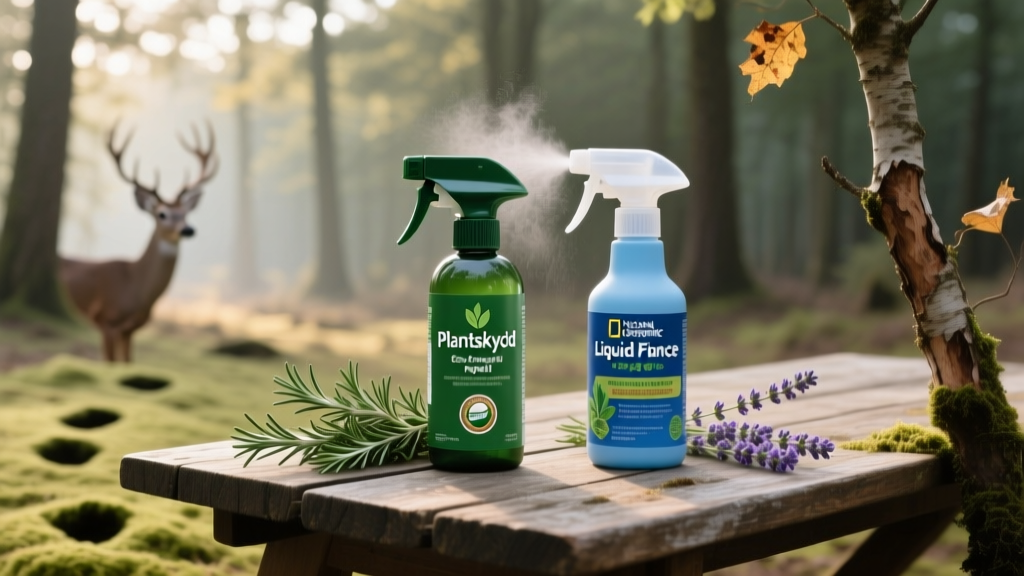
Plantskydd vs Liquid Fence Deer Repellents 2026: Tree Health Guide
Robert HayesPublished
The Hidden Link Between Deer Browsing and Web Worm Outbreaks
As an arborist and integrated pest management (IPM) specialist who spends the majority of the growing season monitoring canopy defoliators like the fall webworm (Hyphantria cunea) and the eastern tent caterpillar (Malacosoma americanum), I look at tree health through a holistic lens. You might wonder why a professional dedicated to tree web worm control is writing a comprehensive review comparing Plantskydd and Liquid Fence deer repellents for the 2026 season. The answer lies in the complex physiology of tree stress and the cascading effects of mechanical damage. Protecting your trees from deer browsing is not just about preserving ornamental aesthetics; it is the critical first line of defense in preventing severe secondary insect outbreaks.
When deer invade your landscape, they do more than just eat leaves. They strip bark, snap tender apical meristems, and rub their antlers against the trunks of young saplings. This mechanical trauma forces the tree to divert valuable energy reserves away from producing defensive secondary metabolites, such as tannins and resins, and toward wound repair and survival. Stressed trees emit specific volatile organic compounds (VOCs) that act as chemical beacons, signaling to opportunistic pests that the tree's immune system is compromised. Consequently, a tree weakened by winter deer browsing becomes an irresistible target for spring and summer web worm infestations. By securing the lower canopy and trunk against deer, you maintain the tree's natural chemical defenses, making the upper canopy far less palatable to web worms and other defoliators. In this 2026 guide, we will evaluate the two most prominent commercial deer repellents on the market, Plantskydd and Liquid Fence, specifically through the lens of tree health preservation and long-term pest management.
Plantskydd: The Blood-Based Powerhouse
Plantskydd has long been a staple in the toolkits of commercial orchard managers and forestry professionals, and its 2026 formulations continue to lead the market in rainfastness and longevity. The active ingredient in Plantskydd is porcine blood meal, which triggers a deep-seated predator avoidance response in herbivores. When a deer approaches a treated tree, the scent of blood signals the presence of a predator, causing the animal to flee before it even takes a test bite. From a tree care perspective, this pre-bite deterrence is invaluable. If a deer bites a leaf or strips bark to test the taste, the mechanical damage is already done, and the tree's stress response is initiated. By preventing the initial bite, Plantskydd preserves the integrity of the tree's vascular system and foliage.
Furthermore, Plantskydd is OMRI-listed, making it fully compliant for use in organic orchards and sustainable landscapes. In 2026, the ready-to-use spray nozzle has been redesigned for better atomization, allowing arborists to coat the lower branches and trunk evenly without excessive runoff. The product bonds to the bark and foliage within hours, and once cured, it can withstand several inches of rainfall. A single application in late autumn can protect dormant trees throughout the winter, while spring applications typically last up to ten weeks during active growth phases. The primary drawback is the initial odor upon application, which, while undetectable to humans once dry, can be unpleasant during the spraying process. However, for the sake of preventing the stress that leads to web worm susceptibility, this temporary inconvenience is a worthwhile trade-off.
Liquid Fence: The Egg-Solid Standard
Liquid Fence operates on a completely different biological mechanism. Its primary active ingredients are putrescent egg solids, garlic oil, and capsaicin. Instead of triggering a predator avoidance response, Liquid Fence relies on taste and olfactory aversion. When a deer approaches a treated tree, the overwhelming scent of rotting eggs and garlic deters it. If the deer is particularly hungry and decides to take a bite, the capsaicin and bitter compounds immediately irritate its mouth, teaching the animal to avoid that specific plant in the future. While highly effective for protecting garden perennials and shrubs, Liquid Fence presents some unique challenges when applied to tree trunks and bark.
The putrescent egg solids can sometimes promote the growth of superficial fungi or algae on the moist, shaded sides of tree trunks, particularly in humid climates. While this does not directly harm the tree's internal vascular system, it can compromise the aesthetic appeal of ornamental bark and potentially harbor secondary pests. Additionally, because Liquid Fence relies partly on taste aversion, the deer must often take a tentative bite to learn the lesson. For young saplings with thin bark, even a single bite or scrape can girdle the tree or introduce fungal pathogens, leading to the exact type of stress that invites web worm colonization. However, for mature trees with thick, furrowed bark where the primary concern is protecting the lower foliage from being stripped, Liquid Fence remains a highly effective and affordable option in 2026.
2026 Head-to-Head Comparison Matrix
To help you make an informed decision for your landscape, I have compiled a comprehensive comparison matrix detailing how these two products perform specifically in the context of tree protection and IPM strategies.
| Feature | Plantskydd | Liquid Fence |
|---|---|---|
| Active Ingredients | Porcine Blood Meal | Putrescent Egg Solids, Garlic, Capsaicin |
| Mechanism of Action | Predator avoidance (Pre-bite) | Olfactory and Taste aversion (Post-bite learning) |
| Rainfastness | Highly rainfast once cured (24 hours) | Moderate; requires reapplication after heavy rain |
| Duration of Protection | 10-14 weeks on foliage; all winter on bark | 4-6 weeks; requires frequent reapplication |
| Bark Safety | Excellent; does not promote fungal growth | Good, but may promote superficial algae on shaded trunks |
| Odor Profile | Strong blood scent when wet; odorless when dry | Strong sulfur/garlic scent; fades over a few days |
| Best Use Case | Young saplings, thin-barked trees, organic orchards | Mature trees, lower shrubbery, perimeter defenses |
Strategic Application: Defending the Browse Line
When applying deer repellents to protect trees from browsing and subsequent web worm outbreaks, the concept of the browse line is paramount. The browse line refers to the maximum height a deer can reach while standing on its hind legs, typically around six feet for mature white-tailed deer. Any foliage, tender shoots, or bark below this line is highly vulnerable. In early spring, just as the tree is breaking dormancy and pushing out new, nutrient-rich growth, you must thoroughly treat all branches and trunk surfaces below the six-foot mark. This is also the exact time when overwintering web worm eggs are preparing to hatch. By ensuring the tree enters the spring growth flush without the compounded stress of deer browsing, you maximize its ability to produce the tannins necessary to deter web worm larvae.
According to guidelines published by the University of Minnesota Extension, alternating the active ingredients of your repellents throughout the season can prevent local deer populations from habituating to a single scent or taste. Therefore, an optimal 2026 IPM strategy involves applying Plantskydd in late winter to protect the dormant bark and early spring foliage, followed by a mid-summer application of Liquid Fence to protect the lower canopy during the peak of the web worm and tent caterpillar season.
Environmental and Soil Considerations
From an environmental and soil health perspective, both products are generally safe when used as directed, but they interact with the local ecosystem in different ways. Plantskydd, being derived from natural blood meal, actually acts as a mild, slow-release nitrogen fertilizer when it washes off the leaves and into the soil. This can slightly boost the vigor of the tree's root system, further aiding in its natural resistance to canopy pests. The Rutgers New Jersey Agricultural Experiment Station notes that blood-based repellents are among the most effective long-term solutions for high-pressure deer environments.
Liquid Fence, on the other hand, introduces sulfur and capsaicin into the soil environment. While these compounds break down relatively quickly, heavy, repeated applications directly to the root zone of sensitive tree species could theoretically alter the soil microbiome or affect shallow-rooted beneficial organisms. Therefore, when spraying Liquid Fence, it is best to target the foliage and bark directly, minimizing soil drench. Neither product has been shown to harm beneficial insects like ladybugs, parasitic wasps, or pollinators, which are essential allies in your ongoing battle against web worms and other canopy defoliators.
Final Verdict for Arborists and Tree Care Enthusiasts
Ultimately, the choice between Plantskydd and Liquid Fence in 2026 depends on the age of your trees, the severity of the local deer pressure, and your overarching pest management goals. If you are managing young saplings, fruit trees, or ornamental species with thin, vulnerable bark, Plantskydd is the undisputed champion. Its pre-bite predator avoidance mechanism ensures that zero mechanical damage occurs, preserving the tree's immune system and its natural ability to fend off web worms and tent caterpillars. The OMRI-listed status and soil-enriching properties make it a cornerstone of holistic, organic tree care.
Conversely, if you are protecting a perimeter of mature, thick-barked trees where the primary goal is simply to stop deer from stripping the lower leaves, Liquid Fence offers a cost-effective, readily available solution that integrates well into a rotational spraying schedule. By understanding the profound connection between mammalian browsing, tree stress physiology, and secondary insect outbreaks, you can elevate your landscape management from simple pest control to true ecological stewardship. Protect the trunk, preserve the tannins, and watch your canopy thrive free from the silken tents of web worms.