Pest Control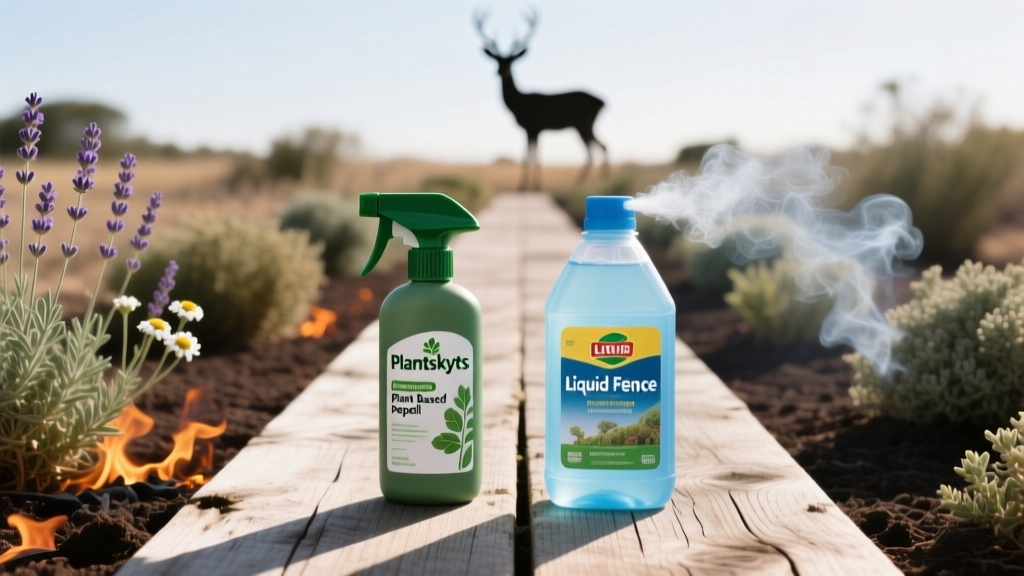
Plantskydd vs Liquid Fence 2026: Deer Control for Fire-Safe Yards
Mike RodriguezPublished
The Intersection of Deer Pressure and Fire-Resistant Landscaping
As we navigate the 2026 wildfire season, homeowners in the Wildland-Urban Interface (WUI) are facing a complex dual-threat: the escalating risk of catastrophic wildfires and rampant deer populations that destroy carefully curated defensible spaces. Fire-resistant landscaping relies heavily on maintaining a "Lean, Clean, and Green" perimeter. However, the very plants recommended for fire safety—such as high-moisture succulents, deciduous maples, and low-resin shrubs like Ceanothus—are often the most attractive targets for foraging deer.
When deer browse on your fire-resistant plants, they strip away the protective, moisture-rich foliage, leaving behind dry, dead stems and bark. This dead material acts as tinder, fundamentally compromising the firebreak you worked so hard to establish. To maintain a true defensible space, integrated pest management (IPM) is not just about plant health; it is a critical fire-safety strategy. In this comprehensive 2026 guide, we evaluate two of the most popular organic deer repellents on the market—Plantskydd and Liquid Fence—specifically through the lens of fire-resistant landscaping, examining their effectiveness, environmental impact, and residue combustibility.
Why Deer Target Fire-Resistant Plant Palettes
Fire-safe landscaping dictates that plants in Zone 1 (0 to 30 feet from the home) should be well-irrigated, low-growing, and free of volatile resins. Deer are naturally drawn to these areas for three reasons:
- Irrigation: Fire-resistant plants are often kept on drip systems to maintain high leaf moisture. Deer seek out these hydrated plants, especially during the dry late-summer months when native forage is scarce.
- Tender New Growth: To keep fire-safe plants healthy and prevent deadwood accumulation, homeowners frequently prune and fertilize them. This stimulates tender new growth, which is highly palatable to deer.
- Lack of Physical Barriers: Fire codes in many WUI zones prohibit the use of wooden fences, dense thorny hedges (which can trap embers), or combustible trellises that might otherwise deter deer.
According to the CAL FIRE Defensible Space guidelines, maintaining healthy, unstressed, and fully foliated vegetation in your immediate perimeter is essential to prevent ember ignition. A browsed, stressed plant with exposed deadwood is a liability.
Plantskydd: The Blood-Based Deterrent
Plantskydd utilizes a proprietary formulation of thrombin and blood-based proteins (specifically porcine blood) to trigger an innate fear response in herbivores. The scent mimics predator activity, causing deer to avoid the area before they even take a test bite.
Performance in Fire-Prone Climates
One of Plantskydd’s greatest strengths in fire-prone regions is its exceptional weather resistance. Once the liquid carrier evaporates and the blood proteins bind to the leaf cuticle, it becomes highly resistant to wash-off. In 2026, a single application of the liquid concentrate can protect dormant fire-resistant trees (like Japanese Maples or Western Redbuds) for up to 6 months, and actively growing succulents or Agave for up to 6 weeks. Because it is water-based and dries to a microscopic, non-oily film, it does not add volatile organic compounds (VOCs) or combustible oils to the plant surface.
Drawbacks
The primary drawback is the initial odor, which smells distinctly of iron and dried blood. While it dissipates to human noses within 24 hours, it can be unpleasant to apply near outdoor living spaces or open windows during the critical fire-season preparation weeks.
Liquid Fence: The Egg and Garlic Formula
Liquid Fence relies on putrescent whole egg solids, garlic, and capsaicin to create an offensive odor and taste barrier. Unlike Plantskydd’s fear-based mechanism, Liquid Fence works on the principle of aversion; the deer must smell or taste the treated plant to decide to leave it alone.
Performance in Fire-Prone Climates
Liquid Fence is highly effective in suburban WUI areas where deer are less "wild" and more accustomed to human scents, meaning predator-based fear responses (like blood meal) might be less effective. However, Liquid Fence requires more frequent reapplication, particularly on fast-growing fire-safe groundcovers. Furthermore, some formulations of Liquid Fence use mild oil-based carriers to help the garlic and egg solids adhere to waxy leaves (such as those on Pittosporum or certain succulents). While the concentration is low, introducing any oil-based spray to Zone 0 (the immediate 0-5 foot ember-resistant zone) is generally discouraged by fire marshals.
Drawbacks
The sulfur and garlic odor can linger in hot, dry climates. During peak summer heatwaves—when fire danger is at its absolute highest—the baking sun can amplify the smell of putrescent eggs, making it less than ideal for patios and outdoor entertaining areas.
Head-to-Head Comparison: 2026 Data
Below is a structured comparison of both repellents, tailored for homeowners managing fire-resistant landscapes in 2026.
| Feature | Plantskydd (Liquid Concentrate) | Liquid Fence (Ready-to-Use Spray) |
|---|---|---|
| Active Mechanism | Predator scent (Fear-based) | Taste/Odor aversion (Egg & Garlic) |
| Rain Resistance | Excellent (binds to leaf cuticle) | Moderate (requires reapplication after heavy rain) |
| Reapplication (Summer) | Every 6–8 weeks on active growth | Every 3–4 weeks on active growth |
| Residue Combustibility | Negligible (Water/Protein-based) | Very Low (Contains trace binding oils) |
| Odor to Humans | Metallic/Blood (Fades in 24 hrs) | Sulfur/Garlic (Lingers in high heat) |
| 2026 Avg. Cost (32oz) | $38.00 (Concentrate makes 10+ gallons) | $26.00 (Ready-to-Use) |
| Best Fire-Zone Use | Zone 0 & Zone 1 (Ember & Lean Zones) | Zone 2 & Zone 3 (Reduced Fuel Zones) |
Fire-Safety and Residue Concerns
A common question among WUI residents is whether applying liquid repellents adds a combustible fuel load to the plants. Research from Penn State Extension indicates that organic repellents do not significantly alter the moisture content or flash-point of the plant material itself. However, the carrier agents matter.
In Zone 0 (the non-combustible zone immediately adjacent to the home), the National Fire Protection Association (NFPA) recommends eliminating all fine, dry, or oily organic matter. Plantskydd’s water-soluble protein base dries into a harmless, non-flammable microscopic layer, making it the superior choice for treating high-moisture succulents and agaves planted right against the foundation. Liquid Fence, while safe for the broader landscape, contains trace natural oils and egg fats that, when sprayed heavily on dry mulch or deadwood, could theoretically contribute to surface-level ember ignition. Therefore, strict IPM practitioners reserve Liquid Fence for the outer edges of the defensible space.
Application Strategies for Defensible Spaces
To maximize both pest control and fire safety, implement a zoned repellent strategy:
Zone 0: The Ember-Resistant Zone (0–5 Feet)
Plant Palette: Agave, Aloe, Ice Plant, well-irrigated lawn alternatives.
Strategy: Deer occasionally trample or nibble low-growing succulents. Use Plantskydd sparingly. Because this zone must remain free of dead debris and volatile oils, the clean-drying protein formula is safest. Apply early in the morning to allow rapid drying before the afternoon heat.
Zone 1: The Lean, Clean, and Green Zone (5–30 Feet)
Plant Palette: Ceanothus, Japanese Maple, Western Redbud, deciduous shrubs.
Strategy: This is the most critical firebreak. Deer love the tender spring growth of deciduous trees and low-resin shrubs. Alternate between Plantskydd and Liquid Fence every few months to prevent deer from habituating to a single scent profile. Ensure you prune away any dead, browsed branches immediately, as deadwood negates the fire-resistant properties of the plant.
Zone 2: The Reduced Fuel Zone (30–100 Feet)
Plant Palette: Native oaks, pines (properly spaced), Manzanita.
Strategy: Deer will strip the lower bark of young oaks and manzanita. Use Liquid Fence heavily on the lower 3 feet of the trunk and surrounding groundcover. The strong garlic/egg odor works well here, far away from the home's open windows, and the cost-effective ready-to-use spray covers larger acreage efficiently.
Final Verdict for 2026
When managing a fire-resistant landscape, the goal is to protect the plant's moisture-retaining foliage without introducing combustible residues. Plantskydd emerges as the winner for Zones 0 and 1 due to its non-oily, water-based protein formula, exceptional rain resistance, and long-lasting protection during the dry fire season. Liquid Fence remains an excellent, cost-effective tool for the outer perimeters (Zones 2 and 3) where deer pressure is highest and human odor sensitivity is lowest.
By integrating these targeted repellents into your seasonal maintenance routine, you ensure that your defensible space remains lush, green, and fully capable of defending your home against both foraging herds and approaching wildfires.