Lawn Care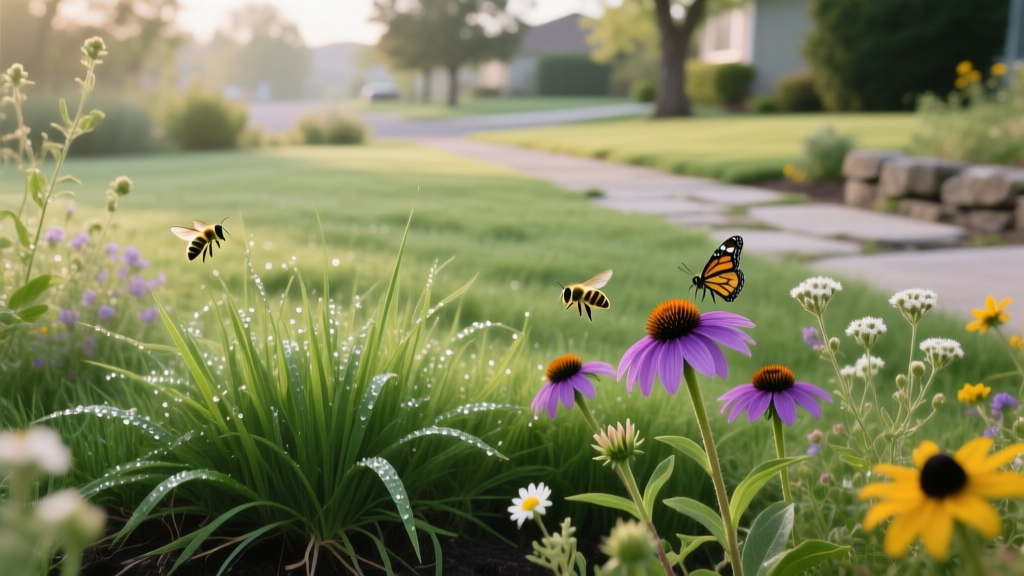
2026 Drought Lawn Recovery: Deep Watering For Pollinators
Lisa ThompsonPublished
The 2026 Shift: Eco-Lawns and Pollinator Habitats
As we navigate the increasingly erratic climate patterns of 2026, homeowners and landscapers are fundamentally rethinking turf management. The traditional, sterile monoculture lawn is being replaced by the 'eco-lawn'—a dynamic, drought-resilient landscape that supports local ecosystems. When drought stress hits, the instinct is often to blast the lawn with shallow, daily watering to force it back to green. However, this approach not only wastes precious municipal water but also actively harms the deep-rooted native plants and pollinator habitats integrated into modern landscapes. Recovering a drought-stressed lawn while maintaining a pollinator-friendly garden requires a strategic, science-backed deep watering schedule.
According to the National Wildlife Federation, creating sustainable, wildlife-friendly garden spaces is one of the most impactful ways homeowners can combat the decline in native bee and butterfly populations. By aligning your lawn recovery protocols with the hydration needs of pollinator-friendly flora, you can build a landscape that is both visually stunning and ecologically vital.
Diagnosing Drought Stress in Turf and Pollinator Plants
Before initiating a recovery schedule, you must accurately diagnose drought stress. In traditional turfgrasses like Kentucky Bluegrass or Tall Fescue, early signs include 'footprinting' (where footprints remain visible on the grass for hours) and a shift in color from vibrant green to a dull, grayish-blue hue. If left unchecked, the grass will enter dormancy, turning crisp and brown.
However, in a pollinator-friendly eco-lawn, you are likely managing a mix of turfgrasses, Dutch white clover, creeping thyme, and native perennial borders (such as coneflowers, milkweed, and yarrow). Drought stress in these pollinator plants manifests differently. Native perennials may droop during the heat of the afternoon but recover at night. If they remain wilted in the early morning, the soil moisture profile is critically depleted. Clover will begin to fold its trifoliate leaves inward to reduce surface area and minimize transpiration. Recognizing these subtle cues ensures you apply water only when necessary, preventing fungal diseases that thrive in overly saturated soils.
The Science of Deep Watering for Dual-Purpose Landscapes
The core philosophy of drought recovery in 2026 is 'deep and infrequent' watering. Shallow, daily watering encourages grass roots to stay near the surface, where they are highly susceptible to evaporation and heat scorch. Conversely, deep watering forces both turfgrass and native pollinator plants to drive their roots deep into the soil profile—often 6 to 12 inches down.
The EPA WaterSense program consistently advocates for deep, infrequent irrigation to maximize soil moisture retention and minimize runoff. When you apply a substantial volume of water less frequently, you create a deep reservoir of moisture. This not only anchors your turf against high winds and heatwaves but also provides a stable hydration base for the deep taproots of essential pollinator plants like Asclepias (milkweed) and Echinacea (coneflower), which are vital for monarch butterflies and native bees.
The 2026 Deep Watering Recovery Schedule
When your eco-lawn is showing active signs of drought stress, you must transition it into a recovery phase. The goal is to rehydrate the soil profile gradually without causing runoff or drowning the soil microbes essential for nutrient cycling. Below is a 4-week deep watering recovery schedule designed for mixed turf and pollinator zones.
| Phase | Frequency | Duration / Volume | Ecological Goal |
|---|---|---|---|
| Week 1: Initial Rehydration | Every 3 Days | 0.5 inches per session | Soften the hydrophobic topsoil crust; provide immediate relief to wilting pollinator perennials and shallow clover roots. |
| Week 2: Root Driving | Twice a Week | 0.6 inches per session | Encourage turfgrass and native plant roots to chase moisture deeper into the subsoil; reduce surface evaporation. |
| Week 3: Stabilization | Twice a Week | 0.5 inches per session | Maintain deep soil moisture; allow the top 1 inch of soil to dry out between sessions to prevent fungal pathogens. |
| Week 4: Maintenance | Once a Week | 1.0 to 1.2 inches total | Establish a resilient, drought-tolerant baseline; support the blooming cycle of mid-summer pollinator forage. |
Calibrating Your System: The Tuna Can Test
To execute this schedule accurately, you must know exactly how much water your irrigation system delivers. In 2026, smart controllers are prevalent, but physical calibration remains a necessary step. Place 4 to 6 empty, flat-bottomed tuna cans (or specialized rain gauges) across different zones of your lawn, including areas near pollinator borders and in the center of the turf. Run your sprinklers for 15 minutes. Measure the water depth in the cans with a ruler. If you collect 0.25 inches in 15 minutes, you know you need to run the system for 30 minutes to achieve the 0.5-inch target required in Week 1 of the recovery schedule.
Smart Irrigation Tech for Pollinator Zones
Modern smart irrigation controllers are indispensable for managing the diverse needs of an eco-lawn. Devices like the Rachio 3 Smart Sprinkler Controller or the Orbit B-hyve XR utilize hyper-local 2026 weather data to automatically skip watering when rain is imminent, preventing over-saturation. More importantly, they allow for distinct zone programming.
Your high-traffic turfgrass zones may require the standard 1 inch of water per week, but your dedicated pollinator borders—filled with drought-adapted natives like lavender, salvia, and sedum—often require 30% less water once established. By separating your lawn into micro-zones, you can apply the deep watering schedule to the recovering turf while preventing root rot in your xeriscaped pollinator beds. Furthermore, smart controllers can be set to water in the early morning (between 4:00 AM and 6:00 AM), which drastically reduces evaporative loss and ensures that foliage is dry by the time bees and butterflies begin their daily foraging.
Embracing Pollinator-Friendly Groundcovers
A true eco-lawn in 2026 is rarely 100% traditional grass. Integrating low-growing, flowering groundcovers is a hallmark of pollinator-friendly garden design. Dutch White Clover (Trifolium repens) and Self-Heal (Prunella vulgaris) are exceptional companions to turfgrass. They possess deep root systems that naturally aerate the soil and fix atmospheric nitrogen, reducing the need for synthetic fertilizers.
During drought recovery, these groundcovers act as a living mulch. Their broad leaves shade the soil surface, significantly lowering soil temperatures and reducing evaporation rates for the entire lawn ecosystem. When you deep water your lawn, the clover and self-heal absorb and hold moisture, releasing it slowly back into the surrounding soil. According to the Xerces Society for Invertebrate Conservation, maintaining flowering groundcovers provides critical, continuous forage for native bees, especially during the stressful heat of late summer when traditional floral resources may be scarce.
Creating Butterfly Puddling Stations
Deep watering schedules offer a unique opportunity to support pollinators beyond just plant hydration. Butterflies, particularly males, require 'puddling'—the act of gathering around wet soil or mud to extract essential salts and minerals that are vital for reproduction. You can designate a small, low-lying area in your pollinator border to act as a puddling station.
By slightly adjusting the spray pattern of one of your deep-watering sprinkler heads, or by routing a drip-line emitter to a shallow basin filled with sand, compost, and a pinch of sea salt, you can create a permanent mud-puddling habitat. The deep, infrequent watering schedule ensures this area receives enough moisture to stay damp without becoming a stagnant breeding ground for mosquitoes.
Soil Amendments for Moisture Retention
Watering is only half the battle; soil structure dictates how much of that water is actually retained. Drought-stressed soils often become hydrophobic, meaning they repel water, leading to wasteful runoff. To combat this during your recovery phase, apply a thin layer (about 1/4 inch) of finely screened organic compost over your lawn immediately after a deep watering session. This topdressing introduces beneficial microbes and organic matter that act like a sponge, increasing the soil's water-holding capacity.
In your dedicated pollinator perennial beds, avoid using dyed wood mulches, which can harbor pests and offer no ecological value. Instead, use shredded native leaves or pine needles. This organic mulch mimics the natural forest floor, retaining deep soil moisture, suppressing water-stealing weeds, and providing overwintering habitat for solitary native bees and butterfly chrysalises.
Conclusion
Recovering a drought-stressed lawn in 2026 is no longer just about rescuing grass; it is about stewarding a complex, living ecosystem. By implementing a disciplined, deep watering schedule, calibrating your irrigation technology, and embracing the synergy between turf and native pollinator plants, you can transform a parched, struggling yard into a vibrant, resilient eco-lawn. This approach not only conserves vital water resources but also ensures that your landscape remains a thriving sanctuary for the bees, butterflies, and beneficial insects that our environment desperately needs.