Pest Control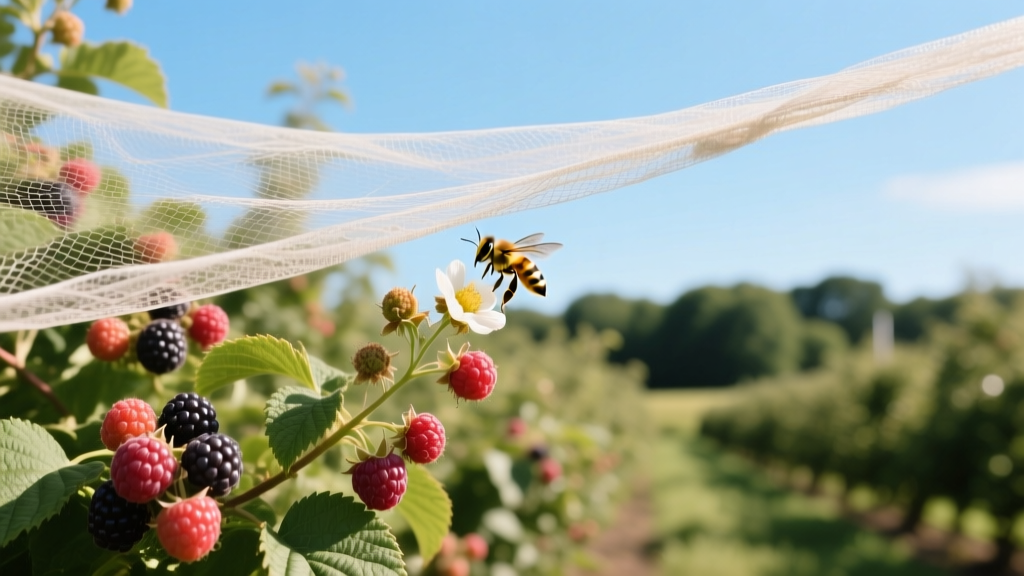
Pollinator-Safe Bird Netting for Berry Bushes: 2026 Guide
David ParkPublished
The Pollinator-Berry Dilemma in Modern Garden Design
As we navigate the 2026 growing season, the intersection of edible landscaping and ecological stewardship has never been more prominent. Home gardeners are increasingly cultivating highbush blueberries, summer-bearing raspberries, and thornless blackberries to achieve food sovereignty and reduce their carbon footprint. However, this pursuit of homegrown superfoods brings a familiar challenge: avian competition. Flocks of cedar waxwings, robins, and starlings can strip a mature berry bush bare in a matter of hours. While the instinctive reaction is to deploy bird netting immediately, doing so without a strategic, ecologically mindful approach can inadvertently devastate local pollinator populations.
In the context of pollinator-friendly garden design, physical pest exclusion requires a delicate balance. You must protect your developing fruit from birds while ensuring that native bees, honeybees, and other vital beneficial insects have unfettered access to blossoms during the critical pollination window. According to the USDA Pollinator Health Initiative, protecting native bee populations requires gardeners to rethink traditional barriers and adopt timing and material strategies that support, rather than hinder, ecosystem health.
The Ecological Conflict: Birds vs. Bees
The primary conflict in berry bush protection arises from the anatomy of traditional bird netting and the timing of its application. Many gardeners make the critical mistake of draping netting directly over their bushes as soon as the first flower buds appear. This practice creates a dual ecological hazard. First, it physically blocks pollinators from reaching the nectar and pollen, resulting in poor fruit set and misshapen berries. Second, loose netting draped directly on foliage is a notorious trap for both birds and beneficial wildlife. Snakes, frogs, and small birds frequently become entangled in the loose folds, leading to fatal injuries.
The Xerces Society for Invertebrate Conservation emphasizes that physical barriers must be timed precisely to avoid disrupting the foraging routes of native pollinators like bumblebees and mason bees, which are essential for the buzz-pollination required by many berry species. To achieve a bountiful harvest in 2026 without compromising your garden's ecological integrity, you must adopt a framework of exclusion cages and strict phenological timing.
The Golden Rule of Timing: Phenology and Fruit Set
The most crucial element of pollinator-safe bird netting is knowing exactly when to deploy it. You must wait until the pollination phase is entirely complete. This requires understanding the phenology—the biological life cycle—of your specific berry bushes.
- Bud Break and Bloom: Pollinators must have full access. No netting should be present.
- Petal Fall: The blossoms drop off, and the ovary begins to swell. Pollinators are still visiting late blooms.
- Fruit Set: The tiny, hard, green berries are clearly visible on the stems. This is the biological signal that pollination is complete.
- Veraison: The fruit begins to change color and soften. This is when birds become highly active and interested in your crop.
You should install your bird netting immediately after fruit set, when the berries are the size of small peas and are completely green. At this stage, the flowers have dropped, the bees have moved on to other forage, and the developing fruit is safely protected from early bird scouting.
2026 Netting Materials: A Comparative Guide
Not all netting is created equal. The horticultural industry has made significant strides in developing materials that exclude pests while allowing airflow, sunlight, and small beneficial insects to pass through. Below is a comparison of the top netting materials recommended for the 2026 season.
| Material Type | Mesh Size | Pollinator Impact | Bird Safety | 2026 Avg Cost (per 100 sq ft) |
|---|---|---|---|---|
| Knitted UV-Stabilized Polyethylene | 5/8 inch | Low (if applied post-bloom) | High (taut installation required) | $25 - $35 |
| Woven Polypropylene | 3/4 inch | Moderate (can trap small insects) | Moderate (edges can fray) | $15 - $22 |
| Galvanized Hardware Cloth (Cages) | 1/2 inch x 1 inch | None (excellent bee access) | Very High (rigid, no entanglement) | $80 - $120 (cage build) |
| Biodegradable Jute/Cotton Mesh | 1 inch | None | Low (birds can peck through) | $40 - $55 |
For the modern, eco-conscious gardener, building rigid exclusion cages using galvanized hardware cloth or heavy-duty PVC frames draped with taut, UV-stabilized knitted polyethylene is the gold standard. These methods eliminate the entanglement risk entirely and ensure that if any late-season beneficial insects are in the area, they are not trapped beneath a collapsing canopy of fabric.
Step-by-Step Pollinator-Safe Frame Installation
Draping netting directly over a blueberry or raspberry bush is a practice that should be permanently retired. To protect both your harvest and local wildlife, you must build a supportive frame. Here is how to execute a pollinator-safe installation in your 2026 garden.
Step 1: Construct a Rigid Frame
Build a box-like frame over your berry patch using 1-inch Schedule 40 PVC pipes or untreated cedar lumber. For a standard 4x8 foot raised bed of raspberries, construct a frame that stands at least 6 feet tall. This height allows you to walk inside or reach in comfortably without your clothing snagging the netting. Ensure all corners are secured with heavy-duty brackets or PVC fittings.
Step 2: Drape and Secure the Netting
Drape your 5/8-inch knitted polyethylene netting over the frame. The netting must be pulled completely taut. Any loose folds, sagging corners, or pooling areas on the ground become deadly traps for foraging birds and ground-dwelling beneficial insects like beetles and spiders.
Step 3: Anchor the Perimeter
Secure the bottom edges of the netting to the ground or the base of your raised bed. Use heavy-duty landscape staples, wooden battens, or bungee cords to create a continuous, gap-free seal. This prevents ground-foraging birds like towhees from hopping underneath, while ensuring no small wildlife can crawl into the enclosure and become trapped.
Step 4: Create an Access Flap
Instead of lifting the entire net to harvest, design a velcro-sealed or zipper-access flap on one side of the frame. This allows you to enter, inspect the bushes for secondary pests like spotted wing drosophila, and harvest your berries without disturbing the structural integrity of the exclusion zone.
Alternative Deterrents and Sacrificial Plantings
If you are designing a highly integrated, pollinator-friendly landscape and wish to minimize the visual footprint of netting, consider combining physical barriers with ecological distraction techniques. Integrating these practices aligns perfectly with the National Wildlife Federation's Garden for Wildlife program, which advocates for providing diverse food sources to support local fauna harmoniously.
Sacrificial Plantings
Birds often target early-ripening berries because natural food sources are scarce in early summer. By planting native, bird-favorite shrubs like Serviceberry (Amelanchier), Mulberry, or Elderberry on the opposite side of your property, you can draw flocks away from your prized raspberries and blueberries. These native shrubs also provide excellent early-spring nectar for pollinators, creating a win-win scenario for your garden's ecosystem.
Visual and Auditory Deterrents
For light bird pressure, reflective Mylar flash tape tied to the upper branches of your berry bushes can disorient and deter birds without harming them. Additionally, moving decoy predator statues (such as artificial owls or hawks) around the garden daily can keep birds on edge. Remember that stationary decoys lose their effectiveness within 48 hours as intelligent birds realize they are fake.
Daily Maintenance and Wildlife Safety Checks
Even with the most meticulous, taut installation, a responsible gardener must perform daily perimeter checks. Walk the boundary of your netted berry bushes every morning with your coffee. Look for small gaps where the landscape staples may have pulled free from the soil. More importantly, look for any signs of wildlife interaction.
If you find a bird, snake, or frog tangled in the edge of your netting, carefully cut the netting away with blunt-nosed scissors rather than attempting to pull the animal free, which can cause severe scale, feather, or skin damage. Keep a small pair of garden shears in your pocket during the harvest season specifically for this purpose. By treating your bird netting not just as a pest control tool, but as a managed component of your garden's broader ecological web, you ensure that your 2026 berry harvest is as sustainable and life-affirming as it is delicious.