Gardening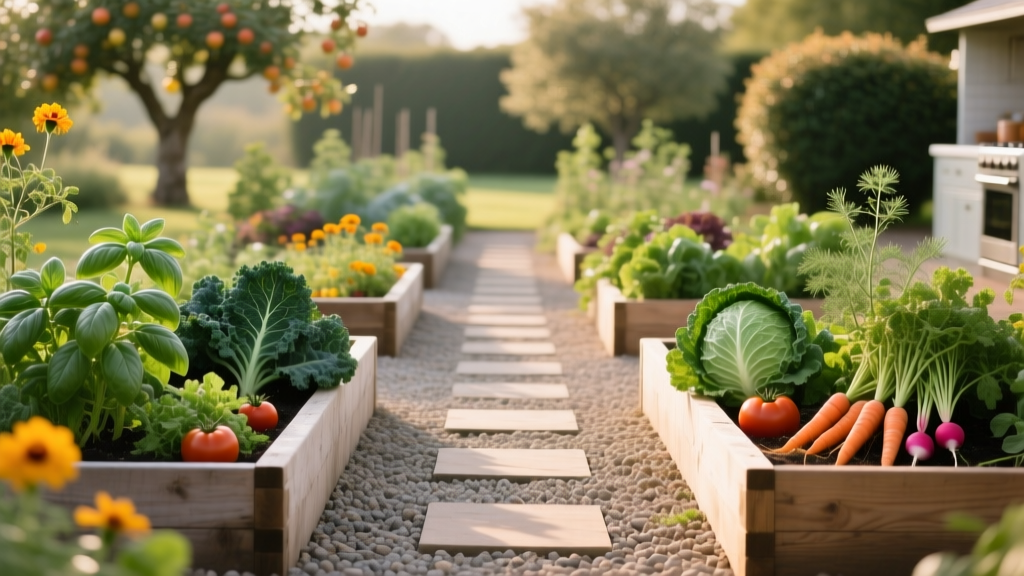
Designing a Potager Kitchen Garden: Layouts and Tips
Anna KowalskiPublished
The Art and Function of the Potager Garden
The French potager (pronounced poh-tah-zhay) is far more than a simple vegetable patch. Rooted in the ornamental kitchen gardens of 16th-century French monasteries and chateaus, a potager seamlessly blends the agricultural utility of a food-producing garden with the aesthetic beauty of a formal landscape. Designing a potager requires a shift in perspective: vegetables, herbs, and edible flowers are treated as ornamental plants, selected as much for their foliage texture, vibrant colors, and architectural forms as for their harvest. Whether you are working with a sprawling half-acre or a modest 16x16-foot urban backyard, planning a potager involves precise spatial mapping, intentional hardscaping, and strategic companion planting.
Site Selection and Sun Mapping
Before ordering materials or sketching parterre designs, you must understand your microclimate. A successful potager requires a minimum of six to eight hours of direct sunlight daily to support heavy-feeding crops like tomatoes, peppers, and squash.
- Orientation: Orient your primary raised beds along a North-South axis. This ensures that the sun travels evenly across the beds from east to west, preventing taller crops from casting prolonged shadows on shorter, sun-loving plants.
- Drainage and Slope: Avoid low-lying areas where frost settles or water pools. If your yard has a slight grade, plan to terrace your beds or build retaining walls on the downhill side to maintain a level planting surface.
- Proximity: The golden rule of kitchen garden planning is convenience. Place your potager as close to your kitchen door as possible. This encourages daily harvesting, makes watering less of a chore, and allows you to easily toss kitchen scraps into a nearby compost bin.
Hardscaping: Dimensions, Materials, and Pathways
The skeleton of your potager relies on precise measurements and durable materials. The classic potager utilizes geometric raised beds separated by well-defined pathways.
Raised Bed Dimensions
For optimal ergonomics and soil health, limit the width of your raised beds to 4 feet. This allows an average adult to reach the center of the bed from either side without stepping on and compacting the soil. Lengths can vary, but 8-foot or 12-foot sections are standard to minimize lumber waste. For deep-rooted crops like parsnips, carrots, and daikon radishes, aim for a bed depth of 18 to 24 inches. Shallower beds (10 to 12 inches) are sufficient for leafy greens and herbs.
Material Comparison for Raised Beds
| Material | Avg Cost (4x8 Bed) | Lifespan | Pros & Cons |
|---|---|---|---|
| Untreated Cedar | $150 - $250 | 10 - 15 years | Pros: Natural rot resistance, beautiful aging. Cons: Higher upfront cost. |
| Galvanized Steel | $100 - $180 | 20+ years | Pros: Modern look, durable, pest-proof. Cons: Can heat soil in extreme climates. |
| Woven Wood (Hazel/Willow) | $80 - $120 | 5 - 8 years | Pros: Authentic rustic aesthetic, eco-friendly. Cons: Requires frequent replacement. |
| Recycled Composite | $200 - $300 | 25+ years | Pros: Zero maintenance, no splinters. Cons: Can warp in high heat, expensive. |
Pathway Planning and Accessibility
Pathways in a potager serve dual purposes: they provide access for maintenance and act as the negative space that defines your geometric patterns. Main thoroughfares should be at least 36 to 48 inches wide to accommodate a standard wheelbarrow and allow two people to walk side-by-side. Secondary paths between individual beds can be narrower, around 24 inches. For a classic look, use crushed decomposed granite (DG), pea gravel, or reclaimed brick. Mulch is a budget-friendly alternative but requires annual replenishment and can harbor slugs if kept too thick.
Soil Architecture for High-Yield Beauty
Because potagers are planted intensively, soil fertility is paramount. Do not fill deep raised beds entirely with expensive bagged potting soil. Instead, use the 'Hugelkultur-lite' method for the bottom 6 inches: layer in decaying logs, twigs, and autumn leaves. For the top 12 to 18 inches, use a premium raised bed mix. A reliable, well-draining recipe is 40% high-quality topsoil, 40% organic compost (such as Espoma or local municipal compost), and 20% aeration material like coarse perlite or pumice. Expect to spend between $45 and $80 per cubic yard for bulk delivery from a local landscape supplier, which is significantly cheaper than buying bagged soil.
Designing with Plants: Form, Color, and Verticality
In a potager, the vegetable is the ornament. Utilize the 'thriller, filler, spiller' container gardening concept on a larger scale.
- Thrillers (Focal Points): Use architectural plants at the center or corners of beds. 'Bright Lights' Swiss chard offers neon stem colors, while 'Dragon' carrots provide striking purple exteriors. Blue Hubbard squash or large artichoke plants serve as dramatic, structural centerpieces.
- Fillers (Mass and Texture): Interplant low-growing edibles to suppress weeds and create a lush carpet. 'Bull's Blood' beets offer deep burgundy foliage, while French marigolds and nasturtiums spill over bed edges, providing vibrant blooms and edible peppery leaves.
- Vertical Elements: Potagers rely heavily on verticality to maximize yield and draw the eye upward. Install 72-inch tall wooden obelisks or copper teepees for 'Blue Lake' pole beans and 'Sugar Snap' peas. Train 'Amish Paste' tomatoes or trailing cucumbers up heavy-duty cattle panel trellises arched over pathways to create living tunnels.
Pollinator Strips and Companion Planting
A beautiful garden is a living ecosystem. Integrating flowers into your vegetable beds is not just an aesthetic choice; it is a vital pest-management and pollination strategy. Dedicate at least 10% of your total planting space to insectary strips featuring borage, calendula, dill, and yarrow.
According to Cornell University's College of Agriculture and Life Sciences (CALS), integrating diverse pollinator habitats and companion planting strips within vegetable gardens significantly increases the presence of beneficial predatory insects, such as parasitic wasps and lady beetles, which naturally suppress aphid and caterpillar populations while boosting fruit set in crops like squash and tomatoes.
Pairing plants strategically enhances both design and function. Plant tall sunflowers on the north side of your beds to act as a windbreak, while utilizing their stalks as natural trellises for climbing morning glories. Underplant brassicas with aromatic herbs like thyme and rosemary to confuse the olfactory senses of cabbage moths.
Budgeting Your Potager Project
Planning a budget ensures your design remains feasible. Below is an estimated cost breakdown for a modest 16x16-foot potager featuring four 4x8 cedar raised beds, gravel pathways, and initial soil fill:
- Hardscaping (4 Cedar Beds): $600 - $800
- Hardware & Screws: $50
- Bulk Soil & Compost (Approx. 8 cubic yards): $350 - $500 (including delivery)
- Pathway Materials (Decomposed Granite & Landscape Fabric): $200
- Vertical Structures (2 Trellises, 2 Obelisks): $150
- Seeds & Starter Plants: $100
- Total Estimated Investment: $1,450 - $1,800
By designing thoughtfully and investing in durable hardscaping and premium soil upfront, your potager will evolve into a breathtaking, edible landscape that provides both visual serenity and abundant harvests for decades to come.
