Gardening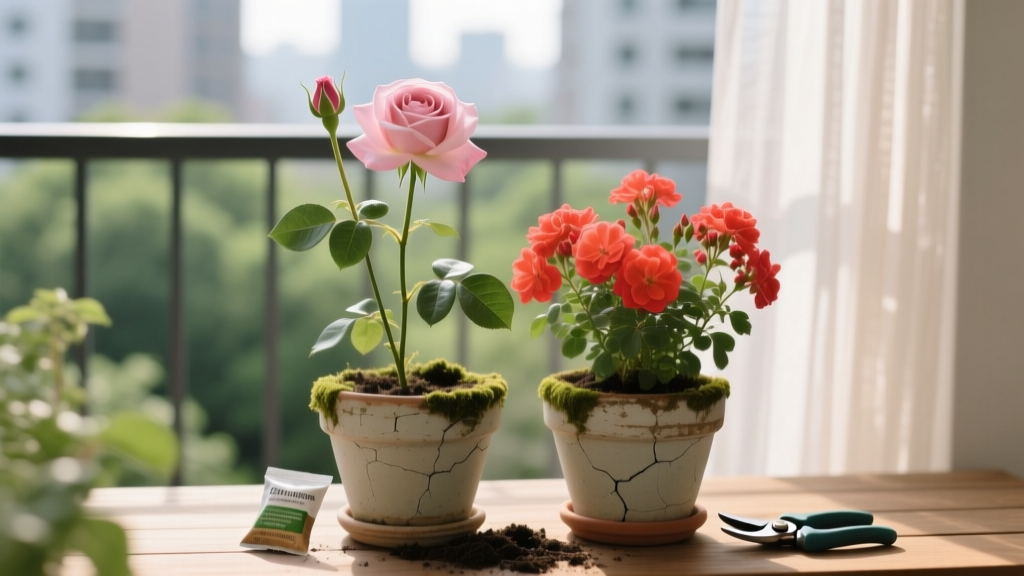
Container Roses 2026: Hybrid Tea vs Floribunda Pruning & Feeding
Emily WatsonPublished
The Rise of Container Rose Gardening in 2026
As we navigate the 2026 gardening season, the trend of cultivating premium roses in containers and pots continues to dominate urban and suburban landscapes. Whether you are working with a compact balcony, a paved patio, or simply want to protect your prized blooms from poor native soil, container gardening offers unparalleled control over your rose's environment. However, growing roses in pots is not the same as growing them in the ground. The restricted root zone means that water, nutrients, and pruning strategies must be meticulously managed.
Two of the most popular classes of roses grown in containers are Hybrid Teas and Floribundas. While both can produce spectacular displays in pots, their growth habits, bloom cycles, and nutritional demands differ significantly. In this comprehensive guide, we will break down the exact pruning and feeding protocols you need to keep your potted Hybrid Teas and Floribundas thriving in 2026.
Understanding Your Potted Roses: Hybrid Tea vs. Floribunda
Before grabbing your pruning shears or fertilizer, it is crucial to understand the fundamental differences between these two rose classes, especially regarding how they behave in a confined container environment.
| Feature | Hybrid Tea (in Containers) | Floribunda (in Containers) |
|---|---|---|
| Bloom Habit | One large, classic bloom per long stem | Clusters of smaller blooms per stem |
| Growth Habit | Upright, somewhat sparse, can be top-heavy | Bushy, compact, highly branched |
| Ideal Pot Size | 15 to 20 gallons (minimum 18 inches deep) | 10 to 15 gallons (minimum 15 inches deep) |
| Energy Focus | Pours energy into massive individual flowers | Pours energy into continuous foliage and cluster blooms |
| Wind Resistance | Low; tall canes act as sails and can tip pots | High; lower, bushy profile resists tipping |
Because Hybrid Teas are naturally top-heavy, they require heavier pots—such as thick ceramic, concrete, or stone resin—to prevent them from blowing over in high winds. Floribundas, being bushier and lower to the ground, are more forgiving and can thrive in high-quality, lightweight resin or fabric grow bags.
Container Rose Pruning Strategies for 2026
Pruning roses in containers requires a different mindset than pruning those in the ground. In the ground, a rose can send roots out several feet to forage for nutrients to support massive cane growth. In a pot, the roots are restricted. Therefore, the primary goal of pruning potted roses is to balance the top growth with the restricted root system. If you leave too many canes on a potted rose, the roots cannot support them, resulting in weak, spindly growth and aborted buds.
According to the Penn State Extension, proper pruning encourages air circulation and directs the plant's energy into producing robust, healthy canes rather than maintaining dead or unproductive wood.
Pruning Potted Hybrid Teas
Hybrid Teas are notorious for producing long, leggy canes. In a container, these long canes are a liability. Your goal is to create a sturdy, open, vase-shaped structure.
- Timing: Late winter to early spring, just as the leaf buds begin to swell but before they break open. In most zones, this is between late February and mid-April.
- The Cut: Using sharp, sterilized bypass pruners (like the Felco 2 Classic), make a 45-degree angle cut about 1/4 inch above an outward-facing leaf bud. This forces the new cane to grow outward, keeping the center of the plant open for airflow, which is critical for preventing fungal diseases like black spot in the humid microclimate of a patio.
- How Much to Remove: Be aggressive. Remove all dead, diseased, or crossing canes. Select 3 to 5 of the healthiest, thickest green canes and cut them back to 12 to 18 inches above the soil line. It feels drastic, but this hard pruning forces the root system to push out thick, strong basal breaks rather than weak, spindly twigs.
Pruning Potted Floribundas
Floribundas are naturally bushier and produce more lateral branches. They do not require the severe hard-pruning that Hybrid Teas do.
- Timing: Same as Hybrid Teas (late winter/early spring), but they also require aggressive deadheading throughout the 2026 growing season.
- The Cut: Make your 45-degree cuts above outward-facing buds, but you can leave the canes slightly longer—about 18 to 24 inches above the soil line.
- How Much to Remove: You can safely leave 5 to 8 healthy canes. Focus on thinning out the very center to prevent a dense, tangled mess that invites powdery mildew. Remove any canes thinner than a pencil.
- Summer Deadheading: Because Floribundas bloom in clusters, do not just snap off the spent flower. Use your pruners to cut the entire flower cluster stem back to the first set of five-leaflet leaves. This signals the plant to produce a new flowering lateral branch quickly.
Feeding Regimens for Container Roses
The biggest challenge of container gardening is nutrient leaching. Every time you water your potted roses, water flows out the drainage holes, taking valuable water-soluble nutrients with it. By mid-summer, the potting mix in your container is essentially devoid of the fertilizer you added in the spring. Therefore, a consistent, scheduled feeding regimen is non-negotiable.
Feeding Hybrid Teas in Containers
Hybrid Teas are the prima donnas of the rose world. They require high energy to produce their massive, exhibition-quality blooms. They are heavy feeders that respond best to a steady, continuous supply of nutrients rather than massive, infrequent doses.
- Spring Base Feeding (March/April): As soon as you finish your spring pruning, top-dress the pot with a slow-release organic granular fertilizer. Espoma Organic Rose-tone 4-3-2 is an industry staple. Apply about 1/2 cup per 10 gallons of pot volume. Scratch it gently into the top inch of soil and water thoroughly. This will slowly feed the rose for up to 8 weeks.
- Peak Bloom Liquid Feeding (May - August): To support the massive energy drain of Hybrid Tea blooms, supplement the granular feed with a liquid fertilizer every two weeks. A water-soluble option like Miracle-Gro Water Soluble Rose Plant Food (18-24-16) provides the high phosphorus and potassium needed for petal development and root strength. Mix at half-strength to prevent salt buildup in the confined potting soil.
- Autumn Taper (September): Stop all high-nitrogen feeding by late summer. You want to allow the canes to harden off before winter. A light application of bone meal or a low-nitrogen kelp extract can help the plant store energy in its roots for the following spring.
Feeding Floribundas in Containers
Floribundas are the marathon runners of the rose world. Because they are almost constantly producing new clusters of blooms from spring until the first hard frost, they need a balanced, consistent diet that supports both heavy foliage growth and continuous flowering.
- Spring Base Feeding: Similar to Hybrid Teas, start with a granular slow-release fertilizer. However, Floribundas benefit greatly from fertilizers that include beneficial mycorrhizal fungi, which expand the root system's reach within the pot. Dr. Earth Organic Rose & Flower Fertilizer is an excellent 2026 choice that includes these soil microbes. Apply according to the package directions for container plants.
- Continuous Bloom Feeding: Instead of high-phosphorus liquid feeds, use a balanced liquid fertilizer (like a 10-10-10 or 5-5-5 organic fish emulsion) every three weeks. Too much phosphorus can actually inhibit the uptake of micronutrients like zinc and iron, which Floribundas need to maintain their dense, dark green foliage.
- Foliar Feeding: Floribundas respond beautifully to foliar sprays. In the early morning, spray the leaves with a diluted liquid kelp or seaweed extract. This provides instant trace minerals and helps the plant combat the heat stress of a sun-baked patio.
Crucial Container Considerations: Soil and Moisture
Your pruning and feeding efforts will be entirely wasted if your container soil and watering practices are flawed. Never use garden soil or topsoil in a pot; it will compact into a concrete-like brick, suffocating the roots.
For 2026, the gold standard for container roses is a mix of 60% high-quality peat or coco-coir based potting mix, 20% composted pine bark fines (for drainage), and 20% organic compost. This blend retains moisture while allowing excess water to drain freely.
Furthermore, the Royal Horticultural Society (RHS) emphasizes that container roses require vigilant watering, as pots can dry out completely within hours during peak summer heat. Consider installing a simple drip irrigation system with a smart timer, or use terracotta watering spikes (ollas) buried in the pot to provide a slow, steady release of water directly to the root zone.
2026 Seasonal Maintenance Calendar for Potted Roses
Keep this quick-reference calendar handy to ensure your Hybrid Teas and Floribundas stay on track throughout the year:
- Early Spring: Remove winter protection. Prune Hybrid Teas hard (12-18 inches); prune Floribundas moderately (18-24 inches). Apply slow-release granular fertilizer. Repot or top-dress with fresh compost if the soil level has dropped.
- Late Spring: Begin liquid feeding schedules. Monitor for aphids on new, tender growth. Introduce beneficial insects like ladybugs or use insecticidal soap if necessary.
- Summer: Deadhead Floribunda clusters back to a five-leaflet leaf. Cut Hybrid Tea blooms for indoor vases to encourage new basal breaks. Water deeply every 1-2 days depending on heat. Mulch the top of the pot with an inch of bark to retain moisture.
- Early Autumn: Stop nitrogen-heavy fertilizers. Allow the last blooms of the season to fade and form rose hips (especially on Floribundas), which signals the plant to begin preparing for dormancy.
- Late Autumn/Winter: Clean all fallen debris from the top of the soil to prevent fungal spores from overwintering. In zones 6 and below, move pots to an unheated garage or wrap the pots in bubble wrap and burlap to insulate the roots from freeze-thaw cycles.
Conclusion
Growing Hybrid Teas and Floribundas in containers is one of the most rewarding endeavors in modern horticulture. By understanding the distinct structural needs of Hybrid Teas and the continuous energy demands of Floribundas, you can tailor your pruning and feeding strategies to perfection. Stick to the 2026 guidelines outlined above, utilize high-quality organic amendments, and your patio will be transformed into a world-class rose garden, completely free from the constraints of native soil limitations.
For further reading on general rose health and disease management, the Old Farmer's Almanac offers excellent supplemental resources on identifying and treating common rose ailments organically.
