Lawn Care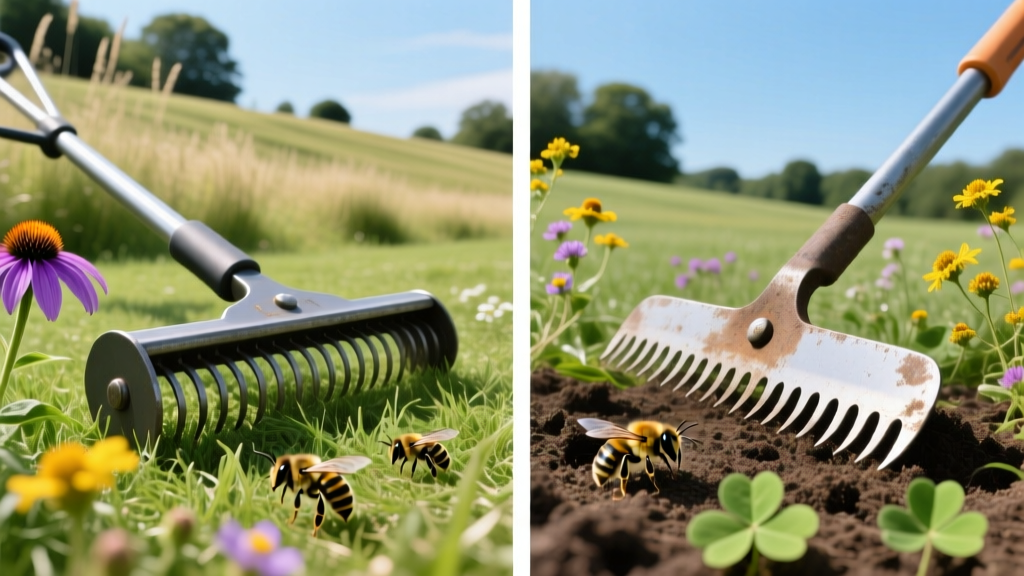
Power Rake vs Dethatcher Blade: 2026 Pollinator Lawn Guide
Anna KowalskiPublished
The Eco-Lawn Paradigm Shift of 2026
As we navigate the 2026 landscaping season, the definition of a beautiful lawn has fundamentally changed. Homeowners and groundskeepers are no longer striving for sterile, golf-course-style monocultures. Instead, the modern lawn is a vibrant, pollinator-friendly ecosystem featuring micro-clovers, native fescues, and low-growing forbs. However, even the most biodiverse eco-lawn requires foundational soil health to thrive. One of the most critical aspects of this maintenance is thatch management. When thatch builds up, it chokes roots, blocks water infiltration, and creates an impenetrable barrier for beneficial insects. But how do we remove it without destroying the very habitats we are trying to protect?
The debate between using a power rake versus a dethatcher blade is no longer just about turfgrass aesthetics; it is a crucial ecological decision. Ground-nesting bees, which comprise approximately 70 percent of native bee species, rely on the soil surface for their life cycles. Aggressive thatch removal can devastate these populations. In this comprehensive 2026 guide, we will compare power rakes and dethatcher blades, evaluating their mechanical differences, their impact on pollinator habitats, and how to execute a thatch removal strategy that aligns with modern ecological gardening standards.
Understanding Thatch in an Ecological Lawn
Thatch is the interwoven layer of living and dead organic matter—primarily stems, stolons, rhizomes, and roots—that accumulates between the green vegetation and the soil surface. According to the University of Minnesota Extension, a thin layer of thatch (about one-quarter inch) is actually beneficial. It acts as a natural mulch, moderating soil temperature, retaining moisture, and providing a micro-habitat for beneficial predatory arachnids and insects.
However, when thatch exceeds half an inch, it becomes a liability. It prevents water, air, and organic fertilizers from reaching the root zone, leading to shallow root systems and increased drought stress. For pollinators, a thick thatch layer acts as a physical barricade. Female ground-nesting bees, such as those in the genera Andrena and Lasioglossum, require direct access to bare or thinly covered soil to excavate their nesting tunnels. If the thatch is too dense, they will abandon your yard in search of more suitable nesting grounds, depriving your garden of essential pollination services.
The Contenders: Power Rake vs. Dethatcher Blade
To manage thatch effectively, lawn care professionals and homeowners typically choose between two primary mechanical tools: the power rake (often called a vertical mower) and the dethatcher blade (often utilizing spring tines). Understanding their mechanical differences is vital for minimizing ecological disruption.
The Power Rake (Vertical Mower)
A power rake is a heavy-duty, walk-behind or tractor-mounted machine equipped with rigid, vertically spinning steel flail blades. These blades slice through the thatch layer and penetrate the top quarter-inch of the soil itself. The aggressive action pulls deep-rooted dead matter to the surface and simultaneously aerates the soil by creating shallow micro-trenches. Power rakes are the industry standard for severe thatch buildup (over three-quarters of an inch) and for preparing seedbeds for overseeding.
The Dethatcher Blade (Spring Tine Attachment)
Dethatcher blades are typically attachments for standard rotary mowers or specialized pull-behind units. They feature flexible, coiled spring tines that bounce and rake across the soil surface. Rather than slicing into the dirt, these tines snag the thatch layer and pull it upward. Dethatcher blades are ideal for mild to moderate thatch accumulation (between half an inch and three-quarters of an inch) and are generally considered less traumatic to the underlying soil structure and the organisms living within it.
Feature Comparison: Power Rake vs. Dethatcher Blade
| Feature | Power Rake (Vertical Mower) | Dethatcher Blade (Spring Tine) |
|---|---|---|
| Blade Type | Rigid steel flail blades | Flexible coiled spring tines |
| Soil Penetration | Deep (slices into topsoil) | Surface-level (rakes above soil) |
| Ideal Thatch Depth | Greater than 0.75 inches | 0.5 to 0.75 inches |
| Stress to Turfgrass | High (requires recovery time) | Moderate to Low |
| Pollinator Impact | Severe (destroys shallow nests) | Moderate (disturbs surface debris) |
| Best Time to Use | Late Summer / Early Fall | Early Fall / Late Spring |
The Ground-Nesting Bee Dilemma
When viewing lawn care through a pollinator-friendly lens, the mechanical aggression of your tools matters immensely. The Penn State Extension notes that the vast majority of native bees are solitary, ground-nesting species. Unlike honeybees that live in elevated hives, these native bees dig tunnels in the soil, often lining them with natural waxes and secretions. They frequently overwinter as pupae just a few inches below the surface or take shelter in the thatch layer itself during extreme temperature fluctuations.
Deploying a power rake in early spring—a traditional practice for quick lawn cleanup—is an ecological disaster. The rigid steel blades will obliterate overwintering pupae, destroy active nesting tunnels, and strip away the protective leaf litter and thatch where adult bees might be seeking refuge. Even the dethatcher blade, while less aggressive, can disrupt the delicate micro-habitats of surface-dwelling beneficial insects if used indiscriminately.
'To support native pollinators in 2026, we must shift our mindset from total eradication of organic debris to strategic, zoned management. Not every square inch of your lawn needs to be dethatched.'
2026 Best Practices for Pollinator-Safe Thatch Management
To balance the agronomic needs of your turf with the ecological needs of your local pollinator population, follow these advanced thatch management protocols recommended by current conservation experts, including guidelines supported by The Xerces Society.
1. Implement Habitat Zoning
Do not dethatch your entire lawn. Designate at least 20 to 30 percent of your property as a 'wild zone' or 'pollinator refuge.' Leave the thatch, fallen leaves, and bare soil patches in these areas completely undisturbed. This ensures that even if you must aggressively power rake the high-traffic areas of your lawn, the local bee populations have a safe, uninterrupted sanctuary to nest and overwinter.
2. Time Your Intervention Perfectly
Never power rake or dethatch in the spring. Spring is the critical emergence period for solitary bees and the peak nesting season for early risers. Instead, schedule your mechanical thatch removal for late summer or early fall (late August through September for cool-season grasses). By this time, most ground-nesting bees have completed their primary life cycles for the year, and the turfgrass has enough time to recover and establish roots before winter dormancy.
3. Embrace 2026 Biological Thatch Digesters
The most significant advancement in 2026 eco-lawn care is the widespread availability of highly concentrated biological thatch digesters. These liquid treatments utilize specialized strains of Bacillus subtilis and enzymatic fungi that naturally break down lignin and cellulose in the thatch layer. Applying a biological dethatcher in early summer can reduce thatch depth by up to half an inch without any mechanical disruption to the soil, entirely eliminating the need for power raking in moderately affected lawns.
4. Core Aeration Over Power Raking
If your soil is compacted and thatch is building up as a result of poor microbial activity, consider using a core aerator instead of a power rake. Core aeration pulls small plugs of soil to the surface, which introduces oxygen and allows soil microbes to naturally decompose the thatch layer from the top down. The soil plugs left on the surface act as a top-dressing that further accelerates thatch breakdown, all while leaving ground-nesting bee tunnels largely intact.
Step-by-Step Execution for the Eco-Conscious Gardener
If you have determined via a core sample that your thatch layer exceeds three-quarters of an inch and mechanical removal is unavoidable, follow these steps to minimize harm:
- Step 1: Mow Low. Set your mower to its lowest setting and bag the clippings. This exposes the thatch layer and makes it easier for the tines or blades to engage.
- Step 2: Moisturize the Soil. Water the lawn deeply two days before dethatching. Slightly moist soil prevents the tools from kicking up excessive dust and reduces the tearing of healthy, living turfgrass roots.
- Step 3: Choose the Right Tool. If the thatch is between 0.5 and 0.75 inches, use a spring-tine dethatcher blade. If it is thicker, use a power rake but set the blade depth to barely kiss the soil surface—do not dig deep trenches.
- Step 4: Rake and Compost. Gather the extracted thatch. Do not send it to a landfill. Instead, add it to a hot compost pile where it will break down into valuable organic matter for your garden beds.
- Step 5: Overseed with Eco-Friendly Blends. Immediately after dethatching, overseed the exposed soil with a 2026-approved eco-lawn mix containing creeping red fescue, micro-clover, and native yarrow. These species naturally suppress future thatch buildup and provide continuous forage for pollinators.
Conclusion
The choice between a power rake and a dethatcher blade in 2026 is about more than just turf maintenance; it is a commitment to the biodiversity of your local ecosystem. While power rakes offer unparalleled aggressive cleaning for severely neglected lawns, their destructive potential to ground-nesting bees makes them a tool of last resort for the eco-conscious gardener. Dethatcher blades, combined with modern biological digesters and strategic habitat zoning, offer a balanced approach that keeps your soil healthy and your pollinators thriving. By timing your interventions correctly and embracing a slightly wilder aesthetic, you can cultivate a lawn that is both resilient and teeming with life.