Lawn Care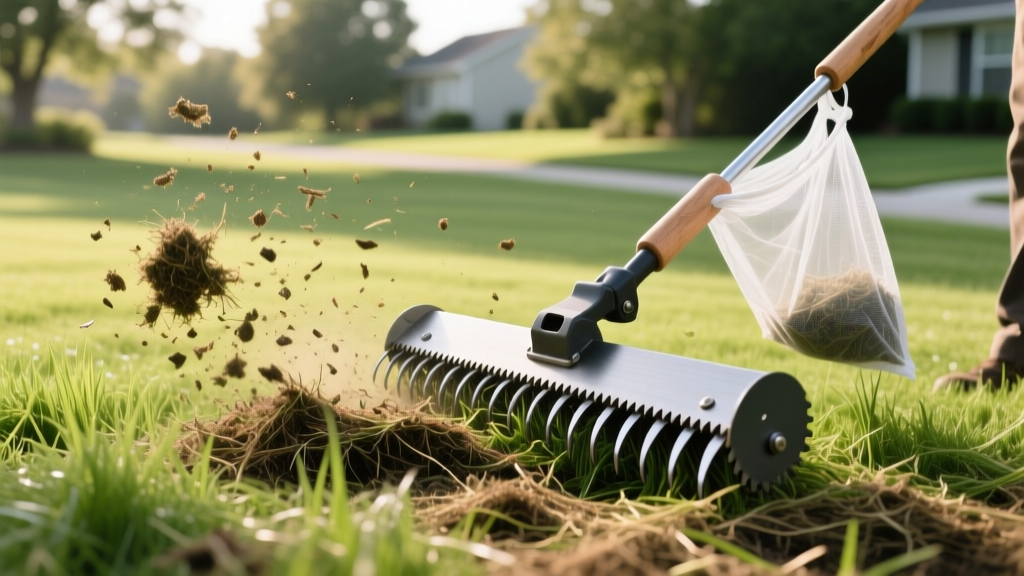
Power Rake vs Dethatcher Blade: 2026 Thatch Mulching Guide
Robert HayesPublished
Introduction to Thatch Removal and Mulching in 2026
A healthy lawn requires a delicate balance of soil, water, and organic matter. However, when the layer of living and dead grass shoots, roots, and stems—known as thatch—exceeds half an inch, it becomes a barrier to moisture and nutrients. According to the University of Minnesota Extension, excessive thatch harbors pests and diseases, making mechanical removal essential for lawn longevity. But for the eco-conscious gardener, thatch removal presents a unique opportunity: harvesting organic material for mulching and composting.
When deciding how to remove this layer, homeowners and landscaping professionals face a critical choice: the aggressive power rake versus the more precise dethatcher blade. In 2026, the shift toward high-torque, 80V lithium-ion electric models has revolutionized both tools, but their fundamental mechanics remain distinct. More importantly, the tool you choose drastically alters the quality, composition, and reusability of the thatch debris as a mulching material. This guide breaks down the power rake vs. dethatcher blade debate through the lens of mulching methods and materials, ensuring your 2026 lawn care routine benefits both your turf and your garden beds.
Understanding the Tools: Mechanics and Debris Yield
The Power Rake (Flail Blade)
A power rake utilizes a series of heavy-duty flail blades or rigid tines that aggressively dig into the soil surface. As the drum spins, these blades fracture the thatch layer and pull up deeply embedded organic matter, along with a significant amount of topsoil, sand, and clay. Power rakes are the heavy artillery of lawn renovation, typically reserved for severe thatch buildup (over one inch) or preparing a seedbed for major overseeding projects.
Impact on Mulch Quality: Because power rakes are highly aggressive, the resulting debris is heavily contaminated with soil. This "mulch" is dense, heavy, and clay-like when wet. It is not suitable for direct application as a fluffy garden bed topper, but it has specific uses in heavy-duty landscaping and sheet mulching.
The Dethatcher Blade (Spring Tine or Slicer)
Dethatcher blades, often featuring flexible spring tines or specialized slicing edges, operate just above the soil line. They comb through the turf, slicing through the thatch mat and lifting it to the surface without severely disturbing the underlying topsoil. In 2026, modern cordless dethatchers feature adjustable depth gauges that allow users to precisely target the thatch layer while leaving the soil structure intact.
Impact on Mulch Quality: Dethatcher blades yield a much cleaner, fluffier harvest. The debris consists almost entirely of carbon-rich organic matter (lignin and cellulose) with minimal soil contamination. This makes the harvested thatch an excellent "brown" material for composting or a lightweight mulch for ornamental garden paths.
2026 Comparison Chart: Power Rake vs. Dethatcher Blade
| Feature | Power Rake (Flail Blade) | Dethatcher Blade (Spring Tine) |
|---|---|---|
| Mechanism | Rigid flails that dig into soil | Flexible tines that comb and lift |
| Aggression Level | High (can damage healthy turf) | Moderate (safer for active lawns) |
| Debris Composition | 50% thatch, 50% soil/dirt | 90% thatch, 10% soil/dirt |
| Mulch Reusability | Low (requires screening/composting) | High (direct composting/mulching) |
| 2026 Avg. Residential Cost | $250 - $450 (Cordless/Gas) | $150 - $280 (Cordless Electric) |
| Best Use Case | Severe thatch, lawn renovation | Annual maintenance, mulch harvesting |
The Mulching Angle: Repurposing Removed Thatch
Viewing thatch as a waste product is a missed opportunity. From a mulching perspective, thatch is a highly valuable, carbon-rich resource. However, how you process and apply it depends entirely on the removal method used.
Composting Dethatcher Blade Debris
The fluffy thatch harvested by a dethatcher blade is an exceptional "brown" ingredient for your compost pile. According to the Environmental Protection Agency (EPA), a successful compost pile requires a careful balance of carbon-rich browns and nitrogen-rich greens. Thatch has a high carbon-to-nitrogen (C:N) ratio, often exceeding 80:1. To break it down efficiently in 2026's composting systems, you must layer it with nitrogen-heavy materials.
- The Ratio: Mix one part dry thatch with two parts fresh green material (grass clippings, vegetable scraps, or coffee grounds).
- Moisture: Thatch is naturally hydrophobic. Shred it with a mulching mower before adding it to the compost bin, and water the pile thoroughly to initiate microbial breakdown.
- Acceleration: If your compost is slow to heat up, sprinkle a high-nitrogen organic fertilizer, such as blood meal or alfalfa meal, between the thatch layers.
Sheet Mulching with Power Rake Debris
Because power rake debris is heavily mixed with soil, it is too dense and potentially full of weed seeds to use as a surface mulch for delicate flower beds. However, it is the ultimate base material for sheet mulching (also known as lasagna gardening) when establishing new garden beds or suppressing aggressive weeds.
- Base Layer: Lay down overlapping sheets of plain cardboard over the target area.
- Thatch/Soil Layer: Spread the heavy, soil-laden power rake debris directly over the cardboard in a thick 2-to-3-inch layer. The soil content adds immediate mineral bulk, while the thatch slowly breaks down.
- Top Layer: Cover the debris with 3 inches of clean wood chips, leaf mold, or premium compost to insulate the pile and improve aesthetics.
This method leverages the soil contamination of the power rake debris as a benefit, building rich, loamy topsoil over a single season.
Important Warnings: Disease and Weed Seeds
Before repurposing any thatch as mulch, you must evaluate the health of your lawn. As noted by Penn State Extension, thatch can harbor fungal pathogens like dollar spot or brown patch, as well as dormant weed seeds. If your lawn suffered from severe fungal disease or heavy weed infestation in 2025 or early 2026, do not use the thatch in your garden beds or compost. Instead, bag it and send it to a municipal commercial composting facility, where high-heat thermophilic processes can safely destroy pathogens and weed seeds.
2026 Equipment Trends for Thatch Harvesting
If your primary goal is harvesting clean thatch for mulching, the 2026 market heavily favors cordless electric dethatchers with integrated collection systems. Brands like EGO, Greenworks, and Toro have released 60V and 80V models featuring dual-action spring tines and high-capacity fabric catch bags. These bags allow you to dethatch and collect the mulch material in a single pass, drastically reducing manual raking time.
Conversely, power rakes in 2026 remain largely the domain of commercial landscaping. While some residential flail-attachment kits exist for walk-behind tractors, standalone power rakes are heavy, expensive, and lack integrated bagging systems. You will need to mow over the pulverized debris with a high-lift bagging mower to collect power-raked material, which further shreds the thatch—a bonus for composting, but a labor-intensive process.
Final Thoughts on Thatch as a Resource
The debate between a power rake and a dethatcher blade ultimately comes down to your lawn's current condition and your landscaping goals. If your lawn is suffocating under an inch of matted thatch and requires a total reset, the power rake is the necessary tool, and the resulting soil-heavy debris should be relegated to sheet mulching projects. However, for routine 2026 lawn maintenance where the goal is to harvest clean, carbon-rich organic matter for composting and garden bed mulching, the dethatcher blade is the undisputed champion. By viewing thatch not as yard waste, but as a vital mulching material, you close the loop on your property's nutrient cycle, fostering a healthier lawn and a more vibrant garden.