Lawn Care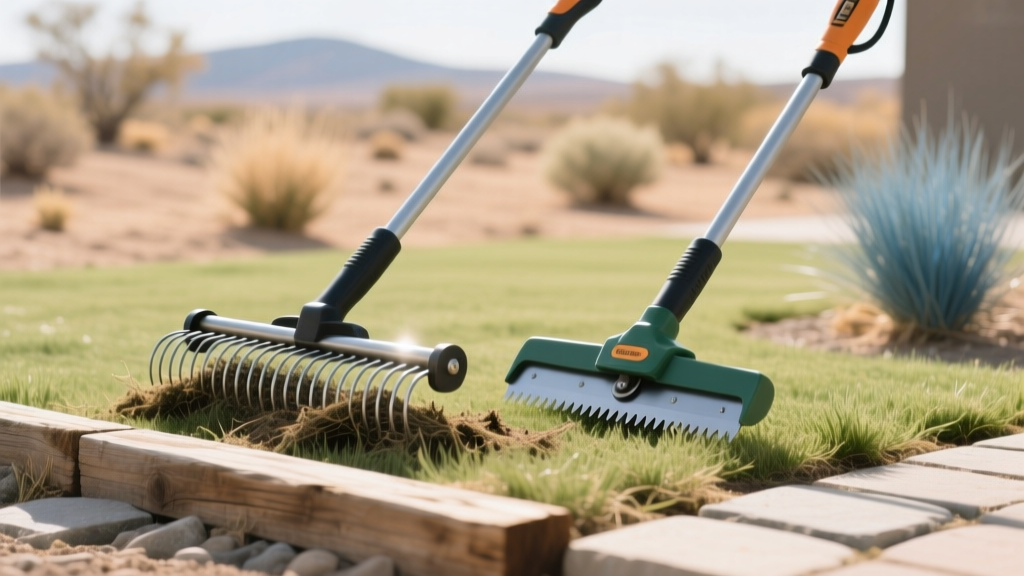
Power Rake vs Dethatcher Blade for Xeric Lawns 2026
Robert HayesPublished
Introduction to Xeric Lawn Maintenance in 2026
As municipal water restrictions tighten across the country in 2026, xeriscaping and low-water landscaping have transitioned from niche gardening trends to essential homeowner practices. However, xeriscaping is no longer limited to replacing turf with gravel and cacti. Modern drought-tolerant turfgrasses, such as Buffalograss, Blue Grama, Bermudagrass, and Zoysia, are the cornerstone of contemporary low-water landscapes. These grasses provide the lush, walkable surface homeowners desire while requiring a fraction of the irrigation needed by traditional Kentucky Bluegrass or Tall Fescue.
Yet, maintaining these drought-resistant lawns presents a unique challenge: thatch accumulation. Thatch is the dense, interwoven layer of living and dead stems, roots, and rhizomes that forms between the soil surface and the green vegetation. In a xeric landscape, managing this layer is not just an aesthetic concern; it is a critical component of water conservation. Choosing the right tool for thatch removal—specifically, deciding between a power rake and a dethatcher blade—can mean the difference between a thriving, water-efficient lawn and a damaged landscape that requires emergency irrigation to survive.
Why Thatch is the Enemy of Water Conservation
In low-water landscaping, every single drop of moisture counts. According to the EPA WaterSense program, outdoor water use can account for up to 30 percent of a household's total water consumption, a figure that xeriscaping aims to drastically reduce. However, a thatch layer exceeding half an inch acts as a hydrophobic barrier. When you apply your carefully rationed irrigation, the water becomes trapped in the spongy thatch layer, evaporating before it ever reaches the soil and the deep root zones where drought-tolerant grasses store their moisture reserves.
Furthermore, thick thatch encourages shallow root growth. Grass roots will colonize the thatch layer to access trapped water and nutrients, completely defeating the purpose of growing deep-rooted xeric grasses designed to survive prolonged dry spells. To maintain the integrity of your low-water landscape in 2026, mechanical thatch removal is mandatory. But because xeric grasses often have delicate above-ground stolons or specific dormancy cycles, the method of removal must be chosen with surgical precision.
The Dethatcher Blade: Gentle Maintenance for Delicate Xeric Turf
A dethatcher blade (often referred to as a spring-tine dethatcher) is an attachment that replaces the standard cutting blade on your rotary lawn mower. It features a series of flexible metal tines or springs that spin at high speeds, gently raking the surface of the lawn to pull up dead organic matter without deeply penetrating the soil.
How It Works in Low-Water Landscapes
The spring tines of a dethatcher blade are designed to flex when they encounter resistance. This flexibility is crucial for xeric grasses like Buffalograss and Blue Grama, which spread via delicate above-ground stolons. A rigid blade would rip these stolons out by the root, causing severe turf damage and exposing the bare soil to rapid moisture evaporation and weed invasion. The dethatcher blade gently lifts the dead material while allowing the living, moisture-storing stolons to remain anchored.
Pros and Cons for Xeriscaping
- Pros: Highly affordable (typically under $40 for a mower attachment in 2026); gentle on shallow-rooted and stoloniferous drought-tolerant grasses; easy to attach and store; ideal for annual, preventative maintenance.
- Pros: Promotes surface aeration without destroying the soil microbiome or disrupting water-retaining mulch layers near garden beds.
- Cons: Ineffective on severe thatch buildup (over 0.75 inches); requires multiple passes in different directions; can be physically demanding to push if the mower is not self-propelled.
The Power Rake: Aggressive Intervention for Warm-Season Xeric Grasses
A power rake (also known as a vertical mower or verticutter) is a heavy-duty, standalone machine typically rented from home improvement centers. Unlike the flexible tines of a dethatcher blade, a power rake utilizes rigid, spinning flail blades or solid steel tines that aggressively slice through the thatch layer and penetrate the top quarter-inch of the soil.
How It Works in Low-Water Landscapes
The flail blades of a power rake act like miniature axes, chopping through thick, matted thatch and severing underground rhizomes. This aggressive action is highly beneficial for warm-season, rhizomatous xeric grasses like Bermudagrass and Zoysia. These grasses possess deep, robust underground root systems that can easily recover from the trauma of a power rake. In fact, slicing the rhizomes stimulates new, vigorous growth and opens up the soil profile, allowing deep-soak irrigation to penetrate directly to the root zone.
Pros and Cons for Xeriscaping
- Pros: Eradicates severe thatch buildup (1 inch or more) in a single pass; slices through compacted soil to improve deep water infiltration; highly effective on aggressive, drought-tolerant warm-season grasses.
- Cons: Expensive to rent (averaging $70 to $90 per day in 2026); heavy and difficult to maneuver around xeric garden beds, boulders, and drip-irrigation lines; will completely destroy stoloniferous grasses like Buffalograss if used improperly.
2026 Comparison Chart: Power Rake vs. Dethatcher Blade
To help you select the correct tool for your specific low-water landscape, refer to the comparison table below. Matching the tool to your grass type and thatch depth is essential for preserving your lawn's drought resistance.
| Feature | Dethatcher Blade (Spring Tine) | Power Rake (Flail Blade) |
|---|---|---|
| Best Xeric Grass Types | Buffalograss, Blue Grama, Seashore Paspalum | Bermudagrass, Zoysia, Centipedegrass |
| Target Thatch Depth | 0.25 to 0.75 inches | 0.75 to 2.0+ inches |
| Soil Penetration | Surface level only | Slices top 0.25 inches of soil |
| Risk to Stolons | Low (Flexible tines) | High (Rigid flails tear stolons) |
| Water Infiltration Boost | Moderate (Clears surface barrier) | High (Creates soil micro-trenches) |
| 2026 Avg. Cost | $25 - $45 (Purchase attachment) | $70 - $110 (Daily rental) |
Step-by-Step Xeric Thatch Removal Guide
Executing a thatch removal plan in a low-water landscape requires careful timing to minimize drought stress. Follow these actionable steps for optimal results in 2026.
1. Test and Measure the Thatch Layer
Before renting equipment or buying attachments, use a soil probe or a sharp trowel to cut a small, deep wedge into your lawn. Measure the brown, spongy layer between the green grass and the dark topsoil. If it is less than half an inch, your xeric lawn does not need mechanical dethatching; the natural soil microbiome is managing it. If it exceeds half an inch, proceed to removal.
2. Time the Removal with Grass Dormancy
Never dethatch a xeric lawn during peak summer heat or severe drought, as the exposed soil will lose moisture rapidly, and the grass will lack the energy to recover. For warm-season xeric grasses (Bermuda, Zoysia), perform power raking in late spring or early summer, just as the grass breaks dormancy and begins active growth. For cool-season xeric alternatives, use a dethatcher blade in early fall when temperatures drop and natural precipitation increases.
3. Prepare the Landscape and Irrigation
Mow your lawn to the lowest recommended height for your specific grass type to expose the thatch layer. Crucially, locate and flag all drip-irrigation emitters, shallow soaker hoses, and xeric groundcover plants. A power rake will easily sever shallow drip lines, leading to hidden water leaks that undermine your conservation efforts.
4. Execute and Clean Up
If using a dethatcher blade, make two passes over the lawn in a crisscross pattern. If using a power rake, make one pass, adjusting the blade depth so it barely scratches the soil surface. Immediately rake up and remove the debris. Leaving the debris on the lawn will smother the grass and create a new thatch layer as it decomposes.
Post-Removal Soil Amendment for Moisture Retention
Once the thatch is removed, the soil surface of your xeric lawn is exposed and vulnerable to rapid evaporation. To align with the principles of low-water landscaping, you must immediately amend the soil to improve its water-holding capacity. According to guidelines published by the Colorado State University Extension, topdressing is a vital component of xeric turf management.
Apply a thin layer (no more than a quarter-inch) of finely screened, high-quality compost over the freshly dethatched lawn. The compost will filter down into the micro-trenches created by the power rake or the aeration holes left by the dethatcher blade. This organic matter acts like a sponge, holding onto your limited irrigation and slowly releasing it to the deep roots. Furthermore, the compost introduces beneficial microbes that will naturally break down future thatch accumulation, reducing the need for aggressive mechanical intervention in subsequent years.
Conclusion: Protecting Your Low-Water Investment
Xeriscaping is a long-term investment in environmental sustainability and household budget management. By understanding the mechanical differences between a gentle dethatcher blade and an aggressive power rake, you can effectively manage thatch without compromising the drought-resistant biology of your turf. Whether you are nurturing a delicate Buffalograss lawn with a spring-tine attachment or rehabilitating a thick Zoysia landscape with a rented power rake, prioritizing soil health and water infiltration will ensure your low-water landscape thrives through the dry seasons of 2026 and beyond.