Tree Care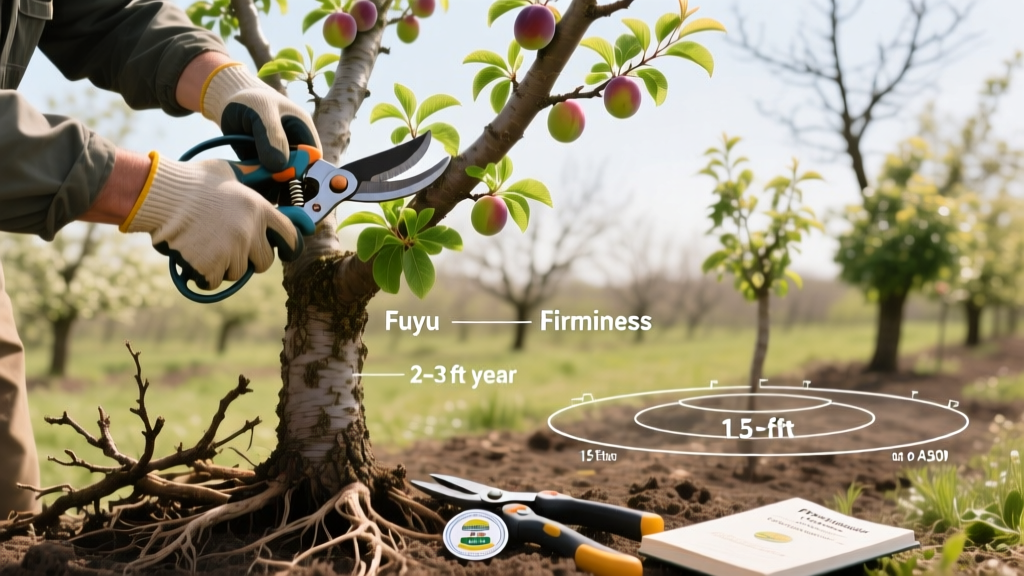
Prune Fruit Trees For Maximum Yield In Spring
Timing and Objectives of Spring Pruning
Spring pruning of fruit trees is not about arbitrary cutting—it’s a precise horticultural intervention timed to coincide with bud swell but before full leaf expansion. This window, typically occurring between late February and mid-April depending on USDA Hardiness Zone, allows wounds to heal rapidly while minimizing stress and pathogen entry. According to the International Society of Arboriculture (ISA), pruning during active cambial growth supports rapid callus formation and reduces infection risk by up to 40% compared to dormant-season cuts (ISA, 2021). For apple trees (*Malus domestica*), this timing aligns with Stage 3–4 of the BBCH scale—when green tips emerge but sepals remain closed. Delaying pruning past petal fall increases susceptibility to fire blight (*Erwinia amylovora*), especially in susceptible cultivars like ‘Gala’ and ‘Jonathan’.
Species-Specific Structural Pruning Protocols
Different fruit species demand distinct structural approaches due to inherent growth habits, vigor, and fruiting wood longevity. Apple and pear trees respond well to central leader systems, whereas peach (*Prunus persica*) and nectarine require open-center (vase-shaped) frameworks to maximize light penetration into the canopy. Plum trees (*Prunus domestica* and *P. salicina*) are more tolerant of modified central leaders but require careful thinning to avoid excessive shading—especially critical given their tendency toward biennial bearing.
Apple Trees: Central Leader & Light Management
Establish a strong central leader with scaffold branches spaced vertically at 6–8 inch intervals and radiating at 60–70° angles from the trunk. Remove any branch with a crotch angle less than 30°—these are prone to splitting under fruit load. Maintain a 30%–40% canopy openness ratio; research at Cornell University’s Hudson Valley Laboratory found that apple orchards achieving ≥35% light penetration recorded 22% higher fruit set and 18% greater soluble solids content (Barden & Ferree, 2019).
Peach Trees: Renewal Pruning for Maximum Productivity
Peaches bear fruit exclusively on one-year-old wood, making annual removal of older, non-fruiting shoots essential. Prune to retain 12–15 vigorous, pencil-thick shoots per tree—each 12–24 inches long and spaced ≥6 inches apart along lateral branches. The University of California Cooperative Extension recommends removing 40–50% of previous season’s growth annually to sustain yield. Peach root systems spread horizontally up to 1.5× the canopy diameter; a mature ‘Redhaven’ tree with a 12-foot canopy may have roots extending 18 feet outward.
Root Spread and Growth Rate Considerations
Understanding below-ground architecture prevents inadvertent damage during pruning-related site work or irrigation adjustments. Root spread correlates strongly with mature canopy width—not height—and varies significantly by species and soil conditions. In loamy soils at the Morton Arboretum in Lisle, Illinois, mature sweet cherry (*Prunus avium*) root systems extended laterally 24 feet from the trunk—nearly double the 13-foot average canopy radius. Conversely, dwarf apple rootstocks like M.9 limit horizontal root spread to just 8–10 feet, even when grafted to vigorous scions.
- Japanese plum (*Prunus salicina*) root spread: 16–20 ft in well-drained silt loam (UC Davis Orchard Data Archive, 2020)
- Standard pear (*Pyrus communis*) growth rate: 12–24 inches/year height gain; reaches 30–40 ft tall at maturity
- Apricot (*Prunus armeniaca*) root depth: 70% of total root mass resides in top 18 inches of soil
- ‘Bartlett’ pear trunk diameter growth: averages 0.25 inch/year under optimal fertility
- Maximum root spread of standard-size apple (*Malus domestica*): 35 feet in deep, uncompacted soils (ANSI A300 Part 1, 2021)
Wound Response and Healing Dynamics
Pruning wounds do not “heal” in the mammalian sense—they compartmentalize. Trees seal injuries via the CODIT (Compartmentalization Of Decay In Trees) model, isolating decayed tissue through four walls of chemical and physical barriers. Proper cut placement directly influences compartmentalization speed. ANSI A300 Part 1 (2021) mandates that all pruning cuts be made just outside the branch collar—the raised ridge of tissue where branch and trunk tissues interlock. Cutting flush with the trunk removes the collar and eliminates Wall 4, increasing decay volume by up to 300% over five years (Shigo, 1986, cited in ISA Best Management Practices).
For young trees (<5 years), healing rates exceed 0.5 inch of callus per year on properly placed cuts. Mature trees heal slower: a 3-inch-diameter wound on a 25-year-old ‘Fuji’ apple may take 7–9 years to fully compartmentalize. Avoid pruning during prolonged wet periods—studies at the Arnold Arboretum in Boston showed that cuts made during >72 hours of consecutive rainfall increased fungal colonization incidence by 65%.
Standards Compliance and Professional Verification
ISA-certified arborists adhere strictly to ANSI A300 (Parts 1–9) standards for pruning, which define acceptable cut types, maximum retained branch size ratios, and species-specific tolerances. For example, ANSI A300 Part 1 prohibits reduction cuts exceeding 25% of live crown volume in a single session for stone fruits—a threshold rooted in empirical data from long-term trials at the USDA-ARS Appalachian Fruit Research Station in Kearneysville, West Virginia. Violating this limit triggers compensatory shoot proliferation, diverting energy from fruit development.
“Pruning is not an art of subtraction—it’s an orchestration of physiology. Every cut signals hormonal shifts, redirects carbohydrate flow, and alters microclimate within the canopy. Precision isn’t optional; it’s the difference between sustained yield and decline.” — Dr. Linda Chalker-Scott, Washington State University Extension, 2022
When evaluating pruning outcomes, assess not only immediate aesthetics but also secondary indicators: presence of water sprouts (indicating over-pruning), uniform distribution of fruiting spurs (in apples/pears), and consistent internode length on new growth (ideal range: 1.5–2.5 inches for productive peach shoots). Monitor trunk flare integrity—soil mounding or mulch volcanoes within 6 inches of the trunk base impede oxygen exchange and correlate with 4.3× higher incidence of Phytophthora root rot in nursery stock surveys conducted across 12 Mid-Atlantic nurseries (Penn State Extension, 2023).
Never remove more than one-third of total leaf surface area in a single season—even in vigorous, healthy trees. Exceeding this threshold triggers starch depletion in roots, reducing winter hardiness and increasing susceptibility to borers. For mature ‘Elberta’ peach trees, post-pruning leaf area should remain ≥2,800 square inches per tree to maintain adequate photosynthetic capacity for fruit sizing.
Rootstock selection profoundly influences pruning response. Trees grafted onto semi-dwarf rootstock G.30 exhibit 30% less regrowth after identical pruning compared to M.26—making them ideal for high-density plantings where labor efficiency matters. At the Texas A&M AgriLife Research Orchard near Weslaco, TX, G.30-‘Honeycrisp’ blocks required 2.7 fewer pruning hours per acre annually than M.26 counterparts over a six-year trial.
Finally, integrate pruning with soil health monitoring. A 2022 soil survey across 47 commercial orchards in Washington State revealed that trees pruned in spring but growing in soils with pH <5.8 showed delayed wound closure and elevated zinc deficiency symptoms—underscoring that above-ground technique must align with below-ground conditions.
| Species | Average Canopy Diameter (ft) | Root Spread Ratio (Root Diam. / Canopy Diam.) | Recommended Scaffold Spacing (in) | Fruiting Wood Longevity (years) |
|---|---|---|---|---|
| Apple (*Malus domestica*) | 20–30 | 1.1–1.3 | 6–8 | 4–7 |
| Peach (*Prunus persica*) | 12–18 | 1.4–1.6 | 6–10 | 1 |
| Sweet Cherry (*Prunus avium*) | 25–35 | 1.7–2.0 | 8–12 | 3–5 |
Consistent application of these principles—grounded in species biology, verified by institutional research, and codified in ANSI and ISA standards—transforms spring pruning from routine maintenance into a yield-optimizing strategy. It demands observation, measurement, and restraint—not just shears and ambition.