Pest Control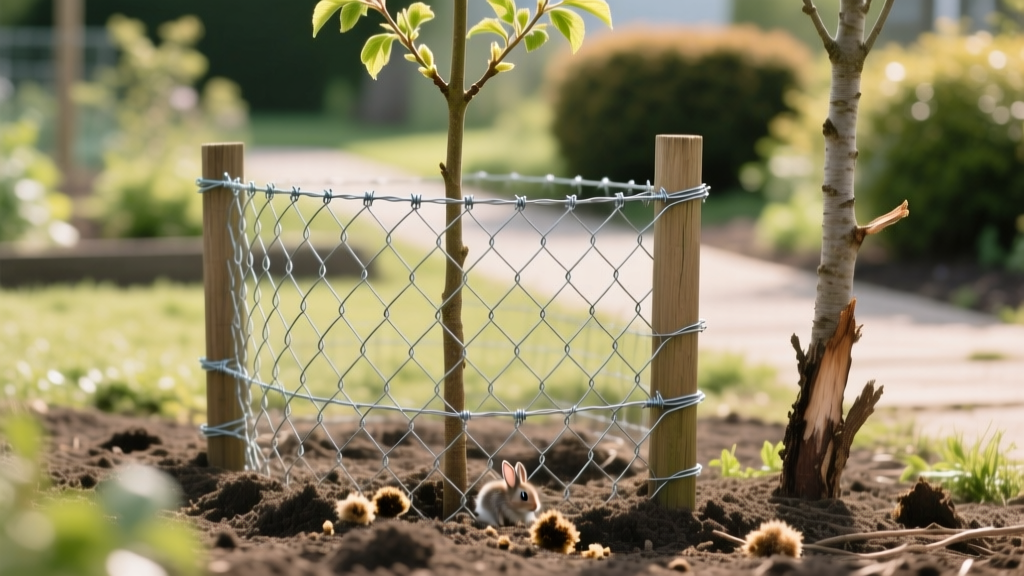
2026 Guide: Protecting New Trees With 2-Foot Chicken Wire Fences
David ParkPublished
Why Rabbits Target Newly Planted Trees
When investing in new landscaping, tree selection and proper planting techniques are only half the battle. The other half is ensuring your young saplings survive their first few seasons in the ground. In 2026, with native plant gardening and sustainable landscaping at an all-time high, attracting local wildlife is almost guaranteed. While birds and pollinators are welcome, foraging rabbits can quickly turn your landscaping investment into an expensive mistake.
Young trees are particularly vulnerable because their bark is thin, tender, and highly nutritious. During the fall and winter months, when herbaceous vegetation dies back, rabbits turn to the cambium layer of young trees for sustenance. According to the Humane Society of the United States, rabbit damage often results in 'girdling,' where the bark is stripped entirely around the trunk. This severs the tree's vascular system, effectively cutting off the flow of water and nutrients, which is usually fatal to young saplings.
As a core component of integrated pest management (IPM), physical exclusion remains the most reliable, non-toxic, and effective method for protecting newly planted trees. Among the various exclusion methods, a 2-foot chicken wire fence is the gold standard for homeowners and professional landscapers alike.
The 2-Foot Chicken Wire Standard for Rabbit Exclusion
Why exactly two feet? The most common rabbit species in North American suburban landscapes, the Eastern Cottontail, is not a high jumper. Under normal circumstances, cottontails rarely jump higher than two feet. However, a proper exclusion fence must account for local variables, particularly winter snow accumulation and the occasional ambitious leap.
The National Wildlife Federation notes that understanding local wildlife behavior is key to successful coexistence and property protection. The National Wildlife Federation's Wildlife Guide emphasizes that physical barriers must be tailored to the specific dimensions and digging habits of the target species. A 2-foot above-ground barrier, combined with a buried apron, perfectly addresses both the jumping and burrowing tendencies of rabbits.
Materials Checklist for 2026 Tree Protection
To ensure your fence lasts through multiple seasons without rusting or degrading, selecting the right materials is critical. Here is what you need for a professional-grade installation:
- Galvanized Chicken Wire: Opt for 20-gauge or thicker galvanized steel with a 1-inch hexagonal mesh. The 1-inch size is crucial; larger mesh (like 2-inch) will allow young rabbits to squeeze through. For 2026 installations, PVC-coated galvanized wire (usually green or black) is highly recommended as it blends into the landscape and resists corrosion from soil moisture and fertilizers.
- Height: Purchase a 3-foot wide roll. You will use 2 feet for the above-ground vertical barrier and bend the bottom 1 foot outward to create an underground 'L-shaped' apron to prevent digging.
- Support Posts: 3-foot metal U-posts or heavy-duty fiberglass garden stakes. Space them every 4 to 5 feet.
- Fasteners: UV-resistant zip ties or 16-gauge galvanized tie wire.
- Tools: Trenching shovel, wire cutters, heavy-duty leather gloves, and a rubber mallet.
Step-by-Step Installation Guide
Proper installation is just as important as the materials you choose. Follow these steps to create an impenetrable perimeter around your newly planted trees.
Step 1: Measure and Clear the Perimeter
Measure a circle around your newly planted tree, leaving at least 12 to 18 inches of clearance from the trunk. This clearance is vital to accommodate trunk growth, prevent the wire from rubbing against the bark in high winds, and allow space for mulch and watering.
Step 2: Dig the Trench and Create the Apron
Rabbits are avid diggers and will attempt to burrow under a fence if they cannot go over it. Dig a shallow trench about 3 inches deep and 12 inches wide along your marked perimeter. Unroll your chicken wire and bend the bottom 12 inches at a 90-degree angle to create an 'L' shape. Lay this bent apron flat into the trench, with the 2-foot section standing vertically. Backfill the trench with soil and tamp it down firmly.
Step 3: Erect Posts and Attach Wire
Drive your metal U-posts into the ground just behind the vertical section of the wire, spacing them evenly around the circle. Use your zip ties or galvanized wire to secure the vertical mesh to the posts. Ensure the wire is pulled taut to prevent sagging, which could create a gap for rabbits to exploit.
Step 4: Secure the Seam
Where the ends of the chicken wire meet, overlap them by at least 6 inches. Wire the overlapping sections together tightly every few inches to ensure there are no weak points or gaps at the seam.
Tree Selection Considerations for Rabbit-Heavy Areas
While a 2-foot chicken wire fence is highly effective, integrating pest control into your initial tree selection process provides a secondary layer of defense. If you are planting in an area with a known, high-density rabbit population, prioritizing less palatable species can save you time and money in the long run.
| Highly Susceptible (Always Fence) | Moderately Susceptible | Highly Resistant (Rarely Damaged) |
|---|---|---|
| Apple, Crabapple, Pear | Maple, Oak, Birch | Juniper, Spruce, Pine |
| Cherry, Plum, Peach | Ash, Elm, Linden | Holly, Boxwood, Barberry |
| Willow, Poplar, Aspen | Honeylocust, Ginkgo | Redcedar, Yew, False Cypress |
Even if you select a resistant species, young saplings are still vulnerable due to their tender bark. Therefore, physical exclusion with chicken wire is still recommended for the first two to three winters until the bark thickens and matures.
Integrating Fencing with Tree Planting Best Practices
When installing your exclusion fence, you must be mindful of the tree's horticultural needs. Avoid piling mulch directly against the chicken wire or the tree trunk. 'Volcano mulching' traps moisture against the bark, inviting fungal pathogens and rot. Keep mulch at least 3 inches away from the trunk and ensure it does not cover the buried apron of the fence, as this can accelerate the corrosion of the wire.
Furthermore, ensure the fence does not interfere with your watering schedule. Drip irrigation lines or soaker hoses can easily be routed under the buried apron or through a small, carefully cut slit in the mesh that is subsequently sealed with a zip tie.
Seasonal Maintenance and Winter Adjustments
A 2-foot fence is highly effective in spring, summer, and fall. However, winter introduces a unique variable: snow. If you live in a region that experiences heavy snowfall, a 2-foot fence can quickly become a 1-foot fence once the snow accumulates. Rabbits can easily walk on top of compacted snow and reach over or bypass the barrier entirely.
To combat this, monitor snow levels around your tree enclosures. If snow depth approaches the top of your fence, gently shovel the snow away from the perimeter to maintain the full 2-foot vertical clearance. Alternatively, in regions with predictable, heavy winter snows, landscapers often use a 3-foot or 4-foot roll of chicken wire, burying the bottom foot and leaving 2 to 3 feet above ground to account for snowpack.
By combining thoughtful tree selection with a properly installed 2-foot chicken wire exclusion fence, you can ensure your newly planted trees thrive in 2026 and beyond, safely coexisting with local wildlife without becoming their winter buffet.