Lawn Care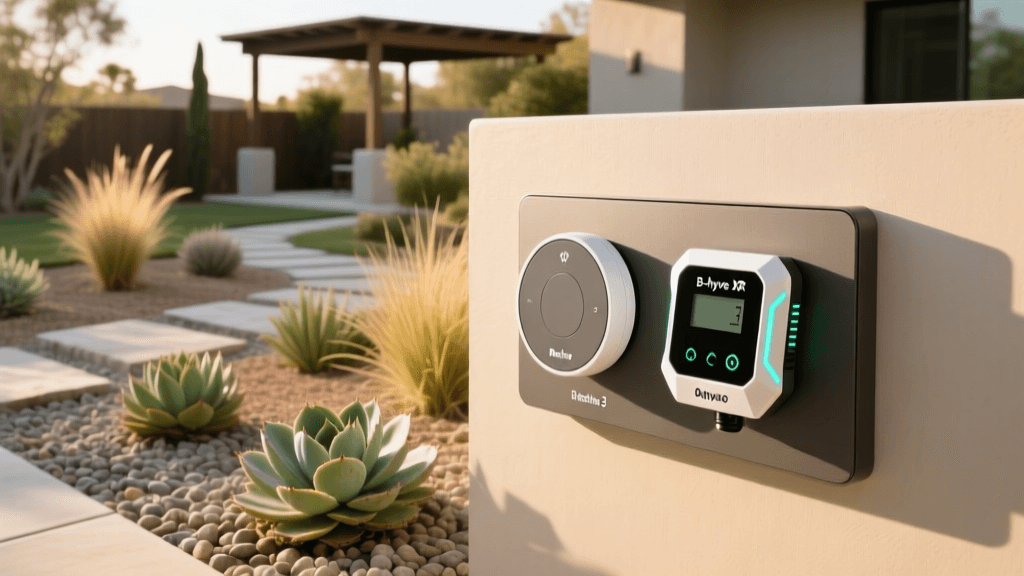
Rachio 3 vs B-hyve XR 2026: Best Smart Controller for Xeriscaping
As water conservation becomes an increasingly critical priority for homeowners in 2026, xeriscaping and low-water landscaping have transitioned from niche gardening trends to essential property management strategies. Whether you are cultivating drought-tolerant native succulents, managing a sprawling buffalo grass lawn, or utilizing complex subsurface drip irrigation, delivering the exact amount of water your landscape needs is paramount. At the heart of any modern low-water landscape is a smart irrigation controller. In 2026, two heavyweights dominate the premium residential and light-commercial market: the Rachio 3 and the Orbit B-hyve XR.
Both controllers boast EPA WaterSense certification and promise drastic reductions in outdoor water usage. However, their approaches to hardware design, software interface, and complex zone management differ significantly. If you are designing or upgrading a xeriscape, choosing the right brain for your irrigation system can mean the difference between a thriving, water-efficient oasis and a struggling, over-watered money pit. In this comprehensive guide, we break down how the Rachio 3 and B-hyve XR compare specifically for xeriscaping and low-water landscaping in 2026.
Why Smart Controllers are Essential for Xeriscaping in 2026
Xeriscaping is not simply about planting cacti and laying down gravel; it is a holistic approach to landscape design that minimizes water waste through hydro-zoning, efficient irrigation, and soil improvement. According to the EPA WaterSense program, smart irrigation controllers that adjust watering schedules based on local weather and soil conditions can save the average home nearly 7,600 gallons of water annually. In 2026, with many western and southern municipalities enforcing strict tiered water pricing and seasonal watering restrictions, these devices are no longer optional luxuries—they are financial necessities.
For low-water landscapes, the primary irrigation method is drip irrigation or low-volume micro-sprayers. These systems require precise scheduling. Unlike traditional spray heads that run for 10 minutes, drip zones often require longer run times but far fewer watering days per week. Furthermore, xeriscapes rely heavily on 'hydro-zoning'—grouping plants with similar water needs together. A smart controller must allow for highly customized, independent scheduling for each individual zone to accommodate the vastly different needs of a high-water vegetable garden, a medium-water perennial bed, and a low-water native shrub border.
Rachio 3: The Xeriscaper’s User-Friendly Champion
The Rachio 3 has long been the gold standard for consumer-friendly smart irrigation, and its 2026 software ecosystem remains incredibly polished. For the DIY xeriscaper, the Rachio 3’s onboarding process is unmatched. The app walks you through a detailed setup for every single zone, asking specific questions about plant type, soil composition, shade levels, and slope.
Strengths for Low-Water Landscapes
- Weather Intelligence Plus: Rachio’s proprietary algorithm pulls data from multiple local weather stations to automatically skip watering during rain, wind, or freeze events. For xeriscapes, avoiding unnecessary watering during humid or cool spells prevents root rot in drought-adapted plants.
- Soil Type Customization: Xeriscapes often feature amended, fast-draining soils or, conversely, heavy unamended clay. Rachio’s 'Cycle and Soak' feature automatically breaks up long drip-irrigation run times into shorter intervals, preventing runoff and ensuring deep water penetration to the taproots of native shrubs.
- App Interface: The visual dashboard makes it incredibly easy to see your monthly water savings and adjust seasonal shift percentages with a single slider.
Limitations for Complex Xeriscapes
While the Rachio 3 is brilliant for standard residential setups, it lacks dedicated hardware terminals for a master valve or pump-start relay. If your low-water landscape is on a large rural property utilizing a well pump, or if you have installed a master valve to protect against catastrophic drip-line leaks, wiring a Rachio 3 requires workarounds that some professionals find cumbersome.
B-hyve XR: The Heavy-Duty Contender for Complex Landscapes
Orbit’s B-hyve XR is the brand’s commercial-grade, heavy-duty smart controller. Housed in a rugged, weather-resistant metal enclosure, the XR is designed for expansive properties, complex multi-zone drip systems, and landscapes that require industrial-level water management. In 2026, the XR continues to be the go-to choice for landscape architects designing high-end, large-scale xeriscapes.
Strengths for Low-Water Landscapes
- Dedicated Master Valve and Pump Terminals: This is the XR’s superpower. For xeriscapes utilizing well water or requiring a main shut-off valve to prevent leaks in extensive drip tubing networks, the XR has dedicated, clearly labeled terminal blocks. No workarounds are necessary.
- Expandable Zone Capacity: Xeriscapes often feature highly granular hydro-zoning. The B-hyve XR supports up to 16 zones natively, and its commercial lineage means it handles complex wiring gauges and long wire runs better than standard plastic consumer models.
- Robust Sensor Integration: The XR features dedicated terminals for rain, freeze, and soil moisture sensors. Integrating a soil moisture sensor into your native plant zones ensures that your controller only triggers the drip system when the soil profile is genuinely dry, overriding weather forecasts if necessary.
Limitations for the Casual Gardener
The B-hyve XR’s physical interface relies on a traditional LCD screen and button-pad navigation, which feels dated compared to Rachio’s sleek touch-friendly design. Furthermore, while the B-hyve app is highly capable, it can feel slightly more cluttered and less intuitive for a beginner trying to understand the nuances of evapotranspiration (ET) rates and crop coefficients.
Head-to-Head Comparison: Rachio 3 vs B-hyve XR (2026 Specs)
To help you decide which controller best fits your low-water landscape, here is a detailed comparison of their core specifications as of 2026.
| Feature | Rachio 3 (16-Zone) | Orbit B-hyve XR (16-Zone) |
|---|---|---|
| Target Audience | DIY Homeowners, Tech Enthusiasts | Prosumers, Large Properties, Contractors |
| Enclosure Material | UV-Resistant Polycarbonate (White) | Heavy-Gauge Powder-Coated Metal |
| Weather Data Source | Weather Intelligence Plus (Multi-source) | WeatherSense (Local station & NWS data) |
| Master Valve / Pump Start | Requires wiring workaround / relay | Dedicated hardware terminals |
| Drip / Cycle & Soak | Excellent, automated via app | Excellent, highly customizable per zone |
| Sensor Terminals | Shared / Limited dedicated inputs | Dedicated Rain, Freeze, Soil Moisture |
| Average 2026 Retail Price | $249.00 | $299.00 |
Xeriscaping Setup: Hydro-Zoning and Drip Configuration
Regardless of which controller you choose, the success of your xeriscape depends on proper hydro-zoning. The Colorado State University Extension emphasizes that grouping plants by water need is the foundational step of xeriscaping. Here is how to configure your smart controller for a typical low-water landscape in 2026:
Zone 1: The Oasis Zone (High Water)
This area is typically near the patio or entryway and features thirsty plants, perhaps a small patch of turfgrass or a vegetable garden. Setup: Configure this zone for frequent, shorter watering cycles. If using spray heads, ensure the Cycle and Soak feature is enabled to prevent runoff on compacted soils.
Zone 2: The Transition Zone (Medium Water)
This zone features drought-tolerant perennials, ornamental grasses, and shrubs like Lavender or Russian Sage. Setup: Utilize drip irrigation with 2 GPH (gallons per hour) emitters. Set the controller to water deeply but infrequently—typically once or twice a week during peak summer, allowing the soil to dry out between sessions to encourage deep root growth.
Zone 3: The Natural Zone (Low Water / Xeric)
This area consists of highly adapted native plants, succulents (like Agave or Yucca), and desert-adapted trees. Setup: Once established, these plants may only need supplemental watering during extreme drought or heatwaves. Use the 'Seasonal Shift' or 'Water Budget' feature on your Rachio or B-hyve to reduce this zone's watering percentage to 10% or 20% of the baseline, or rely entirely on a soil moisture sensor to trigger irrigation only when critical thresholds are breached.
Water Savings, Utility Rebates, and ROI in 2026
Investing in a premium smart controller pays for itself rapidly. In 2026, many municipal water districts and local utilities offer aggressive rebate programs for installing EPA WaterSense-certified smart controllers. Depending on your region, rebates can cover anywhere from $50 to 100% of the purchase price of a Rachio 3 or B-hyve XR. Furthermore, by transitioning from traditional spray irrigation to a smart-controlled drip xeriscape, homeowners routinely report a 30% to 50% reduction in their summer water bills. For properties in high-cost water tiers, the return on investment is often realized within the first two seasons.
Final Verdict: Which Should You Choose for Your Xeriscape?
Choosing between the Rachio 3 and the B-hyve XR ultimately comes down to the physical scale and plumbing complexity of your low-water landscape.
Choose the Rachio 3 if: You are a homeowner managing a standard suburban xeriscape. You value a beautiful, intuitive smartphone app, effortless onboarding, and powerful Weather Intelligence Plus that automatically adapts your drip schedules to hyper-local microclimates without requiring you to tinker with complex settings.
Choose the B-hyve XR if: You have a large, sprawling property, a complex multi-manifold drip system, or rely on a well pump. If your landscape design requires a master valve for leak protection, dedicated soil moisture sensor inputs, and commercial-grade wiring terminals housed in a rugged metal case, the B-hyve XR is the undisputed champion of heavy-duty xeriscape management.
By pairing either of these industry-leading 2026 controllers with thoughtful hydro-zoning and efficient drip irrigation, your xeriscape will thrive beautifully while conserving our most precious natural resource.