Lawn Care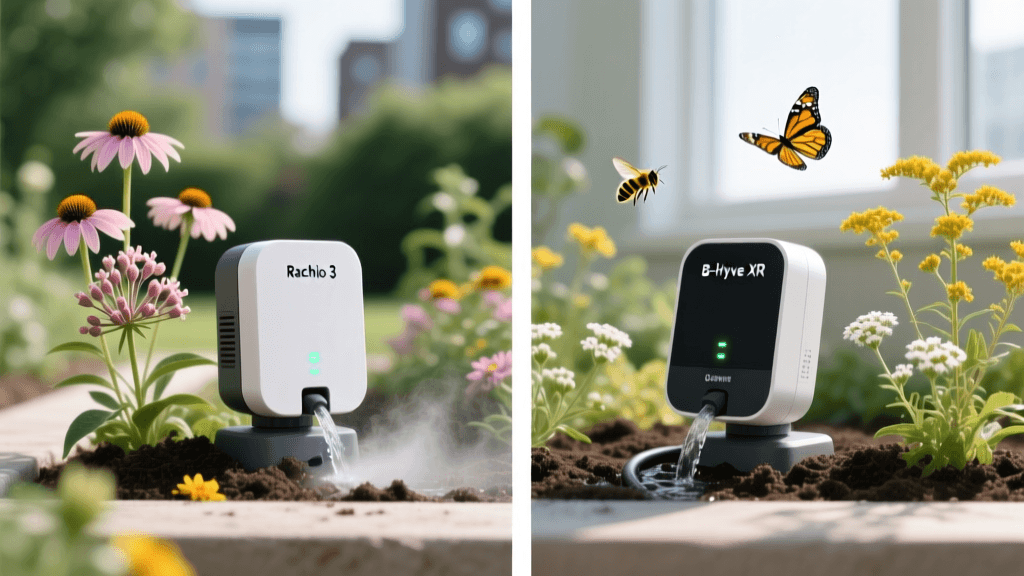
Rachio 3 vs B-hyve XR: Pollinator Garden Irrigation Guide 2026
The 2026 Shift Toward Pollinator-Friendly Lawns
As we navigate the 2026 landscaping season, the traditional monoculture turf lawn is rapidly giving way to biodiverse, pollinator-friendly landscapes. Homeowners are increasingly integrating native wildflower meadows, Dutch white clover, and drought-tolerant pollinator gardens into their yards. While this shift is fantastic for local ecosystems, it introduces a unique challenge: how do you efficiently water a yard that contains both traditional grass and delicate, deep-rooted native pollinator plants? According to the National Wildlife Federation, creating a successful wildlife habitat requires mimicking natural weather patterns, which means abandoning the "set it and forget it" watering schedules of the past.
This is where smart irrigation technology becomes essential. In this comprehensive guide, we are comparing two of the most popular smart irrigation controllers on the market: the Rachio 3 and the Orbit B-hyve XR. We will evaluate them specifically through the lens of pollinator-friendly garden design, focusing on how their features support native plant health, protect ground-nesting bees, and conserve water in 2026.
Why Pollinator Gardens Demand Specialized Irrigation
Pollinator gardens and eco-lawns have vastly different hydrological needs compared to standard Kentucky Bluegrass or Bermuda turf. When designing an irrigation strategy for a pollinator landscape, you must consider three critical factors:
- Protecting Ground-Nesting Bees: Approximately 70% of native bee species nest underground. Traditional sprinkler systems that overwater and create waterlogged soil can flood and destroy these vital nesting sites. Precision watering and soil moisture monitoring are non-negotiable for pollinator conservation, a fact heavily emphasized by the Xerces Society for Invertebrate Conservation.
- Promoting Deep Root Growth: Native wildflowers and pollinator shrubs require deep, infrequent watering to establish extensive root systems that can survive summer droughts. Shallow, daily watering encourages weak roots and promotes fungal diseases.
- Protecting Delicate Blooms: Overhead spray irrigation can damage delicate wildflower petals, wash away pollen, and make it difficult for foraging bees to navigate the garden. Drip irrigation and targeted bubblers are highly preferred for dedicated pollinator zones.
To achieve this level of precision, you need a smart controller that supports advanced hydrozoning, drip irrigation optimization, and soil moisture sensor integration. The EPA WaterSense program highly recommends weather-based smart controllers to reduce outdoor water waste while maintaining landscape health.
Rachio 3: Precision for Microclimates and Ground-Nesting Bees
The Rachio 3 has long been a favorite among landscaping professionals and eco-conscious gardeners. Available in 8-zone and 16-zone models, its standout feature for pollinator gardens is its hyper-local Weather Intelligence Plus. In 2026, Rachio’s proprietary algorithms pull data from over 250,000 personal weather stations, allowing the controller to adjust watering schedules based on microclimate conditions rather than broad regional airport data.
For a pollinator garden, this means if a sudden localized rainstorm hits your specific neighborhood, the Rachio 3 will immediately skip your scheduled drip irrigation cycle, preventing the soil saturation that harms ground-nesting bees. Furthermore, the Rachio 3 seamlessly integrates with wireless soil moisture sensors. By placing a sensor in your native meadow zone, you can program the controller to only water when the soil moisture drops below a specific threshold, ensuring the deep roots of your coneflowers and milkweed get exactly what they need without waterlogging the topsoil.
The app interface is highly intuitive, making it easy to set up "Cycle and Soak" schedules. This method breaks up watering into shorter intervals to prevent runoff, allowing water to penetrate deeply into the clay or loam soils typical of established pollinator gardens.
Orbit B-hyve XR: Powering Large-Scale Meadow Conversions
The Orbit B-hyve XR is a robust competitor, particularly favored by homeowners with larger properties who are converting extensive portions of their turf into sprawling pollinator meadows. Available in 6, 12, and 16-zone configurations, the B-hyve XR features Orbit’s Weather Sense technology, which also utilizes local weather data to adjust watering schedules automatically.
Where the B-hyve XR shines for pollinator landscapes is in its physical design and multi-zone capacity. The XR model features a large, easy-to-read digital dial and a weather-resistant casing, making it ideal for outdoor mounting near remote garden beds or large meadow zones. Its terminal layout is exceptionally accommodating for wiring multiple master valves and drip irrigation manifolds, which are common in large-scale native plant installations.
The B-hyve app allows for detailed hydrozoning, letting you group your high-water turf zones separately from your low-water native pollinator zones. While its soil moisture sensor integration is slightly less seamless than Rachio’s out-of-the-box ecosystem, the B-hyve XR’s reliability and straightforward manual override dial make it a dependable choice for complex, multi-acre pollinator habitats.
Head-to-Head Comparison Chart (2026 Models)
| Feature | Rachio 3 (16-Zone) | Orbit B-hyve XR (16-Zone) |
|---|---|---|
| Weather Technology | Weather Intelligence Plus (Hyper-local) | Weather Sense (Local station data) |
| Drip Irrigation Optimization | Excellent (Custom nozzle types & flow rates) | Very Good (Standard drip presets) |
| Ground-Nesting Bee Protection | Superior (Seamless wireless soil sensor integration) | Good (Wired sensor support, manual thresholds) |
| App Usability for Hydrozoning | Highly intuitive, visual zone mapping | Functional, data-heavy interface |
| Physical Interface | Minimalist LED lights (App dependent) | Digital dial and screen (Great for outdoor use) |
| 2026 Estimated Retail Price | $279.99 | $189.99 |
Best Practices for Programming Pollinator Zones in 2026
Regardless of whether you choose the Rachio 3 or the B-hyve XR, the hardware is only as good as the programming. To maximize the health of your pollinator garden and protect local ecosystems, follow these actionable setup steps:
1. Implement Strict Hydrozoning
Never mix traditional turfgrass and native pollinator plants on the same irrigation valve. Turf requires frequent, shallow watering, while native plants like Black-eyed Susans, Bee Balm, and Swamp Milkweed require infrequent, deep watering. Use your smart controller to assign these to completely separate zones with distinct watering rules.
2. Transition to Drip Irrigation for Flower Beds
Overhead spray heads are detrimental to pollinator gardens. They wet the foliage of native plants, inviting powdery mildew, and they physically knock bees off blooms. Convert your pollinator zones to inline drip tubing or point-source emitters. Both the Rachio 3 and B-hyve XR allow you to input specific drip emitter flow rates (e.g., 0.9 GPH) to calculate exact watering durations.
3. Utilize the Cycle and Soak Method
Native plants need water to reach deep into the soil profile. If you run a drip zone for 90 minutes straight, the soil may become saturated and runoff will occur. Program your smart controller to use the Cycle and Soak feature: water for 30 minutes, wait 45 minutes for the water to percolate, and then water for another 30 minutes. This encourages deep taproot growth, making your pollinator garden more resilient to late-summer heatwaves.
4. Leverage Seasonal Shifts
Pollinator gardens have distinct seasonal water needs. In early spring, native plants need consistent moisture to establish. In late summer, many native species naturally go dormant and require very little water. Use the seasonal shift features in the Rachio or B-hyve apps to automatically scale back watering percentages in August and September, preventing root rot and preparing the plants for winter dormancy.
Final Verdict: Which Controller Wins for Pollinator Landscapes?
When it comes to cultivating a thriving, eco-friendly pollinator garden in 2026, both controllers offer exceptional water-saving capabilities. However, the Rachio 3 takes the crown for dedicated pollinator enthusiasts. Its superior integration with wireless soil moisture sensors is the deciding factor; being able to monitor exact soil saturation levels is the best way to protect the underground nests of native bees while ensuring deep-rooted wildflowers survive drought conditions. The hyper-local weather intelligence also ensures that delicate blooms are not subjected to unnecessary overhead watering after a passing micro-storm.
That said, if you are managing a larger property with extensive meadow conversions and prefer a physical dial for manual overrides and outdoor troubleshooting, the Orbit B-hyve XR is a highly capable, budget-friendly alternative that still supports the essential hydrozoning and drip irrigation features required for a successful pollinator habitat. By upgrading to either of these smart systems, you are not just saving water—you are actively engineering a safer, more abundant environment for the pollinators that sustain our local ecosystems.