Lawn Care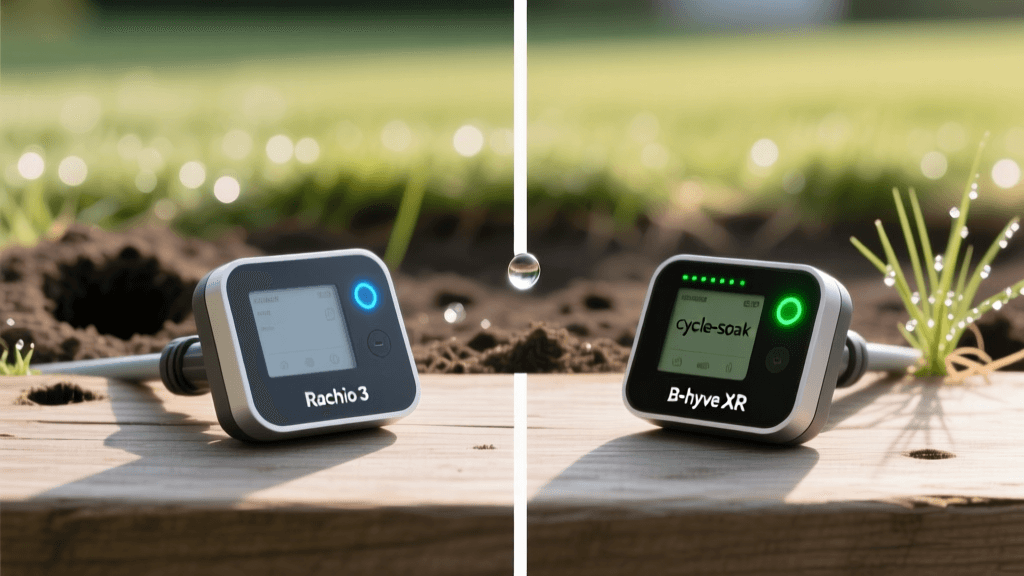
Rachio 3 vs B-hyve XR: Smart Watering After Core Aeration 2026
The Synergy Between Core Aeration and Smart Irrigation in 2026
As we navigate the shifting climate patterns and stringent water conservation mandates of 2026, maintaining a resilient, deep-rooted lawn requires a dual approach: mechanical soil disruption and digital precision. Core aeration remains the undisputed champion for alleviating soil compaction, breaking down thatch, and creating vital pathways for oxygen, nutrients, and water to reach the root zone. However, the physical benefits of pulling thousands of soil plugs from your lawn are entirely negated if your irrigation system subsequently floods the surface, causing massive runoff and wasting precious resources.
This is where the integration of smart irrigation technology becomes mandatory rather than optional. Pairing your freshly aerated soil with a top-tier smart controller ensures that every drop of water is delivered at a rate the soil can actually absorb. In 2026, the market leaders for residential smart irrigation remain the Rachio 3 and the Orbit B-hyve XR. Both devices offer Wi-Fi connectivity, weather-based adjustments, and advanced cycle-and-soak capabilities, but they approach post-aeration water management from distinctly different philosophies. This comprehensive guide will compare these two powerhouse controllers specifically through the lens of post-core aeration lawn care, helping you decide which system best supports your soil health and water conservation goals.
The Science of Core Aeration and Water Infiltration
Core aeration involves using a machine to extract small plugs of soil, typically two to three inches deep, from the lawn. According to turfgrass experts at the University of Minnesota Extension, this process physically fractures compacted soil layers that form due to foot traffic, mowing equipment, and natural settling. When soil is compacted, its pore spaces are crushed, meaning water applied to the surface simply pools and runs off into storm drains rather than penetrating the root zone.
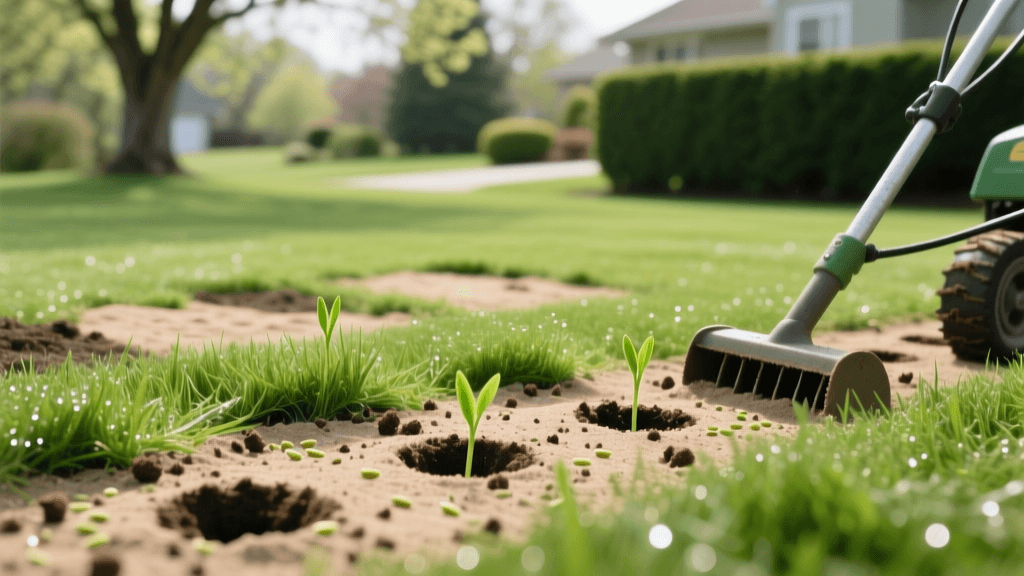
After aeration, your lawn is essentially dotted with thousands of miniature reservoirs. These aeration holes act as direct conduits to the deeper root systems. However, the surrounding soil may still have a slow infiltration rate, particularly if you have heavy clay soil. If your traditional sprinkler system applies water at a rate of 1.5 inches per hour, but your aerated clay soil can only absorb 0.25 inches per hour, the result is immediate surface runoff. The aeration holes fill up in minutes, overflow, and the surrounding compacted soil sheds the excess. To truly capitalize on your aeration investment, you must utilize the 'cycle and soak' methodology, which is where the Rachio 3 and B-hyve XR prove their worth.
Why Smart Controllers are Mandatory Post-Aeration
The EPA WaterSense program highlights that smart irrigation controllers can save the average home thousands of gallons of water annually by adjusting schedules based on real-time environmental conditions. When dealing with a freshly aerated lawn, the primary goal is deep, slow hydration that encourages roots to dive down into the newly created soil channels. Smart controllers utilize local weather data, evapotranspiration (ET) rates, and soil type algorithms to prevent overwatering, which can lead to shallow root growth and fungal diseases—a common risk when homeowners mistakenly believe a newly aerated lawn needs constant flooding.
Rachio 3: The Data-Driven Approach to Soil Hydration
The Rachio 3 has long been the gold standard for data enthusiasts and precision lawn care aficionados. In 2026, its Weather Intelligence Plus feature remains unparalleled in its ability to pull hyper-local weather data from multiple sources, including personal weather stations in your immediate vicinity. For post-aeration care, the Rachio 3 excels in its software interface and automated soil absorption algorithms.
Cycle and Soak Automation
The Rachio 3 app allows you to input your specific soil type (e.g., clay, loam, sand) and slope gradient for every individual zone. When you enable 'Smart Cycle', the controller automatically calculates the maximum runtime before runoff occurs. It then splits your total required watering time into multiple shorter cycles, allowing for 'soak' periods in between. For an aerated lawn, this means water fills the aeration holes, pauses to let the surrounding soil matrix absorb the moisture, and then repeats. This guarantees 100% infiltration and zero runoff.
Overseeding Integration
Because core aeration is frequently paired with overseeding, maintaining consistent topsoil moisture is critical for seed germination. The Rachio 3 allows you to easily create a temporary 'Fixed Schedule' for the first 14 days post-aeration, running three to four micro-cycles per day to keep the seedbed damp without drowning the newly exposed soil plugs. Once the seeds germinate, transitioning back to a deep, inflexible smart schedule takes just one tap in the app.
B-hyve XR: The Accessible Workhorse for Aeration Care
Orbit’s B-hyve XR offers a more traditional hardware experience combined with robust smart features. It features a physical dial and an LCD screen on the unit itself, which many homeowners prefer for quick, on-the-fly adjustments without needing to pull out a smartphone. In 2026, the B-hyve XR continues to be a highly cost-effective solution for managing post-aeration irrigation.
Weather Sense Technology
The B-hyve XR utilizes Orbit’s Weather Sense technology, which automatically skips watering during rain events, high winds, or freezing temperatures. While it may not offer the granular, zone-by-zone soil absorption algorithms of the Rachio 3 out of the box, its cycle-and-soak programming is highly customizable once you learn the interface. You can manually program up to three distinct start times per zone, allowing you to create a custom post-aeration soaking schedule that mimics the automated smart cycles of its competitors.
Hardware Durability and Sensor Support
The B-hyve XR is housed in a rugged, weather-resistant enclosure that performs exceptionally well in harsh outdoor environments. Furthermore, it supports a wide array of third-party soil moisture sensors. If you have invested heavily in core aeration, pairing the B-hyve XR with a physical soil moisture probe placed deep in the root zone ensures that the controller only waters when the soil actually needs it, bypassing weather algorithms entirely in favor of ground-truth data.
Feature Comparison: Rachio 3 vs B-hyve XR for Aeration Care
| Feature | Rachio 3 (2026 Model) | Orbit B-hyve XR (2026 Model) |
|---|---|---|
| Cycle & Soak Automation | Automated via soil type & slope algorithms | Manual programming via multiple start times |
| Weather Intelligence | Weather Intelligence Plus (Hyper-local, multi-source) | Weather Sense (Standard local forecasting) |
| Overseeding Schedules | Easy temporary fixed-schedule overrides in-app | Requires manual dial/app adjustment for micro-cycles |
| Sensor Compatibility | Proprietary Rachio Soil Moisture Sensor & select 3rd party | Broad compatibility with standard 24VAC soil/rain sensors |
| Interface | App-first (Minimalist physical unit) | Physical dial, LCD screen, and App |
| Estimated 2026 Price | $229 - $279 (8 to 16 zones) | $159 - $189 (6 to 12 zones) |
Step-by-Step Post-Aeration Watering Strategy
Regardless of whether you choose the Rachio 3 or the B-hyve XR, executing a proper watering strategy after core aeration is vital for maximizing your lawn's health. Follow this 2026 seasonal blueprint to ensure your aeration investment pays dividends.
Phase 1: The First 48 Hours (Soil Settling)
Immediately after aeration, your lawn will be covered in thousands of soil cores. Do not rake them up; let them break down naturally to return beneficial microbes to the thatch layer. During the first two days, your goal is to soften these cores and begin pushing moisture into the aeration holes. Set your smart controller to run a single, deep cycle-and-soak sequence. If using the Rachio 3, ensure your zone's soil type is accurately set to 'Clay Loam' or your specific soil profile so the app automatically spaces out the soaking intervals.
Phase 2: Days 3 to 14 (Overseeding Germination)
If you applied grass seed immediately after aeration, the rules change. Seeds require constant surface moisture to germinate. You must temporarily disable the smart weather-skipping features that prevent shallow watering. Program your controller (either via the Rachio app's temporary schedule or the B-hyve XR's manual start times) to water for 5 to 10 minutes, three to four times a day. The aeration holes will act as protected micro-climates for the seeds, keeping them moist and safe from surface wind.
Phase 3: Days 15 and Beyond (Deep Root Training)
Once the new grass reaches mowing height, or if you only aerated without seeding, it is time to transition back to deep, infrequent watering. Reactivate the smart weather algorithms on your Rachio 3 or B-hyve XR. Set your target watering days to just two or three times per week. The smart controller will apply a heavy volume of water, utilizing the cycle-and-soak method to ensure the water penetrates 4 to 6 inches deep into the aeration channels. This forces the turfgrass roots to grow downward, creating a drought-resistant lawn capable of surviving the peak heat of late summer.
Soil Moisture Sensors: The Ultimate Aeration Companion
While weather-based algorithms are highly effective, the ultimate way to manage an aerated lawn in 2026 is by integrating a physical soil moisture sensor. Both the Rachio 3 and B-hyve XR support sensor inputs. By burying a sensor probe at a depth of four inches—exactly the depth of a standard aeration tine—you provide the controller with real-time, ground-level data. The EPA's guidelines on irrigation efficiency strongly recommend soil moisture sensors for landscapes with variable soil compositions. When the controller detects that the deep soil profile is still moist from a previous cycle, it will override any scheduled watering, preventing the waterlogging that can rot turf roots and undo the structural benefits of your aeration effort.
Final Verdict for 2026
Choosing between the Rachio 3 and the B-hyve XR for post-aeration lawn care ultimately depends on your desired level of automation and budget. If you want a 'set it and forget it' system that automatically calculates the exact cycle-and-soak intervals required for your specific clay or loam soil after aeration, the Rachio 3 is the undisputed champion. Its software does the heavy lifting, ensuring that water infiltrates the aeration holes perfectly without manual math.
Conversely, if you prefer a more hands-on approach, require a physical dial for quick overrides, or want to integrate a wider variety of budget-friendly third-party soil moisture sensors, the B-hyve XR is a formidable, cost-effective workhorse. Both controllers will vastly improve your water efficiency and ensure that the time, money, and sweat you invested into core aeration translates into a thicker, greener, and more resilient lawn for the 2026 season and beyond.