Lawn Care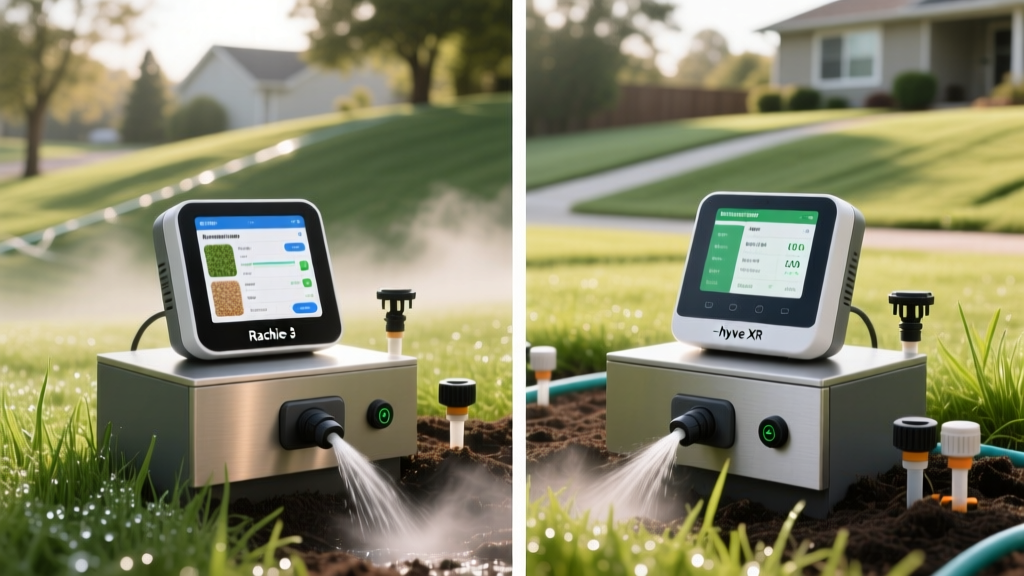
Rachio 3 vs B-hyve XR: 2026 Smart Watering for Fertilizer Schedules
Mike RodriguezPublished
The Intersection of Smart Irrigation and Fertilizer Schedules
As we navigate the 2026 lawn care season, the synergy between your fertilization regimen and your irrigation system has never been more critical. Applying the right nutrients at the right time is only half the battle; how you water those nutrients into the soil profile dictates your lawn's health, color, and resilience. Smart irrigation controllers have evolved significantly, and two of the most prominent models on the market—the Rachio 3 and the Orbit B-hyve XR—offer distinct approaches to moisture management. But how do they handle the specific demands of a rigorous fertilizer schedule?
According to the University of Minnesota Turfgrass Science program, proper watering is essential not just for grass survival, but for nutrient uptake and preventing fertilizer burn. When you apply granular or liquid fertilizers, your irrigation system must deliver precise amounts of water to activate the nutrients, push them past the thatch layer, and into the root zone without causing runoff. In this comprehensive guide, we compare the Rachio 3 and the B-hyve XR specifically through the lens of fertilizer types, application schedules, and nutrient activation best practices for 2026.
Rachio 3: Precision Watering for Nutrient Activation
The Rachio 3 has long been a favorite among lawn care enthusiasts, and its 2026 firmware iterations continue to refine its Weather Intelligence Plus algorithms. For fertilizer schedules, the Rachio 3 excels in its highly customizable 'Cycle and Soak' features. When applying a heavy dose of slow-release granular fertilizer, you need to deliver roughly 0.5 inches of water to properly activate the prills and move them into the soil. If your soil is compacted or clay-heavy, applying 0.5 inches in a single run will result in massive runoff, taking your expensive fertilizer straight into the storm drains.
The Rachio 3 allows you to easily program custom Cycle and Soak routines specifically for your fertilization days. By breaking the watering session into three 10-minute cycles with 30-minute soak intervals, the Rachio 3 ensures that the water—and the dissolved nutrients—penetrates deeply into the root zone. However, one challenge with the Rachio 3's aggressive weather-skipping features is that it may cancel your scheduled post-fertilization watering if a minor rain event is forecasted. A light drizzle is rarely enough to activate granular fertilizer, meaning you must remember to manually override the system or use the 'Start' button on the app to force a soak on fertilizer application days.
B-hyve XR: Soil-Centric Moisture Management
Orbit’s B-hyve XR takes a slightly different approach, leaning heavily into its WeatherSense technology and robust soil moisture sensor integrations. For lawn care professionals and dedicated homeowners who follow a strict organic or synthetic fertilizer schedule, the B-hyve XR’s compatibility with wired and wireless soil moisture sensors is a game-changer. Rather than relying solely on hyper-local weather forecasts, the B-hyve XR can read the actual volumetric water content in your soil.
This is particularly beneficial when managing liquid fertilizers and post-emergent herbicides. Liquid applications often require the grass blades to remain dry for 24 hours to allow for foliar absorption, followed by a gentle watering to push any remaining residue into the soil. The B-hyve XR’s sensor-driven logic ensures that you are only watering when the soil actually drops below your defined moisture threshold, preventing the overwatering that can lead to shallow roots and nutrient leaching. Furthermore, the B-hyve XR's manual override interface on the physical dial is often praised for being more intuitive for quick, on-the-fly adjustments when you are out in the yard with a spreader or sprayer.
Head-to-Head Comparison: Rachio 3 vs B-hyve XR for Fertilization
To help you decide which controller best supports your 2026 lawn fertilization strategy, we have broken down their core features as they relate to nutrient management and watering schedules.
| Feature | Rachio 3 | B-hyve XR |
|---|---|---|
| 2026 Retail Price (8-Zone) | $229.99 | $139.99 |
| Weather Skip Logic | Highly aggressive (may skip light rain needed for granular activation) | Moderate (adjusts based on soil moisture and ET data) |
| Cycle & Soak Customization | Exceptional (highly granular control per zone) | Good (preset intervals, slightly less customizable) |
| Soil Moisture Sensor Support | Limited (relies mostly on weather data and flow meters) | Excellent (native support for multiple sensor types) |
| Manual Override Ease | App-reliant (physical buttons are basic) | Physical dial and app (great for mid-application changes) |
| Best Fertilizer Type Match | Slow-release granular (via deep Cycle & Soak) | Liquid and organic (via precise soil moisture tracking) |
Organic vs. Synthetic Fertilizer Watering Needs
When programming your smart controller, it is vital to recognize that organic and synthetic fertilizers interact with water differently. Synthetic fertilizers are highly soluble and require immediate, precise watering to prevent nitrogen burn. If you use a synthetic 20-0-5 blend, the Rachio 3’s ability to execute a perfectly timed, multi-stage Cycle and Soak is invaluable for dissolving the salts and moving them safely past the crown of the grass.
Conversely, organic fertilizers like milorganite or feather meal rely on soil microbes to break down the nutrients. These microbes require consistent, moderate soil moisture to remain active. The B-hyve XR’s soil moisture sensors excel here, ensuring that the soil never completely dries out, thereby maintaining the microbial activity necessary to release organic nutrients to your turf over a 6-to-8-week period.
Seasonal Fertilizer Schedules and Irrigation Adjustments
Spring Activation
In early spring, soil temperatures are just beginning to rise. When applying your first round of pre-emergent and starter fertilizers, the goal is to water the products into the top inch of soil without saturating the cold ground, which can invite fungal diseases. The EPA WaterSense program recommends utilizing smart controllers to apply short, frequent waterings during this period. The B-hyve XR’s seasonal shift algorithms automatically reduce watering times in early spring, aligning perfectly with light pre-emergent activation.
Summer Stress and Spoon-Feeding
During the peak heat of summer, cool-season grasses go dormant, and heavy fertilization is generally discouraged. However, if you are maintaining warm-season grasses like Bermuda or Zoysia, you will be 'spoon-feeding' liquid nitrogen and iron every two weeks. Liquid applications require the irrigation system to run briefly to wash the nutrients off the grass blades and into the soil. The Rachio 3’s 'Quick Run' feature via the smartphone app is perfect for these 3-minute post-application rinses.
Fall Root Building
Fall is the most critical time for fertilizing cool-season lawns. You are applying heavy potassium and nitrogen to build root mass for the winter. This requires deep, infrequent watering. As noted by Nebraska Extension turfgrass experts, deep watering encourages roots to grow downward, accessing nutrients stored deeper in the soil profile. Both controllers handle fall schedules well, but the Rachio 3’s advanced zone-specific soil type settings allow you to program deeper, longer soaks for clay-heavy zones, ensuring the fall fertilizer reaches the deep root zone before winter dormancy.
2026 Best Practices: Programming Your Controller for Fertilizer Days
Regardless of whether you choose the Rachio 3 or the B-hyve XR, following these best practices will ensure your fertilizer investment is not wasted to evaporation or runoff.
- Create a 'Fertilizer Soak' Schedule: Do not rely on your standard daily or weekly schedule to water in granular fertilizer. Create a dedicated, manual schedule in your app that delivers exactly 0.5 inches of water using Cycle and Soak. Run this specific schedule immediately after spreading.
- Disable Rain Skip on Application Day: A forecast of 0.1 inches of rain is not enough to dissolve granular fertilizer prills. Temporarily disable the rain skip feature on the day of application to ensure your system delivers the necessary activation water.
- Calibrate Your Spray Heads: Smart controllers calculate run times based on the precipitation rate of your sprinkler heads. Place tuna cans around your lawn and measure how long it takes to collect 0.5 inches of water. Input this exact data into your Rachio or B-hyve app to ensure your fertilizer activation schedules are mathematically accurate.
- Liquid Herbicide Timing: If you are applying a liquid weed killer alongside your fertilizer, program your smart controller to skip watering for at least 24 hours. Both the Rachio 3 and B-hyve XR allow you to set 'watering delays' or 'rain delays' which can be repurposed to keep the system off while the herbicide dries on the weed foliage.
Final Verdict for Lawn Care Enthusiasts
When evaluating the Rachio 3 and the B-hyve XR strictly through the lens of fertilizer types and schedules, the decision comes down to your specific lawn care methodology. If your 2026 strategy revolves around heavy, slow-release granular fertilizers applied to clay soils that require meticulous Cycle and Soak routines to prevent nutrient runoff, the Rachio 3 is the superior choice. Its granular control over watering intervals ensures that every prill is dissolved and pushed into the root zone.
However, if your regimen relies on organic fertilizers, frequent liquid spoon-feeding, and you want a system that dynamically adjusts to the actual moisture levels in the soil to maintain microbial activity, the B-hyve XR offers unparalleled value. Its robust soil moisture sensor integration and intuitive physical overrides make it a highly responsive tool for the hands-on lawn care enthusiast. By pairing the right smart controller with a scientifically sound fertilizer schedule, you can achieve a thicker, greener, and more resilient lawn while conserving water and protecting local waterways from nutrient pollution.