Lawn Care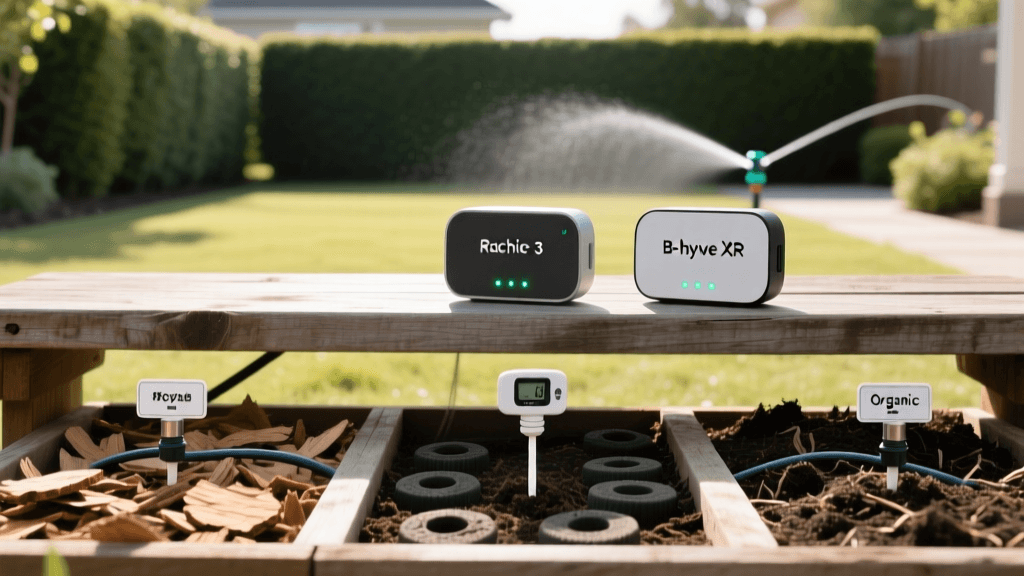
Rachio 3 vs B-hyve XR 2026: Smart Irrigation for Mulched Beds
The Intersection of Smart Irrigation and Mulching Methods
As we navigate the 2026 growing season, water conservation and landscape health are more intertwined than ever. Homeowners and landscape professionals alike are upgrading to smart irrigation controllers to optimize water usage, reduce utility bills, and maintain vibrant outdoor spaces. However, a smart controller is only as effective as the data it receives and the zone customizations it allows. One of the most critical, yet frequently overlooked, variables in irrigation scheduling is the presence and type of mulch in your garden beds.
Mulching methods and materials drastically alter soil evaporation rates, water permeability, and root zone moisture retention. Applying a standard turfgrass irrigation schedule to a heavily mulched ornamental bed is a recipe for root rot, fungal diseases, and wasted water. Today, we are diving deep into a highly specific comparison: the Rachio 3 versus the B-hyve XR smart irrigation controllers, specifically analyzing how their 2026 firmware and hardware ecosystems handle the unique demands of mulched landscape beds.
How Different Mulching Materials Impact Soil Moisture
Before comparing the controllers, we must understand the science of mulch. Mulching materials generally fall into two categories: organic and inorganic. Organic mulches, such as shredded hardwood bark, pine straw, and cedar chips, decompose over time, improving soil structure and water-holding capacity. Inorganic mulches, like rubber nuggets or river rock, do not decompose but offer distinct evaporation barriers.
According to research highlighted by the University of Minnesota Extension, a proper 2-to-3-inch layer of organic mulch can reduce soil moisture evaporation by up to 70 percent compared to bare soil. This means that mulched beds require significantly less frequent irrigation, but when they do need water, they require longer, deeper soak times to penetrate the mulch layer and reach the active root zone. If your smart controller does not allow for precise adjustments to "Allowed Depletion" and "Crop Coefficient" settings per zone, you will inevitably overwater your mulched shrubs and trees.
Rachio 3 in 2026: Precision Moisture Tracking for Mulched Zones
The Rachio 3 remains a powerhouse in the smart irrigation market in 2026. Priced around $229 for the 8-zone model, its primary strength lies in its Weather Intelligence Plus algorithms and seamless integration with wireless soil moisture sensors. For mulched beds, the Rachio 3 excels because of its highly granular zone customization.
When setting up a mulched zone in the Rachio app, you can adjust the Vegetation Type (e.g., shrubs, trees, or groundcover) and the Soil Type. More importantly, Rachio allows you to tweak the Allowed Depletion percentage. For a bed mulched with dense cedar chips, you can lower the allowed depletion, signaling the controller that the soil retains moisture longer and should not trigger a watering cycle until the soil is genuinely dry. Furthermore, if you pair the Rachio 3 with a wireless soil moisture sensor buried beneath the mulch layer in the root zone, the controller will bypass scheduled watering entirely if the subsurface moisture is adequate, regardless of surface weather conditions.
B-hyve XR: Advanced Flow Meters and Mulch Bed Calibration
Orbit’s B-hyve XR has seen significant firmware updates in 2026, solidifying its position as a top-tier competitor, especially for users who want advanced hardware integrations at a slightly lower entry price (typically around $169 for the 8-zone model). The standout feature of the B-hyve XR for mulched beds is its native support for advanced flow meters and leak detection.
Why does flow matter for mulched beds? When irrigating through drip lines or micro-sprayers hidden beneath organic or rubber mulch, clogged emitters or broken lines are incredibly difficult to spot. The mulch hides the puddling. The B-hyve XR’s flow sensor integration learns the exact gallon-per-minute (GPM) output of your mulched bed zones. If a drip line breaks under your pine straw, the B-hyve XR detects the anomalous flow spike and instantly shuts off the zone, sending an alert to your smartphone. Additionally, the B-hyve app features a "Catch Cup" test wizard, allowing you to measure exactly how much water penetrates your specific mulch material, automatically adjusting the zone's precipitation rate to match real-world absorption.
Feature Comparison: Rachio 3 vs B-hyve XR for Mulched Beds
To help you decide which controller best suits your specific mulching methods and materials, here is a head-to-head comparison of their 2026 capabilities regarding soil moisture and zone calibration.
| Feature | Rachio 3 (2026) | B-hyve XR (2026) |
|---|---|---|
| Soil Moisture Sensor Integration | Excellent; proprietary wireless sensors integrate seamlessly into Flex Daily schedules. | Good; supports standard wired sensors and select wireless models via hub. |
| Zone Depletion Customization | Highly granular; allows specific depletion % adjustments for heavy organic mulches. | Moderate; relies more on preset soil types and vegetation profiles. |
| Flow Meter & Leak Detection | Supported via third-party integrations and specific add-on hardware. | Native, best-in-class; auto-shutoff for hidden drip leaks under mulch. |
| Drip Zone Calibration | Manual GPM entry and custom root depth settings. | Automated Catch Cup wizard calculates penetration through mulch layers. |
| Price (8-Zone Model) | ~$229 USD | ~$169 USD |
Step-by-Step Calibration Guide for Mulched Beds
Regardless of whether you choose the Rachio 3 or the B-hyve XR, proper calibration is mandatory for mulched zones. Follow these actionable steps to ensure your 2026 smart controller respects your mulching materials:
- Step 1: Measure Your Mulch Depth. Ensure your organic mulch is exactly 2 to 3 inches deep. If it is thicker, water will never reach the soil; if thinner, evaporation rates will skew your controller's algorithms.
- Step 2: Select the Correct Emitter Type. In the app, do not select "Spray" or "Rotor" for mulched beds. Always select "Drip" or "Micro-Spray." This tells the controller to expect longer run times and slower absorption rates.
- Step 3: Adjust the Crop Coefficient (Kc). Mulched shrubs and trees have different transpiration rates than bare turf. Lower the Kc value in the advanced zone settings by 10-15% to account for the evaporation barrier provided by the mulch.
- Step 4: Set Custom Root Depth. Trees and shrubs in mulched beds have deeper root zones than grass. Set the root depth in your app to 15-24 inches. This forces the controller to utilize "Cycle and Soak" methods, watering in short bursts to allow moisture to percolate through the mulch and deep into the subsoil without causing surface runoff.
- Step 5: Install a Sub-Surface Sensor. For the ultimate precision, bury a soil moisture sensor 6 inches deep, directly beneath the mulch layer, in the dripline of your most water-sensitive plants. Link this sensor to your mulched zones to override weather-based estimates with hard, real-world data.
WaterSense Compliance and Environmental Impact
Both the Rachio 3 and B-hyve XR maintain their EPA WaterSense certification in 2026, a crucial designation for homeowners in drought-prone regions facing strict municipal watering restrictions. The EPA notes that smart controllers can save the average home nearly 7,600 gallons of water annually. However, these savings are only fully realized when the controller's schedule accurately reflects the landscape's microclimates.
By properly configuring your smart controller to account for the moisture-retaining properties of your chosen mulching materials, you not only protect your plants from overwatering but also maximize your environmental impact. Whether you prefer the Rachio 3 for its unparalleled soil moisture sensor ecosystem or the B-hyve XR for its superior leak detection under hidden drip lines, taking the time to calibrate for mulch is the hallmark of a truly smart landscape.
Final Thoughts for the 2026 Season
The debate between the Rachio 3 and the B-hyve XR ultimately comes down to your specific landscape architecture. If your property features extensive ornamental beds layered with diverse organic mulches and you prioritize automated, sensor-driven daily adjustments, the Rachio 3 is worth the premium. Conversely, if you rely heavily on extensive drip irrigation networks hidden beneath rubber or hardwood mulch and want peace of mind against hidden leaks, the B-hyve XR’s flow meter integration is unmatched. Whichever you choose, remember that the mulch on your soil is just as important as the technology on your wall.