Lawn Care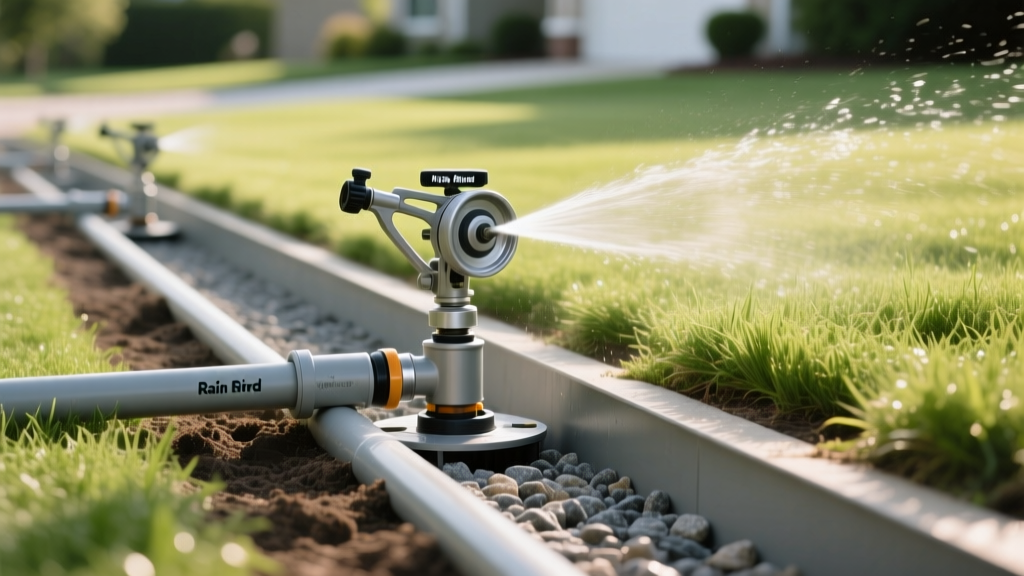
Rain Bird Rotary Sprinkler Adjustment Near French Drains 2026
James MillerPublished
The Intersection of Irrigation and Subsurface Drainage
Installing a French drain is one of the most effective ways to eliminate standing water, protect your home's foundation, and rescue a soggy lawn. By channeling excess groundwater and surface runoff away from low-lying areas, a properly constructed French drain restores the usability of your outdoor space. However, introducing a subsurface drainage system fundamentally alters the topography and soil stability of your yard. This creates a unique challenge for your existing or newly planned irrigation system. As of 2026, landscape architects and drainage experts emphasize that managing water output from high-velocity sprinkler heads is critical to preserving the structural integrity of your French drain trench.
When you place powerful rotary sprinklers too close to a French drain, the kinetic energy of the water droplets can wash away topsoil, expose the drainage gravel, and ultimately compromise the geotextile fabric that keeps silt out of your perforated pipe. This guide focuses specifically on how to adjust and space Rain Bird rotary sprinkler heads around French drain installations to prevent erosion while maintaining lush, evenly watered turfgrass in 2026.
Why Rotary Sprinklers Threaten French Drain Integrity
Unlike traditional spray heads that emit a fine, continuous mist, rotary sprinklers shoot concentrated, high-velocity streams of water that rotate across the lawn. Models like the Rain Bird 5000 Series rotors are industry standards for medium-to-large residential lawns because of their superior wind resistance and deep soil penetration. However, this same force becomes a liability near a French drain.
A standard French drain trench is backfilled with washed drainage rock (typically 3/4-inch gravel) and capped with a few inches of topsoil or sod to hide it from view. If a Rain Bird rotor is spaced too closely or adjusted to spray directly onto the trench line, the heavy water droplets act like tiny hammers. Over a single irrigation season, this impact can:
- Cause Topsoil Erosion: Stripping the grass and soil cap, exposing the underlying gravel bed.
- Displace Mulch and Seed: Washing away the materials used to stabilize the sod recovery zone above the trench.
- Silt the Geotextile Fabric: If soil is splashed into exposed gravel areas, it migrates downward, clogging the drainage fabric and reducing the pipe's flow capacity.
- Create Secondary Puddling: By over-saturating the soil immediately above the drain, you defeat the purpose of the trench, which relies on gradual percolation rather than sudden surface flooding.
Spacing Guidelines: Keeping Water Away from the Trench
Proper spacing is your first line of defense. In 2026, the consensus among irrigation professionals is to maintain a strict buffer zone between high-throw rotary heads and the French drain's gravel bed. The general rule of thumb is to keep standard rotary sprinkler heads at least 3 to 5 feet away from the edge of the French drain trench.
If your lawn's geometry forces a sprinkler head to be placed closer to the drainage zone, you must pivot from standard rotors to rotary nozzles. Rain Bird's R-VAN (Rotary VAN) nozzles are designed to fit onto standard spray bodies but emit thick, wind-resistant streams at a much lower precipitation rate and impact velocity. These are ideal for tight spaces near French drains because they deliver water gently enough to prevent surface erosion while still providing the uniform coverage required for healthy turf.
According to the EPA WaterSense irrigation efficiency standards, matching your precipitation rate to your soil's infiltration rate is vital for preventing runoff. Because the soil directly above a French drain is often looser and more aerated due to the recent trenching process, applying water too quickly will result in immediate surface pooling, even if the drain below is functioning perfectly.
Step-by-Step Rain Bird Rotary Head Adjustment
If you have existing Rain Bird rotors near your newly installed French drain, you must manually adjust the arc and radius to ensure the water stream never crosses the trench line. Here is how to perform the adjustment using a standard Rain Bird adjustment tool or a small flathead screwdriver.
1. Adjusting the Left and Right Arc Stops
Rain Bird rotors allow you to set a custom arc anywhere from 40 to 360 degrees. To protect your French drain, you will likely need to set a part-circle arc that points strictly away from the trench.
- Find the Right Stop: Turn the sprinkler turret clockwise until it clicks or stops. This is your fixed right edge. Position this so the spray stops a few feet short of the French drain.
- Set the Left Stop: Press down on the arc adjustment socket (located on top of the turret) and turn the turret counterclockwise to your desired left edge. Release the socket to lock it in place.
- Test the Arc: Turn on the zone manually and watch the stream. Ensure the outermost edge of the water pattern falls at least 12 inches short of the drain's soil cap.
2. Reducing the Throw Radius
Even with the arc pointed away, the sheer distance of the throw might cause splash-back or wind drift to land on the French drain gravel. You must reduce the radius.
- Locate the radius reduction screw on the top of the nozzle.
- Insert your flathead screwdriver or Rain Bird tool and turn it clockwise.
- This lowers the trajectory and shortens the throw distance. In 2026, newer Rain Bird models feature precision stream straighteners that maintain droplet size even when the radius is reduced by up to 25%, preventing the misting effect that leads to wind drift.
Recommended Spacing and Arc Adjustments by Drain Proximity
Use the following chart to determine the best Rain Bird equipment and adjustment strategy based on how close your irrigation zone borders the French drain installation.
| Distance from French Drain | Recommended Rain Bird Model | Arc Adjustment Strategy | Radius Setting |
|---|---|---|---|
| Under 2 Feet | R-VAN (Rotary Nozzle on Spray Body) | 90° - 180° (Strictly away from trench) | Reduce by 25% - 50% |
| 2 to 4 Feet | 5000 Series Rotor (Low Angle Nozzle) | 180° - 270° (Avoid trench overlap) | Reduce by 15% - 25% |
| Over 4 Feet | 5004 / 5006 Standard Rotor | Full Circle (360°) Acceptable | Standard (Up to 40 ft) |
Protecting the Drainage Aggregate and Sod Recovery Zone
After a French drain is installed, the sod replaced over the trench takes time to establish deep roots. During this 2026 growing season, the soil cap is highly susceptible to being washed away by irrigation. To protect this vulnerable zone, consider installing temporary drip irrigation lines or soaker hoses directly over the trench line. This provides the new sod with the deep, slow watering it needs to root into the backfill without introducing the destructive kinetic energy of a rotary sprinkler.
Additionally, ensure that the soil cap over your French drain is slightly mounded—about half an inch higher than the surrounding grade. This subtle crown encourages surface water to shed away from the trench line toward the lawn, working in harmony with your adjusted Rain Bird rotors rather than against them.
Integrating 2026 Smart Irrigation Technology
Modern lawn care in 2026 relies heavily on smart controllers and flow sensors to protect landscape investments. If you are pairing a new French drain with an irrigation upgrade, install a master valve and a flow sensor connected to your Wi-Fi-enabled smart controller. If heavy rain saturates the ground and the French drain is actively evacuating water, the smart controller's soil moisture sensors will automatically skip scheduled watering cycles. Furthermore, if a sprinkler head near the drain breaks or washes out the soil cap, the flow sensor will detect the anomalous water usage and shut down the zone instantly, preventing a catastrophic washout of your French drain gravel bed.
Conclusion
A French drain and a high-performance irrigation system can coexist beautifully, provided they are carefully calibrated to respect one another. By maintaining proper spacing, utilizing low-impact rotary nozzles near the trench, and meticulously adjusting the arc and radius of your Rain Bird rotors, you safeguard your drainage investment. Taking the time to map your sprinkler coverage and protect the geotextile fabric from silt and erosion ensures that your lawn remains dry, healthy, and visually flawless for years to come.