Lawn Care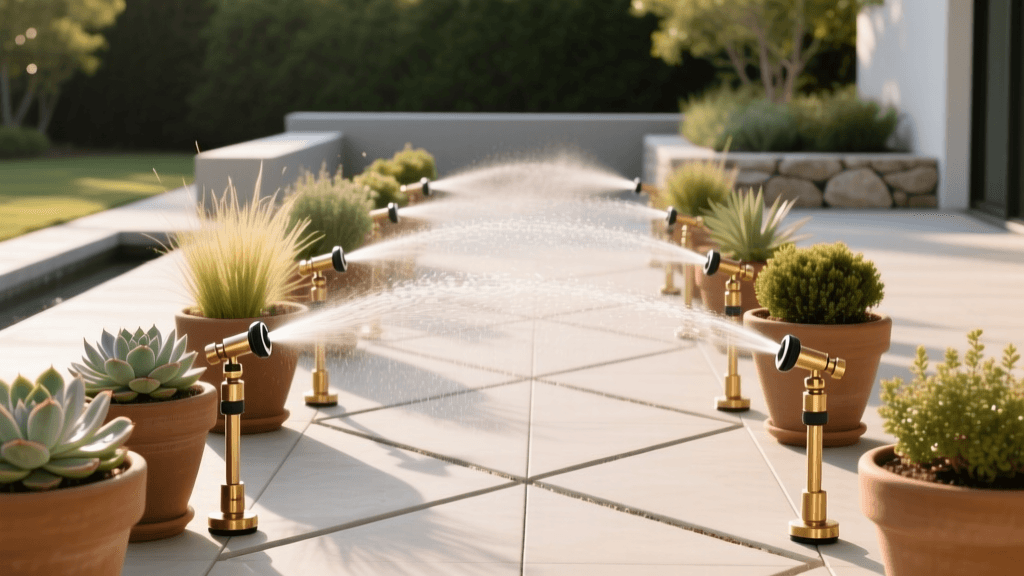
Rain Bird Rotary Sprinkler Spacing for Patio Pots 2026
The Unique Challenge of Patio and Courtyard Container Irrigation
As we move through the 2026 growing season, container and pot gardening on patios, rooftops, and courtyards continues to surge in popularity. However, irrigating these elevated and isolated microclimates presents a distinct set of challenges compared to traditional in-ground lawn care. Potted plants rely entirely on the water we provide, and their root systems are confined to a limited volume of soilless potting mix. Traditional fixed-spray sprinkler heads often deliver water too aggressively, causing soil washout, splashing debris onto hardscapes, and losing massive amounts of moisture to wind drift.
This is where adapting Rain Bird rotary sprinkler heads—specifically adjustable rotary nozzles like the R-VAN series—becomes a game-changer for large container arrangements, half-barrel planters, and courtyard pot groupings. By utilizing multi-stream rotary technology, gardeners can achieve gentle, deep penetration into dense container root balls without the destructive force of standard spray heads. According to the EPA WaterSense program, upgrading to high-efficiency rotary nozzles can reduce outdoor water waste by up to 30%, a critical factor for urban gardeners facing strict 2026 municipal water restrictions.
Why Rain Bird Rotary Nozzles Excel for Potted Plants
Unlike standard mist or spray nozzles that emit a solid sheet of water, Rain Bird rotary nozzles emit multiple, distinct streams of water that rotate across the designated arc. This design offers three massive benefits for container gardening:
- Lower Precipitation Rate: Rotary nozzles apply water at a much slower rate (typically 0.6 to 1.5 inches per hour). Container potting mixes, which often contain peat moss or coco coir, are notoriously hydrophobic when dry. A slow application rate allows the water to absorb gradually rather than running straight out the bottom drainage holes.
- Wind Resistance: Patios and balconies are notoriously windy. The heavier, distinct water streams produced by rotary heads resist wind drift far better than fine mist, ensuring the water actually lands in your terracotta or ceramic pots rather than on your patio furniture.
- Reduced Hardscape Overspray: By precisely adjusting the arc and radius, you can water a semi-circle of large planters against a wall without spraying the stucco, siding, or glass doors.
Selecting the Right Equipment for 2026 Container Setups
For container gardens, you will not be using large commercial rotary heads meant for expansive turf. Instead, the focus is on Rain Bird R-VAN (Rotary Van) Adjustable Nozzles installed on risers or specialized patio-stand pipes. The R-VAN nozzles allow you to manually adjust both the arc (from 45 to 270 degrees) and the radius (from 13 to 24 feet), making them incredibly versatile for targeting specific pot clusters.
For smaller, individual pots, a hybrid approach is often best: using rotary nozzles for large focal-point planters (like citrus trees in half-barrels) while utilizing drip emitters for trailing annuals. However, for dense courtyard container gardens, a well-spaced network of rotary sprinklers on adjustable risers is the most efficient method.
Spacing and Riser Height Chart for Container Gardens
Spacing rotary sprinklers for containers is fundamentally different from lawn head-to-head coverage. In a lawn, you want overlapping grids. In a container garden, you want targeted intersection points that align with the center mass of your largest pots, while avoiding the hardscape borders. The Colorado State University Extension emphasizes that container plants require precise moisture management to prevent both root rot and drought stress, making targeted spacing vital.
| Container Arrangement Type | Pot Diameter / Size | Optimal Riser Height | R-VAN Radius Setting | Spacing Between Heads |
|---|---|---|---|---|
| Half-Whiskey Barrels / Focal Trees | 24 - 36 inches | 12 - 18 inches | 13 - 15 ft (Reduced) | Targeted 1:1 (One head per pot) |
| Courtyard Cluster Groupings | Mixed 12 - 20 inches | 24 - 36 inches | 15 - 20 ft | 8 - 12 ft apart (Overlapping edges) |
| Perimeter Wall Planters | Rectangular 36x18 inches | 18 - 24 inches | 13 ft (Half-Circle Arc) | 6 - 8 ft apart (Linear overlap) |
| Elevated Balcony Troughs | Continuous Trough | 6 - 12 inches | Minimum (Stream setting) | 4 - 5 ft apart (Strip coverage) |
Step-by-Step Adjustment for Targeted Pot Coverage
Proper adjustment of your Rain Bird rotary heads is the difference between a thriving patio garden and a waterlogged mess. Here is how to calibrate your R-VAN nozzles specifically for container environments in 2026:
1. Setting the Left Arc Edge
Turn on the irrigation zone and locate the nozzle. Rotate the entire nozzle body clockwise until it stops. This sets your left edge. Position this so the outermost stream just kisses the inner edge of your outermost pot, avoiding the patio floor.
2. Setting the Right Arc Edge
While the system is running, rotate the nozzle body counter-clockwise to expand the arc. Stop when the rightmost stream aligns with the opposite boundary of your container grouping. The R-VAN allows arcs anywhere from 45 to 270 degrees, perfect for corner planters or narrow balcony troughs.
3. Adjusting the Radius (Throw Distance)
Use a small flathead screwdriver to turn the radius screw on top of the nozzle. Clockwise reduces the throw distance; counter-clockwise increases it. For container gardening, you almost always want to reduce the throw. Turn the screw clockwise until the farthest stream lands exactly in the center of your back-row planters. This prevents water from shooting over the pots and onto the house exterior.
4. Flushing and Cleaning
Container environments often accumulate wind-blown dust, pollen, and organic debris. Pull up on the flush cap of the R-VAN nozzle to allow water to flush out any grit that might clog the intricate rotary streams. Do this monthly during the peak summer season.
Managing Soil Hydrophobia and Runoff in Pots
Even with perfectly adjusted rotary sprinklers, container potting mixes can become hydrophobic (water-repellent) if they dry out completely between waterings. When a rotary stream hits bone-dry peat-based soil, it can bead up and run off the surface, pooling on the patio before the root zone is hydrated.
The 2026 Solution: The Cycle and Soak Method.
Modern smart irrigation controllers, such as the latest Wi-Fi-enabled models compatible with Matter smart home protocols, feature a 'Cycle and Soak' function. Program your Rain Bird controller to water your container zones in short bursts. For example, instead of running the rotary zone for 15 continuous minutes, program it to run for 5 minutes, wait 15 minutes for the potting mix to absorb the moisture and break the surface tension, and then run for another 10 minutes. This guarantees deep saturation of the container root ball with zero runoff.
Seasonal Adjustments for Microclimates
Containers on paved patios experience a 'heat island' effect. The hardscape absorbs and radiates solar heat, causing pots to dry out up to 40% faster than in-ground landscapes. Conversely, during the cooler shoulder seasons of spring and autumn, those same pots retain moisture longer.
- Peak Summer (July-August): Increase the radius slightly to ensure the outer edges of large planters receive adequate moisture. You may need to adjust the arc to cover a wider spread as trailing plants grow and expand their canopy.
- Autumn/Winter Prep: Reduce the radius and arc. As annuals die back and perennials go dormant in their pots, the water demand plummets. Tightening the arc ensures you are only watering the surviving root crowns and not spraying bare soil or dormant foliage, which can invite fungal diseases in cool, damp weather.
Conclusion
Adapting Rain Bird rotary sprinkler heads for container and pot gardening is a masterclass in precision irrigation. By leveraging the gentle, wind-resistant streams of R-VAN nozzles, carefully calculating riser heights, and utilizing smart cycle-and-soak scheduling, you can maintain lush, vibrant patio containers while adhering to modern water conservation standards. Whether you are managing a rooftop terrace or a shaded courtyard, taking the time to measure, space, and adjust your rotary heads will yield spectacular botanical results throughout the 2026 season and beyond.