Lawn Care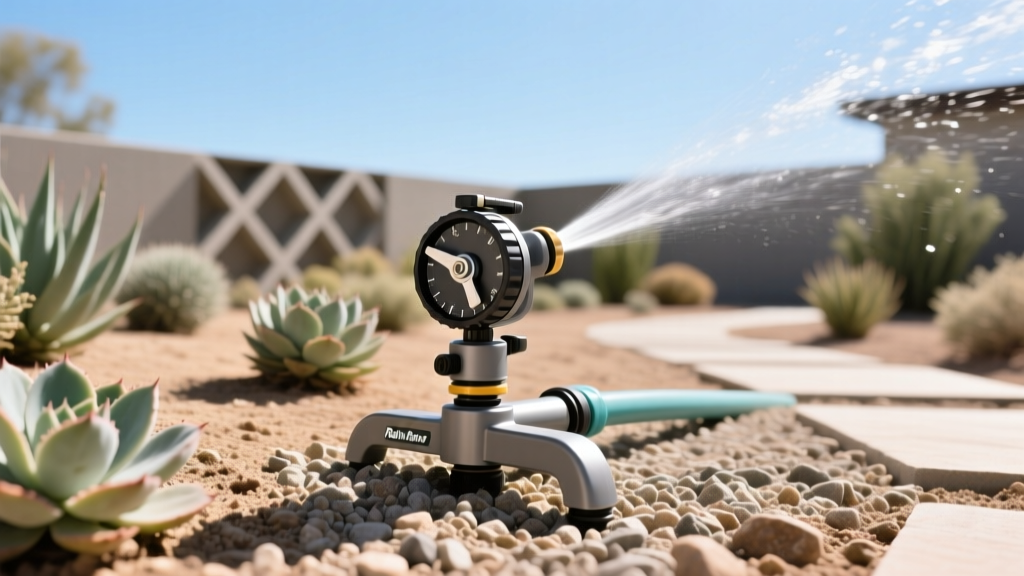
Rain Bird Rotary Sprinkler Spacing & Adjustment For Xeriscapes 2026
David ParkPublished
The Xeriscaping Advantage of Rotary Sprinklers in 2026
As we navigate the 2026 growing season, water conservation is no longer just an environmental preference; it is a strict municipal mandate in many drought-prone regions. Xeriscaping and low-water landscaping have evolved from niche gardening trends into essential property management strategies. However, selecting drought-tolerant plants like agave, lavender, and ornamental grasses is only half the battle. The true secret to a thriving, low-water landscape lies in precision irrigation. This is where Rain Bird rotary sprinkler heads and nozzles become indispensable tools for the modern xeriscape.
Unlike traditional spray heads that dump water rapidly, rotary sprinklers apply moisture slowly and evenly. This deliberate application rate is critical for xeriscape environments, which often feature heavy clay soils, compacted native earth, or decomposed granite pathways that struggle with rapid water absorption. By mastering the adjustment and spacing of Rain Bird rotary heads, homeowners and landscaping professionals can eliminate wasteful runoff, protect expensive hardscaping, and ensure every drop of water serves a purpose.
Understanding Precipitation Rates and Soil Infiltration
To understand why rotary sprinklers are the gold standard for low-water landscapes in 2026, we must look at precipitation rates. Traditional fixed spray heads typically deliver water at a rate of 1.5 to 2.5 inches per hour. In contrast, Rain Bird rotary nozzles and rotor heads apply water at a much slower rate, generally between 0.6 and 1.5 inches per hour.
According to conservation experts at Water Use It Wisely, matching your irrigation precipitation rate to your soil's infiltration rate is the single most effective way to prevent water waste. Xeriscape soils, particularly in the American Southwest and parts of California, often have infiltration rates as low as 0.2 to 0.5 inches per hour. When a traditional spray head applies 2.0 inches per hour to soil that can only absorb 0.5 inches, the remaining 1.5 inches becomes surface runoff. This runoff not only wastes treated drinking water but also washes away expensive gravel mulch, erodes dry creek beds, and stains permeable pavers. Rotary sprinklers solve this by keeping the application rate well within the soil's absorption capacity.
Rain Bird Rotary Spacing: The Head-to-Head Rule
Proper spacing is the foundation of any efficient irrigation system, and it is especially critical in xeriscapes where overwatering can quickly lead to root rot in drought-adapted plants. The industry standard for spacing is "head-to-head coverage." This means that the spray from one sprinkler head must reach the exact base of the adjacent sprinkler head.
If you are using a Rain Bird rotor that throws a 15-foot radius, the next rotor must be placed exactly 15 feet away. A common mistake in low-water landscaping is spacing heads at the maximum diameter (e.g., 30 feet apart for a 15-foot throw) to save money on materials. This results in dry spots in the center and forces homeowners to overwater the perimeters to compensate, entirely defeating the purpose of a xeriscape. By adhering strictly to head-to-head spacing, you create a uniform blanket of moisture that allows for shorter, more efficient run times.
2026 Spacing and Model Comparison Table
Below is a comprehensive guide to spacing and performance for the most popular Rain Bird rotary models used in xeriscaping this year. Always consult the Rain Bird official catalog for the latest nozzle charts and pressure specifications.
| Rain Bird Model / Nozzle | Optimal Pressure (PSI) | Max Radius (Feet) | Head-to-Head Spacing (Feet) | Best Xeriscape Application |
|---|---|---|---|---|
| R-VAN Rotary Nozzle (4x4) | 45 PSI | 15 | 15 | Small courtyard beds, parkway strips |
| R-VAN Rotary Nozzle (8x8) | 45 PSI | 24 | 24 | Medium native shrub zones |
| 5004 Plus Rotor | 45 PSI | 36 | 36 | Large open xeriscape lawns (buffalo grass) |
| 5006 Plus Rotor | 55 PSI | 40 | 40 | Expansive estate xeriscapes, sports fields |
Step-by-Step Adjustment for Hardscape Avoidance
Xeriscapes are defined by their integration of living plants and non-living hardscapes, such as boulders, flagstone, and decorative rock. Watering a hot boulder or a gravel pathway is a complete waste of resources. Fortunately, Rain Bird rotary heads offer precise adjustment capabilities to keep water strictly on the root zones.
1. Adjusting the Arc
Most Rain Bird rotors, like the 5000 series, feature an adjustable arc ranging from 40 to 360 degrees. To set the arc, first, rotate the sprinkler turret to the right until it clicks, establishing the fixed starting point. Then, rotate it to the left to your desired stopping point. If you are watering a narrow strip of drought-tolerant lantana between a driveway and a retaining wall, you can narrow the arc to a tight 90 degrees, ensuring zero overspray onto the concrete or stone.
2. Dialing in the Radius
Every Rain Bird rotary head features a radius adjustment screw located at the top of the nozzle. Using a flat-head screwdriver, you can reduce the throw distance by up to 25% without significantly altering the precipitation rate. In a xeriscape, this is vital for protecting nearby structures. If your rotor is throwing 15 feet, but a permeable paver patio begins at 12 feet, simply turn the radius screw clockwise to pull the stream back to 11.5 feet, leaving a safe buffer zone.
Cycle and Soak: Programming for Low-Water Landscapes
Even with perfectly spaced and adjusted rotary sprinklers, the scheduling of your irrigation controller dictates your overall water efficiency. In 2026, smart irrigation controllers equipped with local weather data and soil moisture sensors are the standard for high-end xeriscapes. According to the EPA WaterSense program, utilizing weather-based smart controllers can save the average home thousands of gallons of water annually.
When programming your Rain Bird ESP-ME3 or ST8I smart controller for rotary heads, you must utilize the "Cycle and Soak" method. Because rotary heads apply water slowly, they require longer overall run times to deliver the necessary depth of water. However, running a zone for 45 minutes straight may still cause minor runoff in heavily compacted xeriscape soils.
- Step 1: Calculate the total run time needed (e.g., 45 minutes).
- Step 2: Divide this into three separate start times (e.g., 15 minutes each).
- Step 3: Space the start times at least one hour apart (e.g., 5:00 AM, 6:00 AM, 7:00 AM).
This allows the first 15-minute cycle to fully infiltrate the dry, hydrophobic xeriscape soil before the next cycle begins, maximizing deep root hydration and eliminating surface pooling.
Seasonal Maintenance for Dusty Xeriscape Environments
Xeriscapes, by their very nature, often feature less ground cover and more exposed soil, rock, and mulch. This environment generates significantly more dust and fine debris than a traditional thick turf lawn. In 2026, maintaining the physical hardware of your rotary sprinklers is just as important as the initial installation.
Dust and fine sand can easily infiltrate the gears and nozzle filters of rotary sprinklers, leading to poor rotation, stuttering arcs, and uneven water distribution. At the start of the spring irrigation season, and again in late autumn, it is imperative to flush your lines and clean the internal filters. Simply unscrew the nozzle from the Rain Bird rotor body, remove the small plastic or stainless-steel filter screen, and rinse it thoroughly in a bucket of clean water. Check the turret for any grit buildup and apply a silicone-based lubricant if the rotation feels sluggish.
Furthermore, inspect the check valves located at the base of the sprinkler heads. In sloped xeriscapes, low-head drainage can cause water to leak out of the lowest sprinkler head long after the zone has shut off, wasting hundreds of gallons over a single month. Rain Bird's integrated Seal-A-Matic (SAM) check valves are designed to hold up to 14 feet of elevation change, keeping water in the pipes and out of your gravel swales until the system is pressurized.
Conclusion
Transitioning to a xeriscape or low-water landscape is a powerful commitment to environmental stewardship and long-term property value. However, the ecological benefits of drought-tolerant plants can be entirely negated by an inefficient, poorly configured irrigation system. By selecting the correct Rain Bird rotary sprinkler models, adhering strictly to head-to-head spacing, meticulously adjusting arcs and radii to avoid hardscapes, and utilizing smart cycle-and-soak scheduling, you can create a stunning, resilient landscape that thrives in the demanding climate of 2026 and beyond. Precision is the ultimate conservation tool, and with proper rotary head management, your xeriscape will remain both beautiful and remarkably efficient.