
Landscaping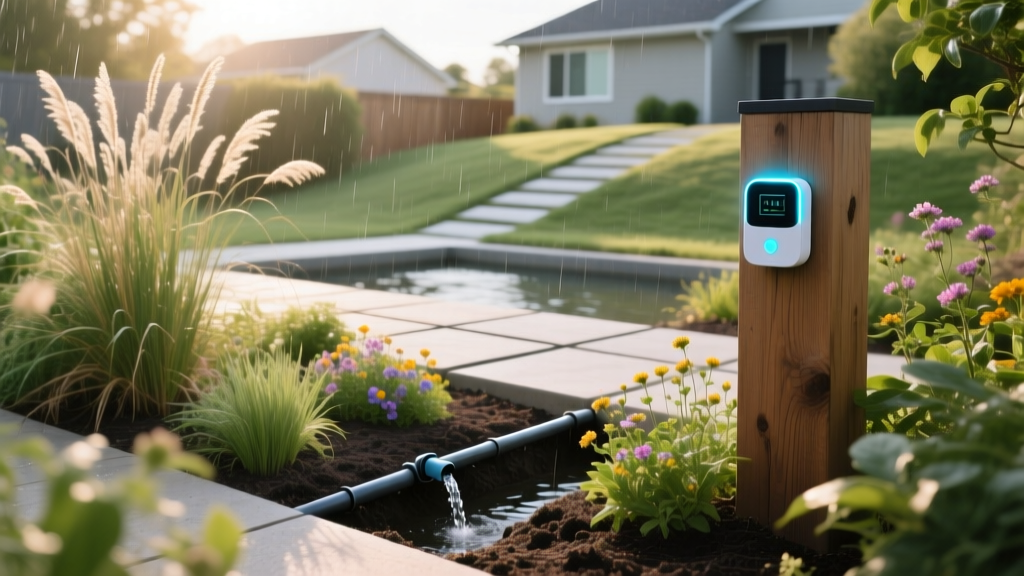
2026 Smart Irrigation & Rain Garden Installation Guide
Sarah ChenPublished
The Evolution of Stormwater Management in 2026
As municipalities tighten stormwater runoff regulations and water conservation becomes a critical priority in 2026, homeowners are rethinking their outdoor water usage. Traditional sprinkler systems often contribute to surface runoff, carrying fertilizers and pollutants into local waterways. The solution? Integrating a rain garden with your existing smart irrigation system. A rain garden is a shallow, landscaped depression designed to capture, filter, and slowly absorb stormwater and irrigation runoff into the ground. By connecting your sprinkler system's overflow and drainage zones to a bioretention basin, you create a closed-loop hydration network that protects local watersheds while keeping your landscape lush.
Why Integrate Your Sprinkler System with a Rain Garden?
Most residential irrigation systems are designed with drainage in mind, often routing excess water directly into street gutters or storm drains. In 2026, many local water authorities are penalizing this practice or offering rebates for on-site water retention. According to the EPA's Green Infrastructure guidelines, capturing runoff at the source reduces the burden on municipal sewer systems and recharges local groundwater aquifers. By redirecting your irrigation runoff into a rain garden, you achieve three major benefits:
- Water Conservation: Captured runoff passively irrigates deep-rooted native plants, reducing the need for dedicated watering zones.
- Pollutant Filtration: The specialized soil mix in a rain garden naturally filters out nitrogen, phosphorus, and heavy metals from lawn fertilizers before they reach the water table.
- Erosion Control: Diverting high-volume sprinkler drainage prevents soil erosion and washout in vulnerable yard areas.
Step-by-Step Rain Garden Installation for Irrigation Runoff
Step 1: Sizing and Location Based on Irrigation Zones
Before digging, you must calculate the volume of water your irrigation system and roof downspouts will deliver. The University of Minnesota Extension recommends that a rain garden should be sized to capture about 20% to 30% of the total impervious drainage area. For a standard residential irrigation zone that outputs 15 gallons per minute, a 15-minute watering cycle produces 225 gallons of water. If your soil has a high clay content, you will need a larger surface area to allow for adequate percolation. Locate the garden at least 10 feet away from your home's foundation and avoid placing it directly over septic systems or underground utilities.
Step 2: Excavation and the Bioretention Soil Mix
Excavate the basin to a depth of 4 to 8 inches, ensuring the bottom is perfectly level so water distributes evenly. The edges should have a gentle slope (roughly a 3:1 ratio) to prevent collapsing. The secret to a functional rain garden is the soil. Native yard soil is usually too compacted to absorb rapid irrigation runoff. You must replace it with a bioretention soil mix. The ideal 2026 standard mix consists of:
- 50% Washed Coarse Sand: Ensures rapid drainage and prevents pooling.
- 30% Topsoil: Provides structure and essential minerals.
- 20% Leaf Compost: Retains moisture during dry spells and feeds soil microbes.
Step 3: Connecting the Irrigation Diversion System
To connect your sprinkler system, install a dedicated drainage line or use a smart flow-diverter valve on your main irrigation manifold. Run a 2-inch or 3-inch PVC pipe from the sprinkler zone's low-point drain or overflow catch basin directly into the rain garden. To prevent the force of the sprinkler water from eroding the garden bed, terminate the PVC pipe into a splash block or a buried gravel dispersion trench lined with landscape fabric. This disperses the water gently across the basin.
2026 Smart Controllers for Rain Garden Diversion
To prevent your rain garden from becoming a swamp, your irrigation controller must be intelligent enough to adjust watering schedules based on recent rainfall and soil moisture. As noted by the Irrigation Association, integrating soil moisture sensors with Wi-Fi-enabled controllers is the gold standard for modern stormwater management. Below is a comparison of the top smart controllers for managing irrigation-fed rain gardens in 2026.
| Smart Controller Model | Key Diversion Features | Est. 2026 Price | Best For |
|---|---|---|---|
| Rachio 4 Smart Sprinkler Controller | Hyper-local weather intelligence, soil moisture sensor integration, automated zone skipping. | $279 | Homeowners wanting a user-friendly app with precise runoff prevention. |
| Hunter Hydrawise Pro (HC) | Predictive watering algorithms, master valve support, advanced flow sensors to detect leaks. | $349 | Complex landscapes with multiple rain gardens and high-volume drainage zones. |
| Orbit B-hyve XR | WeatherSense technology, EPA WaterSense certified, easy manual override for basin flushing. | $189 | Budget-conscious DIYers looking for reliable, code-compliant stormwater management. |
By pairing one of these controllers with a wireless soil moisture sensor placed directly inside the rain garden basin, the system will automatically halt irrigation to the diversion zone if the garden is already saturated, preventing overflow and protecting your landscape.
Plant Selection for Irrigation-Fed Rain Gardens
Plants in an irrigation-fed rain garden must be resilient enough to handle both sudden influxes of water from the sprinkler system and periods of drought when the system is winterized or restricted. Deep-rooted native perennials are the best choice, as their roots act as natural conduits, pulling water deep into the soil profile. Excellent choices for 2026 installations include:
- Swamp Milkweed (Asclepias incarnata): Thrives in wet conditions, supports local pollinators, and features deep taproots.
- Blue Flag Iris (Iris versicolor): Excellent for the center of the basin where water pools the longest; acts as a natural bio-filter.
- Switchgrass (Panicum virgatum): A tough, deep-rooted ornamental grass that stabilizes the soil and handles rapid moisture fluctuations.
- Joe-Pye Weed (Eutrochium purpureum): A tall, architectural plant that thrives on the slightly elevated berms of the rain garden.
Maintenance and Winterization
A rain garden integrated with an irrigation system requires specific maintenance to ensure it continues to function properly year after year. In the spring, inspect the PVC diversion pipe and splash blocks for sediment buildup or root intrusion. Flush the pipes with a high-pressure hose nozzle to clear out any debris that accumulated over the winter. Mulch the garden bed with 2 to 3 inches of double-shredded hardwood mulch. Avoid using pine bark or wood chips, as these are highly buoyant and will float away during heavy irrigation cycles, eventually clogging your overflow drain.
During the late fall, winterize your irrigation diversion lines just as you would your standard sprinkler zones. Use an air compressor to blow out the PVC pipes leading to the rain garden to prevent freezing and cracking. Cut back the dormant native perennials in early spring rather than late fall, as the dried stalks provide crucial overwintering habitat for beneficial insects and help trap snow, which slowly melts into the basin to provide early spring groundwater recharge.
By thoughtfully integrating a rain garden with your smart sprinkler system, you transform a potential runoff problem into a beautiful, eco-friendly landscape feature. This approach not only future-proofs your property against tightening 2026 water regulations but also creates a thriving, resilient ecosystem right in your own backyard.

