Gardening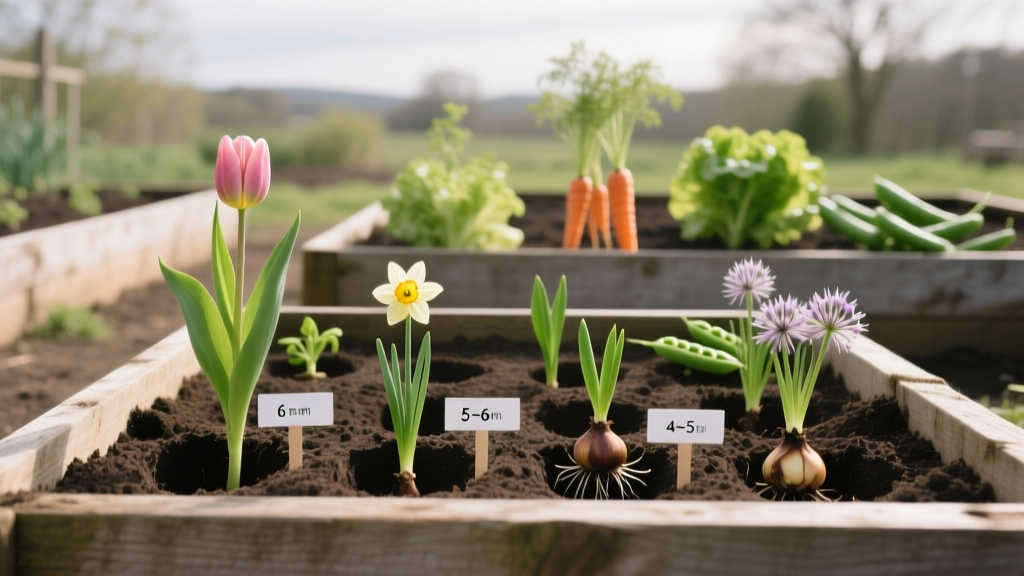
Raised Bed Bulb Depth Guide 2026: Tulips, Daffodils, Alliums
Robert HayesPublished
Integrating Spring Bulbs into Raised Vegetable Beds
Welcome to the 2026 gardening season, where the boundaries between ornamental landscaping and edible food production continue to blur. Raised bed vegetable gardening has evolved far beyond simply planting rows of tomatoes and peppers. Today's most successful home growers are maximizing their limited space, deterring pests naturally, and extending their harvest windows through strategic companion planting and succession cropping. One of the most effective, yet frequently overlooked, strategies for the modern raised bed is the integration of spring-blooming bulbs. Specifically, understanding the precise planting depths and spatial requirements for tulips, daffodils, and alliums can completely transform the ecological balance and productivity of your vegetable garden.
While it might seem counterintuitive to plant ornamental flowers in a dedicated food-growing space, these three bulb varieties offer immense functional benefits. Because they are planted in the fall and bloom in early spring, they occupy the raised bed during the dormant season for most summer vegetables. By the time your warm-weather crops are ready to be transplanted in late spring, the bulbs are finishing their bloom cycle and going dormant underground, leaving the surface soil entirely free for your edible plants.
Why Plant Tulips, Daffodils, and Alliums in Veggie Beds?
Alliums: The Ultimate Pest Confusers
Alliums, the ornamental cousins of the onion and garlic family, are powerhouse companion plants. They emit strong sulfur compounds and volatile oils that mask the scent of vulnerable crops. In 2026, with organic pest management being a top priority for home gardeners, planting alliums around the perimeter of your raised bed is a proven method to deter carrot rust flies, aphids, and cabbage moths from locating your brassicas and root vegetables. According to the Old Farmer's Almanac, alliums are highly effective at disrupting the host-finding behavior of common garden pests, making them an essential biological shield for your edibles.
Daffodils: The Rodent Repellents
If you struggle with voles, mice, or groundhogs burrowing into your raised beds and decimating your root crops, daffodils are your best defense. All parts of the daffodil plant contain lycorine, a toxic alkaloid that rodents instinctively avoid. By interplanting daffodils beneath and around your carrots, beets, and parsnips, you create an underground barrier that pests refuse to cross. Furthermore, daffodils are highly resistant to deer and rabbit browsing, protecting the above-ground foliage of your early spring greens.
Tulips: Early Pollinator Magnets
While tulips do not offer the same pest-deterrent properties as alliums or daffodils, they play a crucial role in establishing early-season pollinator pathways. Native bees and early-emerging beneficial insects rely on the nectar and pollen provided by tulips. Establishing a healthy, resident population of pollinators in your garden during April and May ensures that when your summer squash, cucumbers, and tomatoes begin to flower, the necessary insects are already present and active in your garden ecosystem.
The 2026 Depth and Spacing Matrix
Proper planting depth is critical in raised beds. Because raised bed soil is generally looser and better-draining than in-ground native soil, bulbs can sometimes be planted slightly deeper to protect them from late-spring temperature fluctuations and to ensure their root systems do not compete with shallow-rooted spring greens. Below is the definitive 2026 depth and spacing guide for integrating these bulbs into your vegetable beds.
| Bulb Type | Planting Depth | Spacing | Best Veggie Companion | Primary Garden Benefit |
|---|---|---|---|---|
| Tulip (Standard) | 6 - 8 inches | 4 - 6 inches | Leafy Greens (Lettuce, Spinach) | Early pollinator attraction |
| Daffodil (Large Cup) | 6 - 9 inches | 6 - 8 inches | Root Crops (Carrots, Beets) | Vole and rodent deterrence |
| Allium (Giant) | 5 - 7 inches | 8 - 12 inches | Brassicas (Kale, Cabbage) | Insect pest masking |
| Allium (Drumstick) | 3 - 4 inches | 4 - 6 inches | Legumes (Peas, Beans) | Insect pest masking |
Note: Always measure planting depth from the base (the root plate) of the bulb, not the pointed tip. For detailed botanical guidelines on bulb structure and planting mechanics, refer to the Royal Horticultural Society's official bulb planting guide.
Soil Preparation for Raised Bed Bulb Integration
Raised beds offer superior drainage, which bulbs absolutely require to prevent rot during wet winter and early spring months. However, the rapid drainage can also lead to nutrient leaching. For the 2026 planting season, the recommended soil matrix for a mixed bulb-and-veggie raised bed is 40% high-quality topsoil, 30% organic compost, 20% coco coir for moisture retention, and 10% horticultural biochar.
Biochar has become a staple in modern raised bed gardening due to its incredible ability to retain water and house beneficial soil microbes. Before planting your bulbs in the fall, amend the lower half of the planting hole with a low-nitrogen, high-phosphorus organic bulb fertilizer. Avoid using the high-nitrogen vegetable fertilizers you would normally use for leafy greens, as excess nitrogen promotes weak, floppy bulb foliage and increases the risk of fungal diseases. Incorporating a mycorrhizal fungi inoculant (which costs roughly $15 to $20 per bag in 2026) directly onto the bulb's root plate will drastically improve nutrient uptake and drought tolerance.
Strategic Placement: Perimeter vs. Lasagna Layering
When integrating bulbs into a raised bed dedicated to vegetables, spatial planning is everything. You must ensure that the bulbs do not interfere with the deep tilling or root expansion of your summer crops. There are two primary methods for achieving this harmony.
The Perimeter Method
This is the safest and most popular approach for vegetable gardeners. Plant your daffodils and alliums in a dense ring around the inner perimeter of the raised bed, about 4 to 6 inches away from the wooden or stone walls. This creates a 'fortress' effect, establishing a pest-deterrent border that protects the vulnerable crops planted in the center of the bed. The center remains completely clear for deep-rooted summer transplants like tomatoes and peppers, ensuring you won't accidentally slice through dormant bulbs when digging planting holes in late May.
The Lasagna Layering Method
If you have a dedicated corner of your raised bed that you plan to use for late-summer crops (like bush beans or late zucchini), you can utilize the lasagna planting technique. Dig a single, wide hole about 10 inches deep. Place your daffodils at the very bottom, cover them with 2 inches of soil, then place your tulips in the middle layer, cover with another 2 inches of soil, and place your smaller alliums at the top. This creates a continuous, multi-tiered bloom sequence in a single square foot of space, maximizing your ornamental and ecological yield without sacrificing valuable vegetable real estate.
Succession Planting Timeline for 2026
To truly master the integration of bulbs and vegetables, you must follow a strict succession timeline:
- October - November 2025: Plant your bulbs at the depths specified in the matrix above. Water deeply once to initiate root growth, then allow the raised bed to rest for the winter.
- March 2026: As bulb foliage begins to break the soil surface, interplant the surrounding empty spaces with fast-growing, cold-tolerant spring edibles like radishes, arugula, and baby spinach. These shallow-rooted crops will not disturb the developing bulbs.
- April - May 2026: The bulbs reach full bloom, drawing in early pollinators and deterring spring pests. Harvest your spring greens continuously to keep them from bolting as the weather warms.
- June 2026: The bulb blooms fade and the foliage begins to yellow. Do not cut the foliage; allow it to photosynthesize and feed the bulb for next year. At this stage, plant your warm-season vegetable transplants (tomatoes, peppers, eggplants) in the spaces between the yellowing bulb leaves.
- July 2026: The bulb foliage completely dies back and can be gently pulled away or left to decompose as mulch. Your summer vegetables now have full access to the raised bed canopy and soil nutrients.
Common Mistakes to Avoid
Even experienced gardeners make errors when mixing ornamentals and edibles. First, never plant daffodils near your allium vegetable crops (like culinary garlic or onions) or root crops that you plan to harvest in early summer, as the toxic lycorine can cause severe illness if the bulbs are accidentally harvested and consumed alongside your edible alliums. Always mark your daffodil planting spots with discreet, weather-proof copper tags.
Second, avoid over-watering your raised bed in late spring. While your newly transplanted tomatoes may need daily watering to establish their roots, excess moisture can cause your dormant tulip and daffodil bulbs to rot underground. Utilizing targeted drip irrigation lines placed specifically at the base of your vegetable transplants—rather than overhead sprinklers that soak the entire bed—will keep your summer crops hydrated while keeping the dormant bulbs safely dry.
Conclusion
Integrating tulips, daffodils, and alliums into your raised bed vegetable garden is a brilliant strategy for the 2026 growing season. By respecting the specific depth requirements, leveraging their natural pest-deterrent properties, and utilizing smart succession planting timelines, you can create a highly productive, ecologically balanced, and visually stunning garden space. Your raised beds will work harder, produce more, and require fewer chemical interventions, proving that the best vegetable gardens are those that embrace the diversity of nature.
