
Lawn Care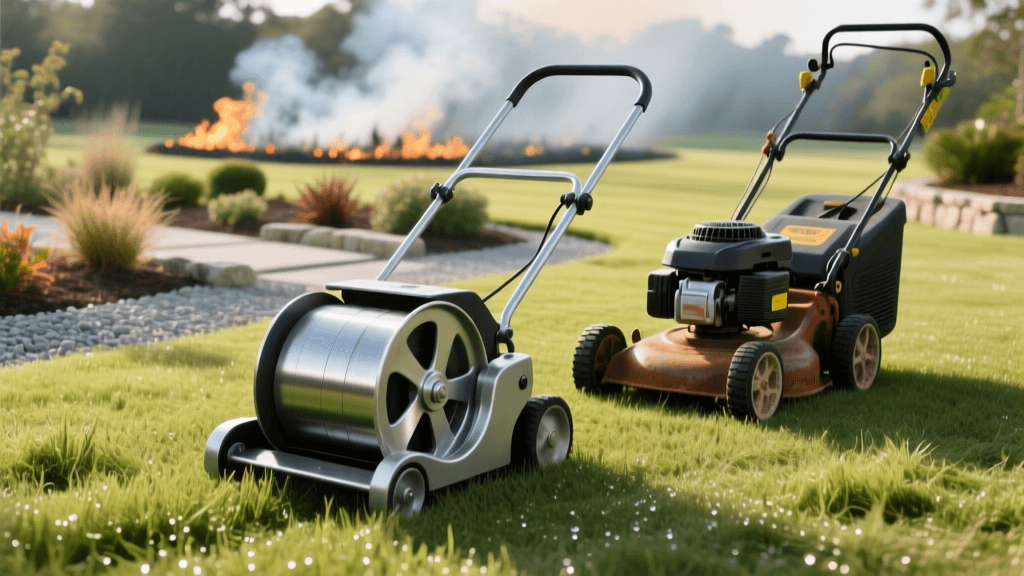
Reel vs Rotary Mowers for Bermuda Grass: 2026 Fire-Safe Guide
The Intersection of Bermuda Grass and Fire-Resistant Landscaping
As we navigate the extended and increasingly unpredictable wildfire seasons of 2026, homeowners in fire-prone regions are rethinking their landscaping strategies. Bermuda grass (Cynodon dactylon) remains a top choice for warm-season lawns due to its exceptional drought tolerance, rapid recovery, and ability to form a dense, moisture-retaining carpet. When properly irrigated and maintained, Bermuda grass serves as an excellent green firebreak, slowing the advance of ground fires and catching wind-blown embers before they reach your home.
However, the effectiveness of Bermuda grass as a defensive barrier relies entirely on how it is maintained. According to CAL FIRE's Ready for Wildfire guidelines, the immediate zone (0 to 30 feet from the home) requires strict vegetation management to eliminate combustible fuel loads. This is where the debate between reel mowers and rotary mowers becomes a critical safety decision, not just an aesthetic one. The equipment you use to maintain your Bermuda lawn can either fortify your defensible space or inadvertently ignite it.
The Hidden Spark Hazard of Rotary Mowers
Rotary mowers are the most common lawn care tool in the world, utilizing a single horizontal blade that spins at roughly 3,000 RPM to chop grass. While effective for tall or weedy lawns, they present severe fire hazards in dry, fire-prone environments.
The Metal-on-Stone Spark Risk
Bermuda grass is often grown in rocky, arid soils. When a high-speed rotary blade strikes a hidden rock, piece of gravel, or hardened debris, it can easily generate a hot spark. In the peak of summer, when ambient temperatures soar and relative humidity drops below 15%, a single spark landing in dry thatch or adjacent dormant vegetation can start a wildfire in seconds. Equipment-related sparks are a leading cause of human-caused wildfires in rural and wildland-urban interface (WUI) zones.
Engine Heat and Exhaust Dangers
Gas-powered rotary mowers generate immense heat. The exhaust muffler can reach temperatures exceeding 400°F (204°C). If dry Bermuda grass clippings accumulate under the mower deck or near the engine block, they can bake, carbonize, and eventually ignite. Furthermore, rotary mowers tend to tear and shred grass blades rather than cutting them cleanly. According to the Clemson University Home & Garden Information Center, torn grass blades lose moisture much faster than cleanly cut ones. In a fire-safe landscape, maintaining high moisture content in your living turf is essential; a dehydrated, stressed Bermuda lawn becomes highly flammable kindling.
Why Reel Mowers Excel in Fire-Prone Zones
Reel mowers operate using a scissor-like cutting action, where a spinning cylinder of blades sweeps the grass against a stationary bottom plate (bedknife). This mechanical design offers profound advantages for fire-resistant landscaping.
Zero Spark Impact Risk
Because reel mowers rely on a shearing action rather than high-velocity impact, they do not violently strike rocks or debris. If a reel mower rolls over a stone, the cylinder simply stalls or bounces over it without generating the friction sparks associated with rotary blades. This makes manual push-reel mowers and electric reel mowers the safest possible choice for mowing within the critical 30-foot defensible space zone during high fire-danger days.
Lower Cutting Heights and Reduced Fuel Loads
Bermuda grass thrives when cut low, typically between 0.5 and 1.5 inches. Rotary mowers often scalp the lawn if set below 1.5 inches, exposing dry soil and killing the turf. Reel mowers, however, can easily be adjusted to cut at 0.5 inches. This ultra-low cut drastically reduces the vertical "fuel bed" height. A half-inch carpet of green, actively growing Bermuda holds significantly less combustible biomass than a two-inch stand, effectively minimizing the fuel available to a creeping ground fire.
Superior Moisture Retention
The clean, scissor-cut provided by a well-adjusted reel mower seals the grass blade efficiently. This minimizes transpiration (water loss) and keeps the Bermuda turf lush, green, and hydrated even under the intense 2026 summer sun. A hydrated lawn is a fire-resistant lawn.
Feature Comparison: Reel vs. Rotary for Fire Safety
| Feature | Reel Mower | Rotary Mower |
|---|---|---|
| Spark Generation Risk | Extremely Low (No high-speed impact) | High (Blade strikes on rocks/debris) |
| Thatch & Fuel Load | Low (Allows ultra-low cutting) | Moderate to High (Tends to scalp if cut too low) |
| Grass Blade Moisture Loss | Minimal (Clean scissor cut) | High (Tearing accelerates dehydration) |
| Engine/Exhaust Heat | N/A (Manual) or Low (Electric) | Very High (Gas models pose exhaust fire risks) |
| Terrain Suitability | Best for flat, even, well-prepared lawns | Better for uneven, bumpy, or sloped terrain |
2026 Top Mower Recommendations for Fire-Safe Bermuda Lawns
If you are managing a fire-resistant landscape this year, selecting the right tool is paramount. Here are the top-performing, fire-safe mowers for Bermuda grass in 2026:
- Fiskars StaySharp Max Reel Mower (Manual): The ultimate zero-emission, zero-spark tool. Its advanced cutting geometry makes pushing through dense Bermuda effortless. Ideal for small to medium lawns strictly within the Zone 1 defensible space.
- California Trimmer 2026 Pro-Series (Gas Reel): For larger properties where manual pushing is impractical, this gas-powered reel mower offers the low cut of a reel without the high-speed rotary blade sparks. *Note: Still requires careful engine cleaning to prevent clippings from contacting the hot muffler.*
- EGO Power+ 21" Select Cut (Battery Rotary): If your terrain is too uneven for a reel mower, this battery-powered rotary eliminates the gas engine exhaust and muffler fire risks entirely. The brushless motor runs significantly cooler than 2020s-era gas engines, and the composite deck resists heat buildup.
Fire-Safe Mowing Protocols for High-Risk Seasons
Regardless of whether you choose a reel or a rotary mower, adhering to strict operational protocols is non-negotiable during fire season. The National Fire Protection Association (NFPA) emphasizes that human behavior and equipment maintenance are the first lines of defense in wildfire mitigation.
1. The 10 AM Rule
Never mow during the heat of the day. In 2026, many local fire marshals in high-risk counties mandate that all motorized landscaping equipment be shut down by 10:00 AM. Mow in the early morning when the grass still holds overnight dew, humidity is highest, and temperatures are lowest. Wet grass will not ignite from a stray spark, and the moisture acts as a natural suppressant.
2. Undercarriage Cleaning
Dry Bermuda clippings packed under a mower deck act like tinder. After every single mowing session, use a scraper or compressed air to remove all organic matter from the mower deck, engine block, and exhaust areas. Never use a gas-powered rotary mower if the undercarriage is caked with dry thatch.
3. Spark Arrestor Maintenance
If you must use a gas-powered rotary or reel mower in a rural or WUI zone, ensure the exhaust is fitted with a certified spark arrestor screen. These screens must be cleaned with a wire brush monthly to prevent carbon buildup, which can render them useless and cause the engine to overheat.
4. Perimeter String Trimmer Safety
While mowers handle the open lawn, string trimmers are often used for the edges near fences and walls. Metal-blade weed whackers or nylon strings hitting rocks are notorious fire starters. Switch to a manual edger or a low-RPM electric trimmer with a plastic blade guard when maintaining the perimeter of your Bermuda firebreak.
Conclusion
Maintaining a beautiful Bermuda grass lawn in a fire-prone region requires a shift in perspective. By viewing your lawn as a critical component of your home's defensive armor, the choice between a reel and rotary mower becomes clear. Reel mowers offer unmatched fire safety through zero-impact cutting, superior moisture retention, and the ability to minimize vertical fuel loads. If terrain dictates the use of a rotary mower, transitioning to modern, cool-running battery technology and adhering to strict morning mowing schedules will keep your landscape both pristine and protected throughout the 2026 fire season.