
Lawn Care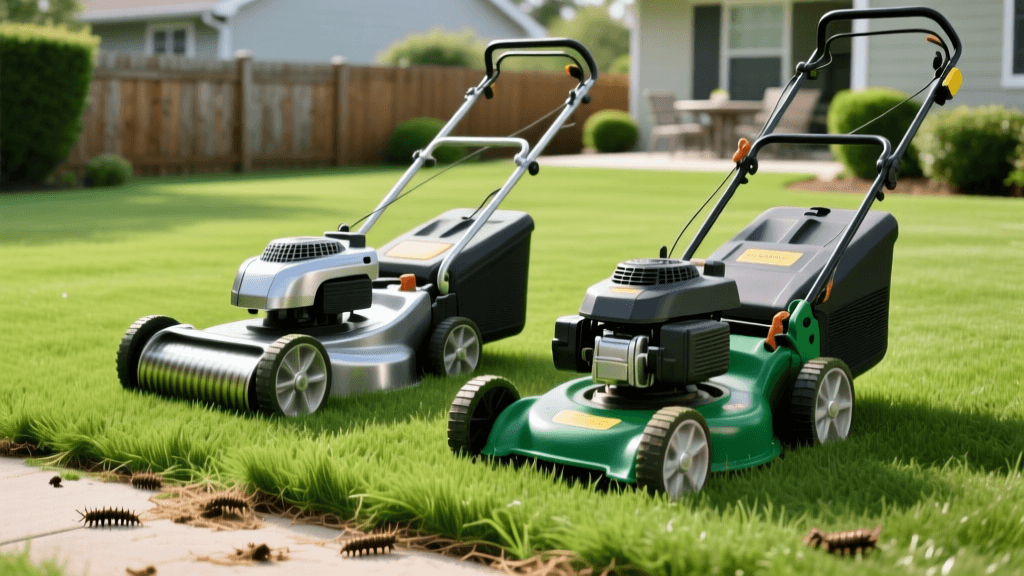
Reel vs Rotary Mower for Bermuda Grass Guide 2026
Bermuda Grass Mowing in 2026: The Ultimate Showdown
Maintaining a pristine Bermuda grass lawn in 2026 requires more than just regular watering and fertilization; it demands precision mowing. Homeowners and turf managers constantly debate the merits of reel mowers versus rotary mowers. However, this decision is not just about the aesthetic stripe left on the turf. It also plays a critical role in integrated pest management, particularly when dealing with destructive pests like sod webworms and managing the fallout from tree webworms in surrounding landscapes. According to NC State Extension TurfFiles, Bermuda grass is a vigorous, warm-season turf that thrives on frequent, low mowing, but its dense growth habit can also harbor pests if not managed correctly.
The Core Differences: Reel vs. Rotary Mowers
Before diving into pest management, it is essential to understand the mechanical differences between these two mowing systems. A reel mower operates using a scissor-like cutting action. A rotating cylinder of blades pushes the grass against a fixed bed knife, shearing it cleanly. This promotes rapid healing and reduces water loss from the grass blade. Conversely, a rotary mower uses a single, horizontally spinning blade that cuts grass via high-speed impact. While rotary mowers are more versatile and can handle uneven terrain, they can tear the grass if the blade is dull, leaving ragged edges that are susceptible to disease.
Mower Specifications and Turf Impact
| Feature | Reel Mower | Rotary Mower |
|---|---|---|
| Cut Quality | Scissor-like, exceptionally clean | Impact-based, slightly torn if dull |
| Ideal Height for Bermuda | 0.25 inches to 1.5 inches | 1.5 inches to 3.0 inches |
| Thatch Management | Promotes dense, low thatch layer | Can contribute to thatch if cut low |
| Tree Debris Handling | Poor (chokes on twigs and webs) | Excellent (mulches debris effectively) |
| Webworm Habitat Impact | Reduces daytime hiding spots | May leave taller hiding spots |
The Pest Factor: Tree Webworms and Turf Health
Tree webworms, commonly known as fall webworms (Hyphantria cunea), are notorious for spinning large, unsightly webs in the canopies of shade trees such as pecans, oaks, and sweetgums. While they do not feed on your Bermuda grass, their presence creates a cascading effect on your lawn's health. As highlighted by Penn State Extension, these caterpillars consume vast amounts of tree foliage, dropping significant quantities of frass (excrement), silk webbing, and defoliated leaf matter onto the turf below.
In 2026, with shifting climate patterns leading to extended pest seasons, this overhead debris accumulates rapidly in the Bermuda grass canopy, accelerating thatch development. Thatch is a spongy layer of dead and living organic matter that sits between the soil and the green grass blades. While a thin layer is beneficial, excessive thatch provides the perfect, humid daytime sanctuary for a much more dangerous lawn pest: the sod webworm. Sod webworms hide in the thatch during the heat of the day and emerge at night to chew off Bermuda grass blades at the base. Therefore, controlling the impact of tree webworm debris is an indirect but vital step in sod webworm management. Your choice between a reel and rotary mower dictates how effectively you handle this debris and manage the thatch layer.
Reel Mowers for Bermuda: The Professional Choice
For hybrid and common Bermuda grass, which thrives at low mowing heights, reel mowers are the gold standard. In 2026, advanced models like the TruCut H-20 Pro Lithium-Ion and the McLane 101-5.5GT offer unprecedented torque and precision. By cutting Bermuda grass at heights between 0.5 and 1.5 inches, reel mowers promote horizontal stolon growth, creating a dense, carpet-like turf that naturally crowds out weeds.
More importantly for pest management, maintaining a very low, tight canopy with a reel mower limits the physical space available for sod webworms to hide and spin their protective silk tubes. The clean scissor cut also heals faster, reducing the open wounds that invite fungal pathogens. However, reel mowers have a distinct weakness: they choke on the thick twigs, heavy leaf clusters, and webbing dropped by tree webworms. If your Bermuda lawn is heavily shaded by infested trees, you will need to rake or blow the debris before mowing, or risk jamming the reel cylinder.
Rotary Mowers: The Practical Alternative
While they cannot achieve the ultra-low, manicured heights of a reel mower without scalping, modern rotary mowers are highly versatile. The 2026 EGO Power+ LM2135SP Select Cut and the Honda HRX217VKA feature advanced mulching decks that finely chop organic matter. This is where the rotary mower shines in the context of tree webworm control.
When tree webworms drop leaves, frass, and webbing into your lawn, a rotary mower's high-velocity blade can mulch this debris into fine particles that quickly decompose, preventing the severe thatch buildup that harbors sod webworms. To use a rotary mower on Bermuda grass effectively, you must keep the blade razor-sharp to avoid tearing the grass. Rotary mowers are best suited for common Bermuda grass varieties maintained at a slightly higher height of 1.5 to 2.5 inches. If your lawn suffers from heavy tree debris and you prefer a lower-maintenance mowing routine that simultaneously manages organic matter, a high-quality rotary mower with superior mulching capabilities is your best defense against thatch-driven pest habitats.
Seasonal Mowing Strategies for 2026
Managing your Bermuda grass throughout the 2026 growing season requires adjusting your mower and cutting height based on temperature and pest pressure.
- Spring Green-Up (April - May): As Bermuda grass exits dormancy, lower your mowing height to remove the dead winter canopy. This 'scalping' process is best done with a rotary mower equipped with a bagging attachment to collect the dead material, which may harbor overwintering sod webworm pupae.
- Peak Summer (June - August): This is when tree webworm activity peaks in the canopy and sod webworms are most active in the turf. Switch to your reel mower (or raise the rotary deck) to maintain the grass at its optimal height. If using a reel mower, you may need to mow every 3 to 4 days to keep up with rapid summer growth.
- Fall Transition (September - October): As growth slows, gradually raise the cutting height by 0.5 inches to protect the turf from early frost damage. This is also the time to apply preventative grub and webworm treatments if your lawn has a history of severe infestations.
Integrated Pest Management for Webworms
Regardless of whether you choose a reel or rotary mower, integrated pest management (IPM) is essential for keeping webworms at bay. According to Texas A&M AgriLife Extension, if you notice small, brown patches in your Bermuda grass and see tiny green or brown caterpillars darting into the thatch, you likely have a sod webworm infestation. To combat this, apply a biological insecticide containing Bacillus thuringiensis (Bt) kurstaki. Bt is a naturally occurring soil bacterium that specifically targets caterpillars, including both sod webworms in the lawn and fall webworms in your trees, without harming beneficial insects like bees or earthworms.
Apply Bt in the late afternoon or early evening when webworms are actively feeding. Additionally, proper irrigation practices—watering deeply but infrequently in the early morning—will reduce the excess surface moisture that webworms thrive in. Regularly dethatching your Bermuda grass, either through manual raking or vertical mowing, will physically destroy the webworm habitat, exposing them to natural predators like birds and parasitic wasps.
Conclusion
The choice between a reel and rotary mower for your Bermuda grass in 2026 ultimately depends on your lawn's specific environment and your willingness to perform routine maintenance. If you have an open, sun-drenched lawn and desire a golf-course-quality finish that naturally restricts pest habitats, invest in a premium reel mower. However, if your lawn is surrounded by shade trees prone to fall webworm infestations, a high-torque rotary mower with exceptional mulching capabilities will save you time, manage debris, and prevent the thatch buildup that leads to destructive sod webworm outbreaks. By aligning your mowing strategy with proactive pest management, your Bermuda grass will remain thick, green, and resilient all season long.