Lawn Care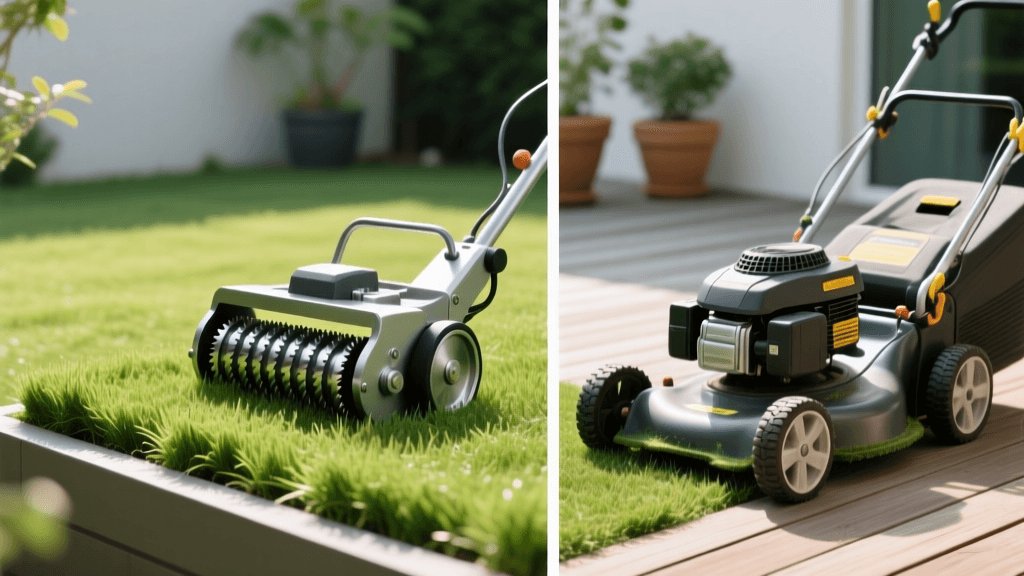
Reel vs Rotary Mowers for Potted Bermuda Grass in 2026
The Rise of Container Bermuda Grass in 2026
As urban living spaces shrink and rooftop gardens become more sophisticated in 2026, the trend of growing turfgrass in containers, raised beds, and modular patio troughs has exploded. Among the most popular choices for these micro-lawns is Bermuda grass (Cynodon dactylon). Known for its incredible drought tolerance, rapid recovery from foot traffic, and love for full sun, Bermuda grass thrives in large, deep containers like half-barrels, galvanized steel troughs, and heavy-duty resin planters. However, maintaining a potted lawn presents unique challenges that traditional ground-level lawns do not face. The most critical of these challenges is mowing. When managing a confined turf space, the debate between using a reel mower versus a rotary mower becomes highly specialized. Choosing the wrong equipment can lead to scalped soil, damaged container walls, and a stressed root system.
Understanding Bermuda Grass in Pots and Raised Beds
Before selecting a mower, it is essential to understand how Bermuda grass behaves in a container environment. Unlike sprawling backyard lawns, potted Bermuda grass has a restricted root zone. According to University of Georgia Extension, Bermuda grass requires a mowing height between 0.5 and 1.5 inches for optimal health and density. In a container, the soil surface is often slightly uneven due to settling, and the edges are bounded by rigid walls. If the grass is allowed to grow too tall, it becomes leggy, develops excessive thatch, and shades out its own lower leaves, leading to a thin, patchy appearance. Because container soil volumes are limited, the grass cannot afford the stress of severe scalping, which exposes the shallow roots to the intense summer sun and rapidly drying potting mix. Therefore, precision mowing is not just an aesthetic preference; it is a vital survival mechanism for potted turf.
Reel Mowers: The Precision Choice for Container Turf
For potted Bermuda grass in 2026, the reel mower is overwhelmingly the superior choice. Reel mowers utilize a scissor-cut action, where a spinning cylinder of helical blades pushes the grass against a fixed bottom plate (the bedknife). This mechanism provides a clean, surgical cut that promotes rapid healing and reduces moisture loss from the grass blades.
Advantages of Reel Mowers in Confined Spaces
- Low Height of Cut (HOC): Reel mowers can easily be adjusted to cut Bermuda grass at the ideal 0.5-inch to 1-inch height without tearing the turf. Rotary mowers typically struggle to cut cleanly below 1.5 inches.
- Edge Clearance: Potted lawns have hard boundaries. The blades of a manual or electric reel mower are recessed and can safely glide right up to the edge of a wooden raised bed or a resin pot without striking the wall.
- Lightweight Footprint: Balcony and rooftop containers have strict weight limits. Modern 2026 push reel mowers weigh between 10 and 15 pounds, ensuring you do not compact the limited soil in your container or overload your patio structure.
- No Projectile Debris: In a small patio or balcony setting, a rotary mower will violently throw dirt, mulch, and clippings out of the pot and onto your furniture. Reel mowers drop clippings gently straight down.
For small to medium containers, a high-quality manual push reel mower with 5 to 7 blades is perfect. For larger modular trough systems, the latest 2026 cordless electric reel mowers offer battery-powered convenience while maintaining the gentle scissor-cut action.
Rotary Mowers: Power Meets Severe Limitations
Rotary mowers, which use a single high-speed horizontal blade to chop the grass, are the undisputed kings of the traditional suburban lawn. However, when applied to container and pot gardening, their limitations become glaringly apparent.
The Pitfalls of Rotary Mowers for Potted Lawns
- Scalping Risks: Because the soil in pots can settle unevenly, the low-hanging deck of a rotary mower will frequently scalp the high spots, tearing the Bermuda grass down to the dirt and exposing the shallow container roots.
- Blade Strikes and Pot Damage: The extended tips of a rotary blade require a wide clearance. If you mow near the edge of a container, the blade can easily strike the pot wall, chipping resin, denting metal, or severely dulling and bending the mower blade.
- Suction and Soil Disruption: Rotary mowers rely on aerodynamic suction to stand the grass up before cutting. In the shallow, loose soil of a container, this suction can actually pull up newly rooted Bermuda stolons, damaging the turf mat.
While a small, lightweight cordless rotary mower might be tempting for its versatility, Clemson University Home & Garden Information Center notes that Bermuda grass demands the lowest and cleanest cut possible to prevent thatch buildup—a feat rotary mowers simply cannot achieve in the confined, uneven space of a container.
2026 Comparison Chart: Reel vs. Rotary for Potted Bermuda
| Feature | Reel Mower (Manual/Electric) | Rotary Mower (Cordless/Gas) |
|---|---|---|
| Cut Quality | Scissor-cut; excellent for low HOC | Chop-cut; tears grass at low heights |
| Ideal Mowing Height | 0.5 to 1.5 inches | 1.5 to 3.0 inches |
| Edge Clearance | High; safe near pot walls | Low; high risk of blade strikes |
| Weight / Compaction | Very Low (10-25 lbs) | High (35-60+ lbs) |
| Debris Throw | Minimal; drops straight down | High; throws soil onto patios |
| 2026 Avg. Price | $120 - $350 | $250 - $600+ |
Best Mowing Practices for Container Bermuda in 2026
Once you have selected a reel mower for your potted Bermuda grass, adhering to strict mowing practices will ensure your micro-lawn remains lush and green throughout the growing season.
The One-Third Rule
Never remove more than one-third of the grass blade in a single mowing session. If your target height is 1 inch, you must mow when the grass reaches 1.5 inches. In the peak heat of summer, container-grown Bermuda grass may require mowing every three to four days to maintain this rule. Frequent, light mowing with a reel mower encourages lateral growth, resulting in a thick, carpet-like turf that naturally chokes out weeds.
Managing Thatch in Confined Spaces
Bermuda grass is notorious for producing thatch—a layer of dead and living stems that builds up between the soil surface and the green grass blades. In a container, thatch builds up faster because the confined space limits natural microbial breakdown. If the thatch layer exceeds 0.5 inches, your reel mower will struggle to cut cleanly. Use a small hand-held thatching rake or a specialized container-turf grooming attachment on your electric reel mower to vertically slice the stolons and remove excess organic matter twice a year.
Comprehensive Container Care Guide for Bermuda Grass
Mowing is only half the battle. To maintain a pristine potted lawn, your soil, water, and nutrient management must be tailored to the container environment.
The Ideal Container Soil Mix
Do not use standard garden soil or heavy topsoil in your pots; it will compact and suffocate the Bermuda roots. According to NC State TurfFiles, Bermuda grass requires well-draining soil. For containers, mix 50% high-quality sandy loam, 30% coarse builder's sand, and 20% organic compost. This ensures rapid drainage while retaining enough moisture and nutrients to support the dense turf.
Precision Irrigation for Pots
Containers dry out significantly faster than ground soil. In the summer of 2026, smart irrigation technology has made managing potted lawns effortless. Install a shallow drip-to-micro-sprinkler conversion kit connected to a smart Wi-Fi timer. Set the system to water deeply but infrequently, encouraging the Bermuda roots to stretch to the bottom of the pot. Watering in the early morning prevents fungal diseases, which can spread rapidly in the humid microclimate of a patio container.
Fertilization Without the Burn
Because water flushes through pots quickly, nutrients leach out faster than they do in traditional lawns. However, applying heavy doses of quick-release nitrogen will cause rapid, weak growth and severe salt buildup in the confined soil, burning the roots. Use a high-quality, coated slow-release fertilizer formulated specifically for warm-season grasses. Apply it at half the recommended rate for traditional lawns, but do so every six weeks during the active growing season (May through September). This provides a steady, gentle feed that keeps the Bermuda grass vibrant without overwhelming the container's ecosystem.
Conclusion
Growing Bermuda grass in containers is a brilliant way to bring the beauty and utility of a lawn to balconies, patios, and rooftops. However, the confined nature of potted turf demands specialized care. When comparing a reel mower vs a rotary mower for potted Bermuda grass, the reel mower is the undisputed champion. Its ability to deliver a pristine, low cut without damaging container walls or scalping uneven soil makes it an indispensable tool for the modern urban gardener. By pairing the precision of a 2026 reel mower with a well-draining soil mix and a careful watering regimen, your container-grown Bermuda grass will remain a lush, resilient oasis for years to come.