Pest Control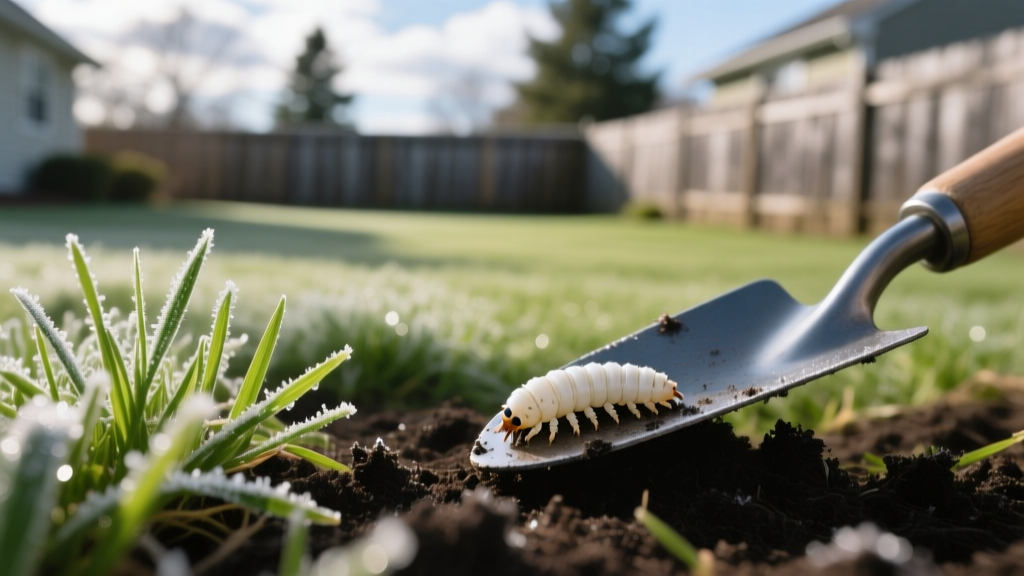
Regional Grub Control for Northeast and Midwest Lawns
James MillerPublished
The Unique Threat of White Grubs in Cool-Season Climates
Homeowners in the Northeast and Midwest regions of the United States face a unique set of lawn care challenges, primarily driven by the region's distinct seasonal shifts. Cool-season grasses like Kentucky Bluegrass, Tall Fescue, and Perennial Ryegrass thrive in these areas, but they are also the preferred food source for some of the most destructive turf pests in the country: white grubs. The larvae of Japanese beetles, European chafers, and June bugs feed aggressively on grass roots, severing the turf from its soil base. This results in large, spongy patches of brown grass that can be rolled back like a carpet.
Beyond the direct damage to the roots, grub infestations in northern climates often trigger severe secondary damage. As soil temperatures drop in early autumn, grubs remain near the surface, attracting foraging wildlife. Skunks, raccoons, and crows will tear up a lawn overnight to feast on the protein-rich larvae, leaving behind craters of destroyed topsoil and turf. Effective pest control in these regions requires a deep understanding of how freezing winters and humid summers dictate the grub life cycle, allowing you to time your interventions perfectly.
Understanding the Regional Grub Life Cycle
To manage grubs effectively, you must align your treatment schedule with their biological clock, which is heavily influenced by regional soil temperatures. According to entomologists at the University of Minnesota Extension, most damaging grub species in the northern U.S. operate on a one-year life cycle, with the exception of the June bug, which takes three years to mature.
In the Northeast and Midwest, adult beetles emerge from the soil in late June and July. After mating, females lay their eggs in the top two inches of soil, preferring full-sun areas with adequate moisture. By mid-August, these eggs hatch into first-instar grubs. These young larvae are small, highly susceptible to insecticides, and feed voraciously near the surface. As autumn progresses and soil temperatures drop below 50°F, the grubs migrate deep into the soil profile—often 4 to 8 inches down—to overwinter and escape the freezing frost line. They return to the surface in early spring to feed briefly before pupating into adults, restarting the cycle.
Climate-Specific Timing: When to Treat
Timing is the single most critical factor in regional grub control. Applying the wrong product at the wrong time of year is not only a waste of money but can also harm local pollinator populations. The Michigan State University Extension emphasizes that preventative treatments must be applied before eggs hatch, while curative treatments are reserved for late-summer emergencies.
| Season / Month | Avg. Soil Temp | Grub Stage | Recommended Action |
|---|---|---|---|
| Late Spring (May) | 55°F - 65°F | Overwintered mature larvae / Pupae | No chemical treatment. Focus on lawn health and repair. |
| Early Summer (June - July) | 70°F - 80°F | Adult emergence / Egg laying | Apply long-residual preventative insecticides (e.g., Chlorantraniliprole). |
| Late Summer (Aug - Sept) | 65°F - 75°F | Young, actively feeding grubs | Apply fast-acting curative treatments (e.g., Trichlorfon) or beneficial nematodes. |
| Fall (Oct - Nov) | Below 50°F | Mature grubs migrating deep | Treatment is ineffective. Grubs are too deep and dormant. |
Preventative vs. Curative Chemical Controls
For Northeast and Midwest lawns, chemical control is generally divided into two categories: preventatives and curatives. Choosing the right active ingredient depends entirely on the current month and your observation of the turf.
Preventative Treatments (April through July)
Preventatives are designed to be absorbed by the grass roots and soil, creating a toxic zone that kills young grubs as they hatch and begin to feed. These products do not kill older, overwintered grubs in the spring.
- Chlorantraniliprole (Brand names: Acelepryn, Scotts GrubEx): This is the gold standard for northern lawns. It is highly effective against all major grub species and is remarkably safe for bees and other pollinators. For optimal results in the Midwest and Northeast, apply between April 15 and June 1. It requires 0.5 inches of irrigation to activate and can remain effective in the soil for up to four months. Cost: Approximately $12 to $15 per 5,000 sq. ft. bag.
- Imidacloprid (Brand name: Merit): A systemic neonicotinoid that works well when applied slightly later, typically between mid-June and mid-July. Because neonicotinoids can be harmful to pollinators, it is strictly advised to mow your lawn and remove any flowering weeds (like clover or dandelions) before application to prevent bees from contacting the treated foliage. Cost: Roughly $20 to $30 for a 1.5 lb bag covering 10,000 sq. ft.
Curative Treatments (August through September)
If you missed the preventative window and notice irregular brown patches or increased bird activity in late August, you are dealing with an active, feeding infestation. At this stage, preventatives will not work fast enough to save the turf.
- Trichlorfon (Brand name: Dylox): This is a fast-acting, short-residual contact insecticide. When applied in late August or early September, it penetrates the soil and kills actively feeding grubs within 24 to 48 hours. Dylox degrades quickly in alkaline soils (pH above 7.0), which are common in parts of the Midwest, so it must be watered in immediately after application. Cost: About $25 for a 10 lb bag covering 10,000 sq. ft.
Organic and Biological Controls for Northern Gardens
For homeowners practicing Integrated Pest Management (IPM) or those with sensitive environments near waterways, organic controls are highly viable in cool-season climates.
- Beneficial Nematodes (Heterorhabditis bacteriophora): These microscopic worms naturally occur in soil but can be purchased and applied to hunt down grubs. In the Northeast, apply them in mid-to-late August when the soil is still warm but grubs are young. Nematodes require a moist environment to survive; you must irrigate the lawn before and after application. Apply at a rate of 1 billion nematodes per acre (roughly 25,000 per 1,000 sq. ft.). Cost: $40 to $60 per treatment area.
- Milky Spore (Paenibacillus popilliae): This is a naturally occurring bacterium that specifically targets Japanese beetle grubs. While it is a popular organic choice, it has limitations in the colder parts of the Midwest and Northeast. The bacterium requires warm soil temperatures to establish and multiply, meaning it may take 3 to 5 years to build up an effective population in northern climates. It is best applied in a grid pattern across the lawn in early fall. Cost: $50+ for a 20 lb box covering 7,000 sq. ft.
Cultural Practices to Deter Grub Damage
Chemical and biological treatments are most effective when paired with regional cultural practices. Adult female beetles strongly prefer laying their eggs in short, thin turf where the soil is warm and easily penetrable. By maintaining a mowing height of 3.5 to 4 inches during the peak egg-laying months of July and August, you shade the soil, keeping it cooler and making it less attractive to egg-laying females.
Additionally, managing your summer irrigation can act as a natural population control. Japanese beetle eggs require consistent moisture to survive. Allowing your cool-season lawn to enter a state of natural summer dormancy by withholding irrigation during dry spells in July can desiccate and kill a significant percentage of eggs before they ever hatch. However, if your lawn is heavily shaded or you are maintaining a high-traffic turf area, strategic, deep watering paired with a Chlorantraniliprole application in May remains the most reliable defense strategy for Northeast and Midwest homeowners.
By understanding the intersection of regional climate, soil temperature, and pest biology, you can protect your cool-season lawn from devastating root loss and the subsequent wildlife damage that plagues northern neighborhoods every autumn.