Lawn Care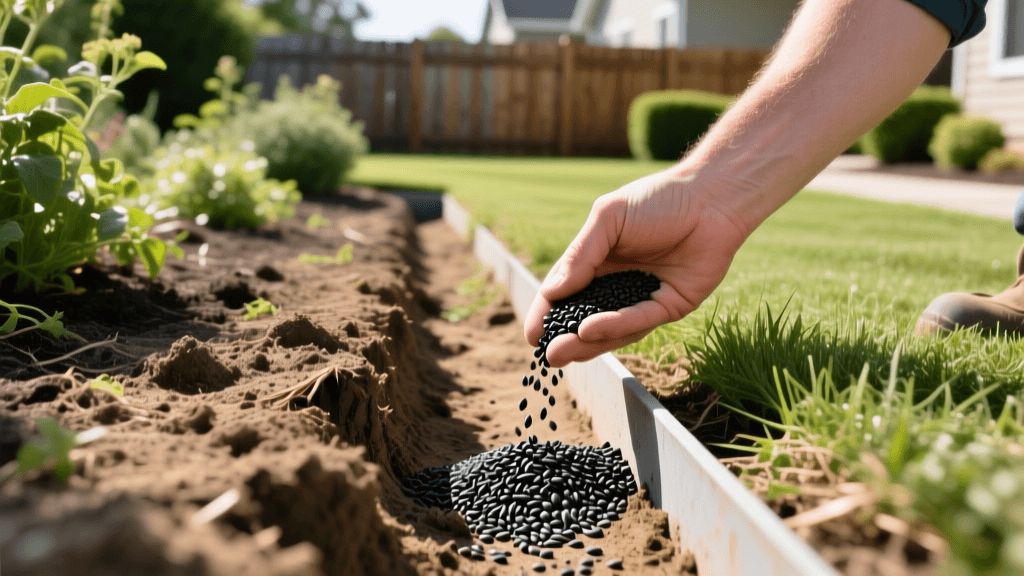
Fix French Drain Trench Spots Using Jonathan Green Black Beauty 2026
The Hidden Cost of French Drain Installation: Trench Settling
Installing a French drain is one of the most effective ways to rescue a waterlogged yard, protect your foundation, and eliminate standing water after heavy storms. However, the process of excavating a trench, laying perforated pipe, and backfilling with washed gravel inevitably disrupts your lawn. While contractors do their best to replace the topsoil and sod, a frustrating phenomenon almost always occurs within the first year: trench settling.
As the 2026 spring thaw and heavy rain seasons come and go, the soil above the gravel bed naturally shifts. Fine soil particles migrate into the void spaces of the drainage gravel below, causing the surface to sink. This creates a linear depression directly over the drain line. Paradoxically, while the drain is designed to move water away, the surface soil directly above it often dries out much faster than the surrounding yard. The gravel bed acts as a capillary break, wicking moisture away from the topsoil and leaving the grass above it stressed, thin, and highly susceptible to drought and heat damage.
If you are dealing with a sunken, yellowing strip of grass where your French drain was installed, standard overseeding methods and cheap contractor-grade seed will not survive. To permanently repair these specific drainage zones, you need a turfgrass with extreme drought tolerance and deep root architecture. This is exactly where overseeding thin spots with Jonathan Green Black Beauty seed becomes your best strategy for 2026.
Why Standard Grass Seed Fails Over Drainage Trenches
Most contractors use a generic, bulk sun-and-shade mix to patch trench lines after a drainage installation. These standard mixes typically rely heavily on shallow-rooted perennial ryegrass or basic fescues. While they may germinate quickly and provide a temporary green band over your new French drain, their root systems rarely extend beyond two to three inches.
Because the soil layer above a French drain is often shallower and drier than the rest of the lawn, these shallow roots quickly hit the dry gravel interface and fail. According to turfgrass researchers at the University of Minnesota Extension, maintaining adequate soil moisture is the primary challenge in overseeding, a challenge that is exponentially magnified over subsurface drainage systems. When the summer heat arrives, the grass over the trench line is the first to go dormant or die off completely, leaving an unsightly scar across your otherwise healthy lawn.
The Jonathan Green Black Beauty Advantage for 2026
Jonathan Green Black Beauty is not your average big-box store seed. It is specifically bred using tetraploid turfgrass genetics, which gives the grass blades a thicker, darker green appearance and, most importantly, a waxy cuticle. This invisible waxy layer acts like a sealant, locking in moisture and preventing the grass from drying out in the micro-climate created by the French drain below.
Furthermore, Black Beauty varieties are famous for their massive root systems, which can grow up to four feet deep under optimal conditions. These deep roots help bind the backfill soil together, reducing the rate of future subsidence into the gravel bed. The seed also contains naturally occurring endophytes—beneficial fungi that live inside the grass plant and deter surface-feeding insects like chinch bugs and sod webworms, which frequently target the stressed grass over dry drainage trenches.
As noted by Penn State Extension, managing landscape drainage requires not just moving water underground, but also stabilizing the surface soil to prevent erosion and compaction. The deep-rooting nature of Black Beauty directly supports this surface stabilization goal.
Step-by-Step Guide: Overseeding the Trench Line
To successfully repair your French drain settling spots in 2026, follow this targeted protocol. You will need a bow rake, a quality compost or topsoil blend, a broadcast or drop spreader, and the appropriate Jonathan Green seed mix.
Step 1: Assess and Level the Settled Trench
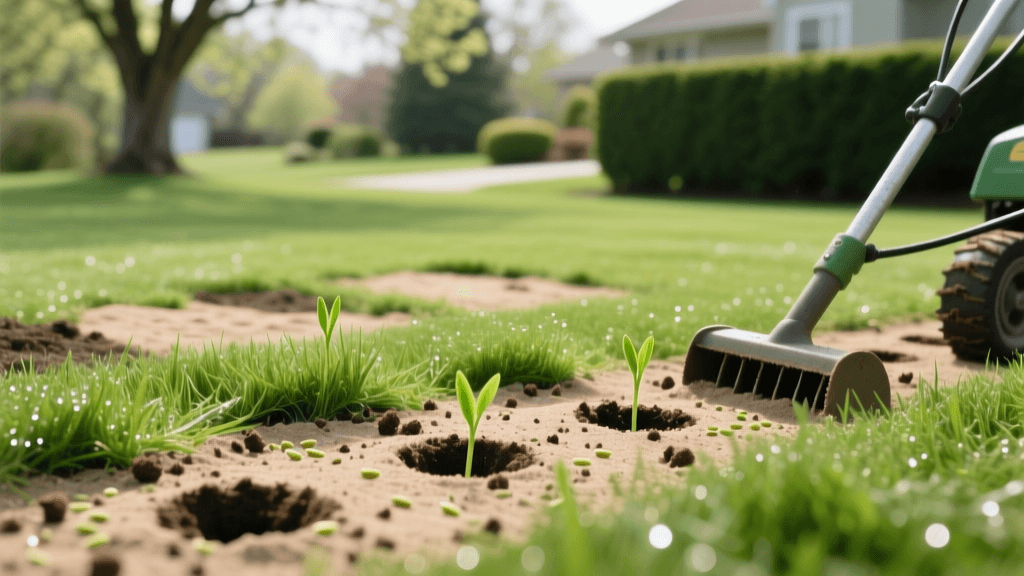
Before dropping any seed, you must address the physical depression. If the trench has sunk more than an inch, simply throwing seed on top will result in water pooling in the low spot, rotting the seed. Use a bow rake to aggressively scratch the surface of the thin spot, removing dead thatch and loosening the compacted soil left behind by the contractor's machinery. Add a half-inch layer of high-quality compost or a sandy loam topsoil to level the depression. Avoid using heavy clay soils or pure peat moss, as clay will impede surface drainage and peat moss will dry out and become hydrophobic over the gravel bed.
Step 2: Choose the Right Black Beauty Mix
Jonathan Green offers several variations of their flagship seed. For a standard, full-sun French drain line, the Black Beauty Original or Black Beauty Ultra are your best choices. Black Beauty Ultra includes a percentage of Kentucky Bluegrass, which spreads via rhizomes and will help knit the trench line together with the surrounding lawn, providing extra structural integrity to the soil. If your French drain runs under a heavy tree canopy, opt for the Black Beauty Dense Shade mix, which is formulated to thrive with less photosynthesis while still maintaining the waxy moisture-retaining cuticle.
Step 3: Sowing and Fertilizing
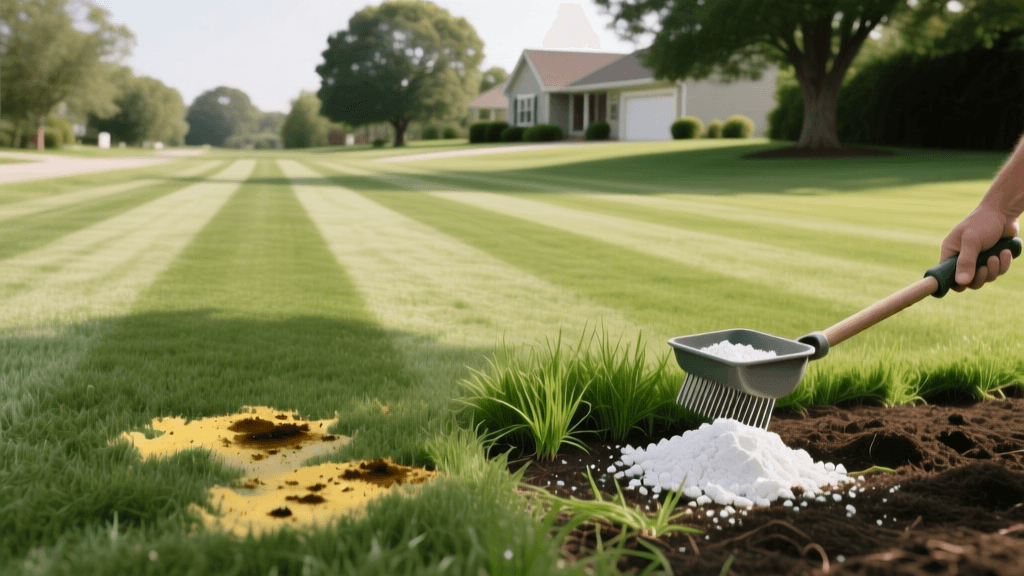
Apply the seed at a rate of 10 to 15 pounds per 1,000 square feet for overseeding. Because trench lines are narrow, use a handheld spreader or carefully calibrate a drop spreader to avoid wasting seed on adjacent concrete or driveways. Immediately follow up with a starter fertilizer. Jonathan Green's New Seeding Lawn Fertilizer is highly recommended as it provides the essential phosphorus needed for rapid root development down into the backfill soil.
Step 4: The 2026 Watering Protocol
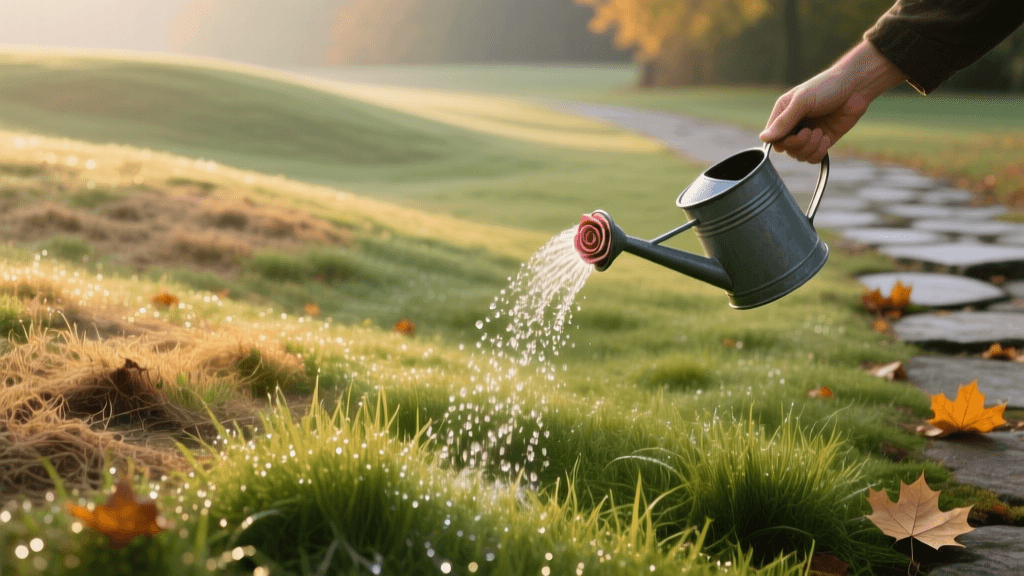
Watering a French drain trench line requires a delicate balance. You must keep the top inch of soil consistently moist for the 14 to 21 days it takes for the Black Beauty seed to germinate. However, because the gravel below is designed to move water, heavy, prolonged watering will simply wash your seed and fertilizer into the drain pipe and out to the street. Instead, program your smart irrigation system or set your sprinkler to deliver short, light bursts of water three to four times a day. Once the grass reaches two inches tall, transition to deep, infrequent watering to encourage those signature four-foot roots to anchor into the soil profile.
Seed Comparison Chart: Trench Line Performance
When deciding how to repair your drainage installation, it is crucial to understand how different seed types react to the unique environment above a French drain. The table below compares standard options against Jonathan Green Black Beauty for this specific application.
| Seed Characteristic | Standard Contractor Mix | Big Box Store Sun/Shade | Jonathan Green Black Beauty Ultra |
|---|---|---|---|
| Root Depth Potential | 1 - 2 Inches | 2 - 3 Inches | Up to 4 Feet |
| Drought Tolerance (Over Gravel) | Poor | Moderate | Exceptional (Waxy Cuticle) |
| Germination Time | 5 - 7 Days | 7 - 14 Days | 14 - 21 Days |
| Soil Binding / Erosion Control | Weak | Moderate | Strong (Rhizomes + Deep Roots) |
| Insect Resistance (Endophytes) | None | Rare | Naturally Occurring |
| Estimated 2026 Cost (per 50 lbs) | $90 - $110 | $130 - $150 | $170 - $190 |
Long-Term Maintenance of Drainage Zones
Even after your Jonathan Green Black Beauty grass has successfully established over the French drain, this specific strip of lawn will require slightly different maintenance than the rest of your yard. Because the soil is looser and sits over a gravel base, it is more prone to compaction from foot traffic and mowing equipment.
In the fall of 2026 and beyond, ensure you are core aerating the trench line to relieve compaction and allow surface water to penetrate the soil rather than running off the depressed area. When mowing, keep the blade height over the drain line slightly higher—around 3.5 to 4 inches. This taller grass blade will shade the soil, further reducing evaporation and protecting the microorganisms in the compost layer you added during the leveling process.
By understanding the unique subterranean environment created by a French drain, and by selecting a genetically superior seed like Jonathan Green Black Beauty, you can seamlessly blend your drainage infrastructure into a thick, dark green, and resilient lawn. For more detailed information on the specific genetics and coating technologies used in these seeds, you can review the manufacturer's data on the Jonathan Green Black Beauty Grass Seed product line. With the right preparation and premium seed, your drainage solution will finally look like a natural part of your landscape.