
Landscaping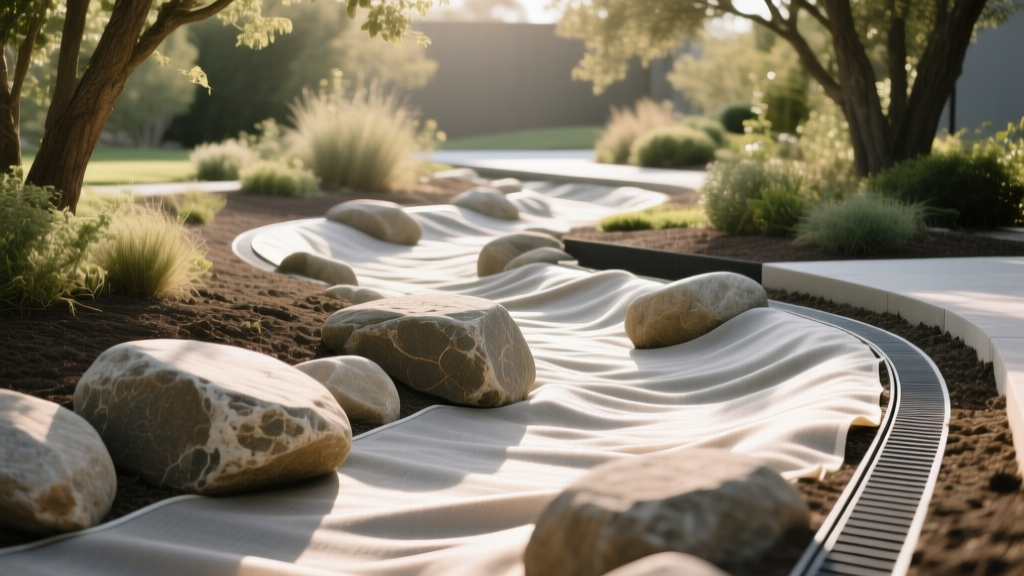
Dry Creek Bed Design and Fertilizer Runoff Guide 2026
David ParkPublished
Integrating Hardscaping and Nutrient Management
Landscaping in 2026 requires a dual focus on stunning aesthetics and rigorous environmental stewardship. One of the most popular and functional hardscaping features for modern yards is the dry creek bed. Designed to mimic the natural flow of a seasonal stream, a dry creek bed utilizes river rock and heavy-duty landscape fabric to solve drainage issues, prevent soil erosion, and add striking visual contrast to garden beds. However, because dry creek beds act as primary drainage swales during heavy rain events, they are highly susceptible to collecting runoff from surrounding lawns and garden beds.
This creates a hidden landscaping challenge: fertilizer runoff. When fast-release synthetic fertilizers are applied to adjacent turf or planting zones, heavy rains wash excess nitrogen and phosphorus directly into the rock-lined channel. This not only promotes unsightly algae growth on your beautiful river cobble but also contributes to broader nonpoint source water pollution. According to the EPA's guidelines on nonpoint source pollution, nutrient runoff from residential landscaping remains a leading cause of localized waterway degradation. In this comprehensive guide, we will explore how to properly construct a dry creek bed with river rock and landscape fabric, while implementing a precise 2026 fertilizer schedule to protect your hardscape and the local ecosystem.
Designing the Dry Creek Bed: Rock and Fabric Fundamentals
Before addressing the fertilizer schedule, the physical construction of the dry creek bed must be optimized for both water flow and filtration. A poorly constructed bed will trap nutrient-rich sediment, turning your decorative feature into a muddy, weed-choked mess.
Excavation and Grading
The first step is mapping the natural water flow of your yard. Excavate a trench that varies in width (typically 2 to 5 feet across) and depth (1 to 2 feet), ensuring a gentle, meandering curve rather than a straight, artificial line. The trench must maintain a minimum slope of 1% to 2% to encourage water to move toward the designated exit point or rain garden.
Selecting the Right Landscape Fabric
In 2026, the industry standard for drainage features has shifted entirely away from cheap, non-woven black plastic, which traps water and degrades rapidly. Instead, use a heavy-duty, woven geotextile landscape fabric rated for high water flow. A 4-ounce to 6-ounce woven polypropylene fabric is ideal. This material allows water to percolate into the subsoil while completely blocking weed growth from beneath. Line the entire trench with the fabric, ensuring you overlap the seams by at least 12 inches and pin the edges securely to the soil using 6-inch galvanized landscape staples.
Layering River Rock and Cobble
The aesthetic and functional core of the dry creek bed is the stone. To prevent the rocks from washing away during heavy storms, use a mix of stone sizes. Start with a base layer of 3/4-inch crushed gravel to promote deep drainage. Then, layer your primary decorative stone: 2-inch to 5-inch river rock or smooth river cobble. Current 2026 material costs for premium, multi-colored river cobble average between $95 and $130 per ton, depending on your region and quarry proximity. Place larger, jagged boulders along the outer curves of the creek bed to simulate natural erosion patterns and slow the velocity of rushing stormwater.
The Hidden Threat: Fertilizer Runoff in Drainage Swales
Once your dry creek bed is constructed, you must evaluate how you feed the surrounding landscape. The USGS Water Science School notes that excess nutrients, specifically nitrogen and phosphorus, trigger rapid algae and aquatic weed growth. When nutrient-rich lawn runoff pools in the crevices of your river rock, it creates a perfect breeding ground for slime molds, string algae, and aggressive weeds like nutsedge, which can penetrate even the best landscape fabric if the surface is covered in nutrient-dense silt.
Furthermore, soluble salts from cheap synthetic fertilizers can cause efflorescence—a white, crusty mineral deposit that stains the surface of porous river rock, dulling its natural color and requiring intensive pressure washing to remove. To maintain the pristine look of your hardscape, your fertilizer types and application schedules must be meticulously calibrated.
Best Fertilizer Types for Creek Bed Adjacent Zones
When feeding the lawns and garden beds that border your dry creek bed, the release rate of the fertilizer is the most critical factor. Fast-release fertilizers dissolve immediately upon contact with water, making them highly vulnerable to being washed into the creek bed during the very next rainstorm. In 2026, landscapers heavily favor slow-release and bio-polymer coated formulas for properties featuring drainage swales.
| Fertilizer Type | Release Mechanism | Runoff Risk in Swales | 2026 Recommendation |
|---|---|---|---|
| Fast-Release Synthetic | Water-soluble salts | High | Avoid near creek beds entirely |
| Urea Formaldehyde | Microbial breakdown | Moderate | Use only with established buffer zones |
| Bio-Polymer Coated | Osmotic / Temp controlled | Low | Best for adjacent high-traffic lawns |
| Organic (e.g., Milorganite) | Microbial mineralization | Very Low | Ideal for riparian banks and garden beds |
Bio-polymer coated fertilizers represent a massive leap forward in 2026. Unlike older sulfur-coated ureas that left behind microplastic or chemical residues in the soil, modern bio-based polymer coatings break down harmlessly after releasing their nutrients over a 90 to 120-day window. Because the nutrients are released slowly based on soil temperature and microbial activity, they remain in the root zone of your turf rather than washing across the surface into your river rock bed.
The 2026 Fertilizer Schedule for Riparian Landscapes
Timing your fertilizer applications to coincide with optimal root uptake—and avoiding periods of heavy, flushing rains—is essential for protecting your dry creek bed. Here is a recommended 2026 schedule for landscapes featuring central drainage swales.
Early Spring (April - May)
Avoid the temptation to use high-nitrogen, fast-release 'weed and feed' products as soon as the grass greens up. Heavy spring showers will wash these soluble salts directly into your dry creek bed. Instead, apply a low-nitrogen, bio-polymer coated slow-release fertilizer. This provides a steady, gentle feed that the grass roots can absorb before heavy rain events occur.
Summer (June - August)
During the heat of summer, turfgrass naturally slows its growth, and its ability to uptake nutrients decreases. Applying synthetic fertilizers during this period is not only wasteful but highly dangerous for your hardscape. Summer thunderstorms are often intense and localized, creating flash runoff that will scour your lawn and dump excess phosphorus into the creek bed. If your lawn requires feeding, use a liquid organic kelp or humic acid treatment, which binds tightly to soil particles and resists water erosion.
Early Fall (September - October)
Fall is the most critical time for lawn health, but it requires careful execution near drainage features. Apply a specialized fall winterizer that is high in potassium and low in phosphorus. Potassium strengthens the grass's cellular walls for winter survival and is less likely to contribute to algae blooms if trace amounts do reach the creek bed. Ensure you apply this at least three weeks before the region's heavy autumn rain season begins.
Late Fall and Winter (November - March)
Cease all fertilizer applications. Dormant turf cannot absorb nutrients, and any product applied will simply sit on the surface until winter thaws and spring rains wash it directly into your landscape fabric and river rock.
Implementing Riparian Buffer Zones
The most effective way to protect your dry creek bed from fertilizer contamination is to establish a 'no-feed' riparian buffer zone. According to research highlighted by the University of Minnesota Extension on protecting water quality, maintaining an unfertilized buffer strip between your lawn and any drainage feature can reduce nutrient runoff by up to 70%.
Leave a 2-foot to 3-foot border along the edge of your dry creek bed completely free of synthetic fertilizers. Instead of bare soil or standard turf, plant this buffer zone with deep-rooted, moisture-tolerant native species. Plants like Blue Flag Iris, Swamp Milkweed, and native ferns act as biological filters. Their extensive root systems absorb any stray nutrients that migrate from the lawn before they can reach the river rock.
When planting the banks of your creek bed, dig planting pockets directly through the landscape fabric. Place the root ball in the native soil, backfill, and top-dress with a 1-inch layer of decorative gravel to hide the fabric cutout. Feed these specific riparian plants exclusively with granular organic compost or slow-release organic pellets placed directly into the root zone, ensuring zero surface-level nutrients are available to be washed away.
Maintenance: Keeping the Rock and Fabric Clean
Even with a perfect fertilizer schedule, organic debris like fallen leaves and grass clippings will eventually decompose in the creek bed, creating a layer of nutrient-rich silt on top of the landscape fabric. To prevent this silt from feeding weeds, use a high-powered leaf blower to clear organic debris from the river rock every autumn. If silt buildup occurs, carefully lift the top layer of large cobble and use a shop vacuum or a gentle rinse to clear the debris from the fabric below without disturbing the geotextile weave.
Conclusion
A dry creek bed lined with premium river rock and heavy-duty landscape fabric is a masterpiece of functional landscaping, solving drainage woes while elevating curb appeal. However, its longevity and beauty are directly tied to how you manage the surrounding soil. By abandoning fast-release synthetics, embracing 2026's advanced bio-polymer coated fertilizers, and strictly adhering to a seasonal schedule that respects local weather patterns, you can keep your hardscape pristine. Combine this with a native riparian buffer zone, and your dry creek bed will remain a clean, vibrant, and ecologically responsible focal point in your landscape for decades to come.

