Gardening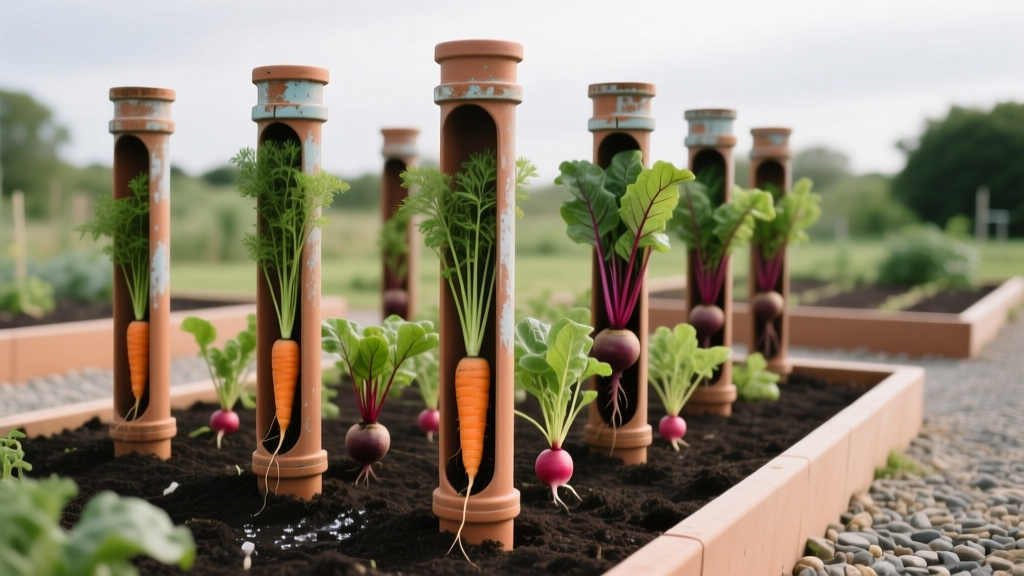
2026 Root Veggie Spacing: Carrots, Beets & Drainage Pipes
James MillerPublished
The 2026 Root Crop Challenge: Overcoming Compacted Soil
As we navigate the 2026 growing season, home gardeners are increasingly faced with erratic spring rainfall and heavily compacted urban soils. For root crops like carrots, beets, and radishes, soil structure is the single most critical factor determining your harvest. When roots encounter heavy clay or compacted dirt, they fork, stunt, or rot. Traditional tilling often destroys soil microbiology and brings dormant weed seeds to the surface. Enter a revolutionary, highly effective technique borrowed from hardscaping: using perforated landscape drainage pipes to create deep, loose, well-aerated soil columns specifically designed for root vegetable spacing and development.
The Landscape Drainage Pipe Method for Deep Root Zones
Typically, 4-inch corrugated landscape drainage pipes are buried horizontally in trenches to create French drains that move excess water away from foundations. However, innovative urban farmers and raised-bed gardeners have repurposed these pipes vertically to solve the root crop dilemma. By cutting perforated drainage pipes into 12-to-16-inch segments and burying them upright in the garden bed, you create a permanent, structured column of loose, well-draining soil.
This method provides three massive benefits for the 2026 garden:
- Unrestricted Root Growth: The pipe walls hold back heavy clay, allowing taproots to grow perfectly straight.
- Targeted Sub-Irrigation: Watering directly into the pipe columns delivers moisture deep into the root zone, preventing surface crusting and reducing fungal diseases.
- Optimized Spacing Grids: The pipes act as physical anchors, allowing you to map out precise geometric spacing for carrots, beets, and radishes in concentric circles or grid patterns around each column.
Choosing and Preparing Your Drainage Pipes
For this method, you will need standard 4-inch ADS (Advanced Drainage Systems) corrugated perforated landscape drainage pipe. Avoid solid PVC, as the corrugated pipe is flexible, cheaper, and the perforations allow for lateral moisture wicking into the surrounding soil. Cut the pipe into 14-inch sections using a reciprocating saw. Bury them so that 12 inches are underground and 2 inches protrude above the soil line to prevent surface mulch from washing into the column. Fill the interior of the pipe with a custom blend of 40% coarse sand, 40% screened compost, and 20% vermiculite. This mixture ensures the drainage column remains loose and friable year after year.
2026 Spacing Guide for Carrots, Beets, and Radishes
Proper spacing is vital to prevent competition for nutrients and water. When utilizing the drainage pipe column method, you will plant your seeds in the native (or amended) soil immediately surrounding the exterior of the pipe, while the pipe itself acts as a moisture and aeration reservoir. Below is the definitive spacing chart for the 2026 season.
| Crop | Seed Depth | Final Intra-Row Spacing | Distance from Pipe | Days to Harvest |
|---|---|---|---|---|
| Carrots (Nantes/Danvers) | 1/4 inch | 2 to 3 inches | 2 to 6 inches | 65-75 days |
| Beets (Detroit/Chioggia) | 1/2 inch | 3 to 4 inches | 4 to 8 inches | 50-60 days |
| Radishes (Cherry Belle) | 1/2 inch | 1 to 2 inches | 1 to 4 inches | 25-30 days |
Carrots: Precision Spacing Around Pipe Columns
Carrots are notoriously finicky about spacing and soil resistance. According to the University of Minnesota Extension, carrots require a fine, loose seedbed to ensure proper germination and straight taproot development. When planting around your vertical drainage pipes, sow carrot seeds in concentric circles roughly 3 inches away from the exterior wall of the pipe.
Because carrot seeds are tiny, they are often over-sown. In 2026, the most efficient method is using pelleted carrot seeds or seed tape, which naturally spaces the seeds 2 inches apart. If you sow raw seeds, you must thin them aggressively once the true leaves emerge. Thinning is non-negotiable; crowded carrots will result in twisted, undersized roots. The perforated drainage pipe in the center of your planting circle ensures that even during heavy summer downpours, the soil immediately surrounding the carrots remains oxygenated, preventing the anaerobic conditions that lead to root rot.
Beets: Thinning and Moisture Management
Beets are unique because each "seed" is actually a dried fruit cluster containing multiple true seeds. This means that even if you space your beet seeds perfectly 4 inches apart, you will still need to thin the seedlings. Beets thrive in the consistent moisture provided by the landscape drainage pipe wicking system. As noted by The Old Farmer's Almanac, beets require consistent watering to prevent the roots from becoming tough and woody.
Plant your beet seeds about 6 inches away from the drainage pipe columns. As the beet roots expand, they will draw moisture laterally from the perforations of the pipe. To maintain optimal spacing, snip the weaker seedlings at the soil line with scissors rather than pulling them, which can disturb the delicate taproots of the neighboring beets. The remaining beets will have a 4-inch radius to expand into, yielding perfectly round, tender roots.
Radishes: Quick Turnarounds in the Drainage Zone
Radishes are the sprinters of the root vegetable world. They germinate in days and are ready to harvest in under a month. Because of their rapid growth cycle, radishes are excellent candidates for the tight spaces immediately adjacent to the drainage pipe (about 2 inches away). Their shallow, fast-growing taproots benefit immensely from the loose soil and high aeration provided by the pipe's exterior boundary.
Sow radish seeds 1/2 inch deep and thin them to 2 inches apart. Radishes also serve as excellent row markers for your slower-germinating carrots. By mixing radish and carrot seeds together in the same furrow around the pipe, the radishes will break the soil crust and be harvested long before the carrots need the extra space. For more detailed regional planting windows, refer to the radish planting guides provided by The Old Farmer's Almanac.
Sub-Irrigation and Soil Maintenance for 2026
The true genius of integrating landscape drainage pipes into your vegetable bed lies in irrigation efficiency. In the heat of late summer, surface watering often leads to rapid evaporation and soil crusting. By removing the caps of your vertical pipe columns and filling them directly with water, you deliver hydration straight to the deep root zone. The water slowly seeps out through the corrugated perforations, wicking outward into the surrounding soil where your carrots and beets are spaced.
This sub-irrigation method keeps the top inch of soil relatively dry, which drastically reduces the germination of surface weed seeds and deters slugs and snails that thrive in damp surface mulch. To maintain your drainage pipe columns throughout the 2026 season, flush them with a high-pressure hose nozzle once a month to clear any silt or fine clay that may have migrated through the perforations.
Pro-Tip for 2026: At the end of the autumn harvest, do not pull the drainage pipes out of the ground. Simply top them off with a handful of worm castings and cover the opening with a landscape fabric cap. This protects the column from winter debris while allowing earthworms to migrate into the pipe and naturally aerate the surrounding bed for next spring.
Conclusion
Mastering root vegetable spacing is only half the battle; providing the right subterranean environment is the key to a bountiful harvest. By repurposing 4-inch corrugated landscape drainage pipes into vertical soil columns, you bypass the limitations of heavy clay, optimize your garden footprint, and guarantee the straight, crisp carrots, beets, and radishes that every gardener dreams of. Implement this drainage pipe spacing strategy this season, and watch your root crop yields transform.
