Pest Control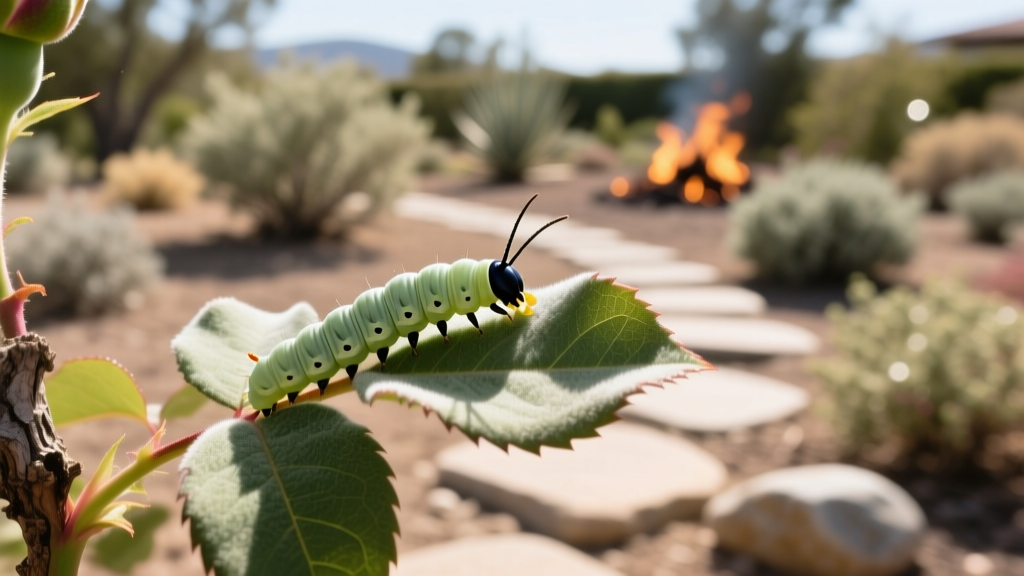
Rose Sawfly & Spinosad Treatment: Fire-Safe Guide 2026
James MillerPublished
The Intersection of Pest Control and Fire-Resistant Landscaping
When homeowners think of fire-resistant landscaping, they typically focus on hardscaping, removing dead trees, and selecting high-moisture succulents or fire-retardant shrubs. However, an often-overlooked component of maintaining a defensible space in 2026 is active pest management. Pests that defoliate ornamental plants do more than just ruin your garden's aesthetics; they actively compromise the fire-resistance of your landscape by creating fine, dry fuels and stressing plants to the point where their natural moisture content plummets.
Roses are a staple in many gardens, frequently planted in Zone 1 and Zone 2 of the defensible space around homes. When kept healthy, well-watered, and lush, roses possess a high moisture content that makes them relatively resistant to catching fire from wind-blown embers. But when a severe infestation of rose sawfly larvae strips the plant of its foliage, the resulting stress causes the canes to become brittle and dry. Furthermore, the accumulation of skeletonized, papery leaf litter on the soil surface acts as a highly flammable "flash fuel." In the context of the increasingly severe 2026 fire season, managing defoliating pests is not just an agricultural concern—it is a critical fire-safety protocol.
Identifying Rose Sawfly Larvae in Your 2026 Garden
The rose sawfly, commonly referred to as the "roseslug," is neither a true slug nor a caterpillar. These pests are the larvae of primitive wasps belonging to the order Hymenoptera. In 2026, three primary species of roseslugs are prevalent in North American gardens: the bristly roseslug, the European roseslug, and the curled rose sawfly. Despite their differences, their identification and the damage they cause are remarkably similar.
To the untrained eye, roseslugs look like small, green, translucent caterpillars. They typically measure between 1/2 inch to 3/4 inch in length and feature a darker green head capsule. You will most commonly find them on the undersides of rose leaves, where they feed in groups during their early instar stages. Because they are not true caterpillars, they possess six or more pairs of fleshy prolegs, whereas true caterpillars have fewer. This biological distinction is crucial because it dictates the type of biological control you must use.
The damage caused by sawfly larvae is distinct. Young larvae feed on the soft tissue between the leaf veins, leaving behind a transparent, papery layer of epidermis. This is known as "window-paning" or skeletonizing. As the larvae mature, they consume the entire leaf, leaving only the major veins. A heavy infestation can defoliate a mature rose bush in a matter of days, leaving behind a bed of dry, curled, dead leaf matter that poses a significant fire hazard near your home's foundation.
Sawfly Larvae vs. True Caterpillars: A Comparison
Understanding the difference between sawflies and true caterpillars is essential for selecting the correct organic treatment. Applying the wrong biological control will waste time and allow the defoliation—and the subsequent fire fuel buildup—to continue unchecked.
| Feature | Rose Sawfly Larvae (Roseslugs) | True Caterpillars (Lepidoptera) |
|---|---|---|
| Scientific Order | Hymenoptera (Wasps/Bees) | Lepidoptera (Moths/Butterflies) |
| Legs & Prolegs | 6 true legs, 6+ fleshy prolegs | 6 true legs, 2 to 5 pairs of prolegs |
| Bt Susceptibility | Not susceptible to Bt | Highly susceptible to Bt |
| Spinosad Efficacy | Highly effective | Highly effective |
| Primary Damage | Skeletonizing (window-paning) | Chewing holes, rolling leaves |
Why Spinosad is the Gold Standard for Sawflies
For decades, gardeners relied on Bacillus thuringiensis (Bt) to control chewing insects on roses. However, as noted by the University of Minnesota Extension, Bt is completely ineffective against sawfly larvae because Bt specifically targets the alkaline digestive tracts of true caterpillars (Lepidoptera). Since sawflies are Hymenoptera, their digestive systems do not activate the Bt toxins.
Enter Spinosad. Derived from the soil-dwelling bacterium Saccharopolyspora spinosa, Spinosad is a naturally occurring, OMRI-listed organic insecticide that has become the cornerstone of integrated pest management (IPM) for sawflies. Spinosad works by overstimulating the insect's nervous system, specifically targeting the nicotinic acetylcholine receptors. This causes paralysis and death within 24 to 48 hours of ingestion or direct contact.
In 2026, Spinosad formulations have been refined for better UV stability and longer residual control on leaf surfaces. It is highly effective against the bristly and European roseslugs while remaining safe for mammals, birds, and most beneficial predatory insects once it has dried. By swiftly halting the defoliation process, Spinosad preserves the rose bush's canopy, maintaining the plant's internal hydration and preventing the accumulation of dry, flammable debris on the ground below.
Step-by-Step Spinosad Application Guide
To effectively eradicate sawfly larvae while adhering to fire-safe landscaping principles and protecting local pollinators, follow this precise application protocol:
- Timing is Everything: Spinosad is highly toxic to bees and other pollinators while the spray is still wet. You must apply the treatment in the late evening or at dusk, after bees have returned to their hives. By morning, the spray will have dried, rendering it practically non-toxic to visiting pollinators.
- Mixing the Solution: Follow the 2026 manufacturer instructions on your specific liquid concentrate. A standard dilution rate is typically 4 tablespoons of Spinosad concentrate per gallon of water. Use a dedicated pump sprayer to ensure an even, fine mist.
- Targeted Spraying: Sawfly larvae are photophobic and hide on the undersides of leaves. You must spray the lower leaf surfaces thoroughly until the solution begins to drip. Do not neglect the lower canopy and the base of the canes, where older larvae may pupate in the soil.
- Reapplication Schedule: Spinosad breaks down under prolonged UV exposure. For severe infestations, apply a second treatment 7 to 10 days after the initial spray to catch any newly hatched larvae emerging from the soil.
Integrating Rose Care into Your Fire-Resistant Strategy
According to the University of California Agriculture and Natural Resources, maintaining a fire-resistant landscape requires ongoing vigilance to eliminate dead plant material and ensure high moisture content in surviving vegetation. Treating your roses with Spinosad is only the first step in a comprehensive fire-safe IPM strategy.
Once the sawfly larvae have been eliminated, you must address the damage they left behind. The skeletonized leaves that remain on the plant and the debris that has fallen to the soil surface represent dangerous fine fuels. In a fire-resistant landscape, the ground immediately surrounding your home (Zone 0 and Zone 1) must be kept completely free of dead leaves, pine needles, and dry mulch.
Perform a thorough cleanup of the rose bed. Rake away all fallen, papery leaf litter and replace any dry, flammable wood mulch with non-combustible alternatives like decomposed granite, river rock, or composted wood chips that have been heavily watered. Prune away any canes that have died back due to the stress of defoliation, as dead wood ignites much faster than live, hydrated tissue.
Finally, restore the plant's moisture levels. A defoliated rose bush has lost its ability to photosynthesize efficiently and is highly stressed. Implement a deep-watering schedule using drip irrigation to rehydrate the root zone without wetting the remaining foliage, which could invite fungal diseases like black spot. A well-hydrated rose bush is a resilient rose bush, and more importantly, it is a plant that will resist ignition during an ember storm.
Conclusion
As we navigate the environmental challenges of 2026, the boundaries between gardening and home hardening continue to blur. Identifying and treating rose sawfly larvae with Spinosad is a highly effective, organic IPM strategy that does more than just save your prized blooms. By preventing defoliation and eliminating the buildup of dry, dead biomass, you are actively maintaining the moisture content of your landscape and reducing the flash fuels around your home. A pest-free garden is not just a beautiful garden; it is a vital line of defense in a fire-resistant landscape.